
Vatican-Rubio meeting signals US tensions with Pope Leo
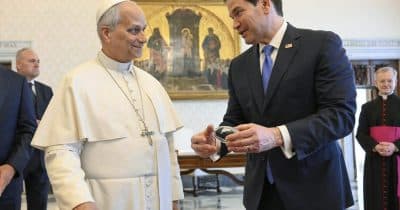
A meeting between the Vatican and US political figure Rubio highlights emerging tensions that could reshape US-Catholic voter dynamics, with potential downstream effects on cryptocurrency regulation and policy priorities.
The Vatican-Rubio meeting represents an intersection of religious diplomacy and political strategy during a period of shifting US-Catholic voter alignment. Catholic voters have historically served as a critical swing demographic in US elections, and changes in their political orientation can significantly influence policy outcomes across multiple sectors. This particular engagement signals potential tensions in the Vatican's relationship with current US political leadership, suggesting divisions over values, governance, or international priorities.
The broader context involves long-standing debates within the Catholic community regarding economic policy, social issues, and the role of institutional religion in secular governance. The Vatican's diplomatic overtures and strategic positioning reflect its traditional approach of engaging directly with political actors to influence policy from within corridors of power. Rubio's prominence in conservative political circles adds another layer, indicating that this meeting carries weight beyond ceremonial protocol.
For the cryptocurrency sector, regulatory policy remains sensitive to broader political shifts and religious institutional positions. If Catholic voting blocs shift their political allegiance, elected officials and regulatory bodies may recalibrate their approach to crypto oversight, financial innovation, and corporate accountability measures. The Vatican has previously engaged with crypto and blockchain technologies, though often with cautious skepticism regarding speculative finance and consumer protection.
Investors and crypto stakeholders should monitor how this diplomatic engagement translates into concrete policy shifts. Changes in political coalitions can affect regulatory timelines, enforcement priorities, and legislative initiatives targeting digital assets. The intersection of religious demographics and regulatory momentum creates uncertainty that warrants close attention to both Vatican statements and Rubio's legislative activities.
- →Vatican-Rubio tensions signal potential shifts in US-Catholic voter alignment with implications for electoral outcomes and policy priorities
- →Crypto regulation faces indirect pressure from religious institutional positioning and demographic voting pattern changes
- →Changes in political coalitions tied to Catholic voters could alter regulatory timelines and enforcement priorities
- →The Vatican's diplomatic engagement reflects historical patterns of directly influencing policy through political engagement
- →Investors should monitor emerging political realignments for their impact on crypto oversight and compliance frameworks