
White House signals increased military tensions with Iran amid Operation Midnight Hammer
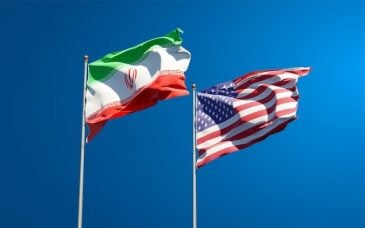
The White House has signaled escalating military tensions with Iran through Operation Midnight Hammer, prioritizing military action over diplomatic engagement. This shift increases geopolitical instability and poses risks to global markets, including cryptocurrency and traditional financial assets sensitive to regional conflict.
The White House's emphasis on military operations rather than diplomatic channels marks a significant escalation in U.S.-Iran relations. Operation Midnight Hammer represents a strategic pivot toward military posturing, which historically correlates with heightened geopolitical risk premiums across asset classes. This approach constrains diplomatic off-ramps and increases the probability of military confrontation, a scenario that typically destabilizes emerging markets and volatile asset classes including cryptocurrencies.
U.S.-Iran tensions have oscillated for decades, but military-first positioning signals reduced likelihood of negotiated settlements. Previous escalations—including the 2020 Soleimani assassination and subsequent Iranian ballistic missile strikes—demonstrated how regional conflict rapidly transmits shocks through global markets. Cryptocurrency markets, already sensitive to macroeconomic uncertainty and geopolitical risk, would likely experience increased volatility and capital reallocation toward safe-haven assets during active military confrontation.
Market participants face heightened uncertainty regarding oil prices, supply chain disruptions, and broader economic stability. Traditional equities and emerging market assets typically decline during regional conflicts, while flight-to-safety dynamics can drive demand for perceived store-of-value assets like Bitcoin. However, the relationship remains complex—crypto markets show mixed responses depending on whether geopolitical instability triggers broader macroeconomic contraction or inflation expectations.
Investors should monitor escalation indicators including military asset deployments, maritime incidents, and diplomatic statement frequency. Sustained military positioning without negotiation channels suggests elevated tail risks. Portfolio managers may consider hedging strategies appropriate to geopolitical stress scenarios, though the specific impact on cryptocurrency valuations remains unpredictable without clearer market catalysts.
- →White House prioritizes military operations over diplomatic resolution with Iran, signaling increased confrontation risk
- →Regional military escalation historically creates volatility across crypto and traditional markets through safe-haven flows
- →Geopolitical tensions may disrupt oil markets and supply chains, triggering broader macroeconomic uncertainty
- →Investors should monitor military deployment indicators and diplomatic channel activity as escalation metrics
- →Cryptocurrency valuations face competing pressures from risk-off sentiment and potential inflation-hedging demand