
Israel’s Windward, Vantor enhance maritime monitoring in Strait of Hormuz
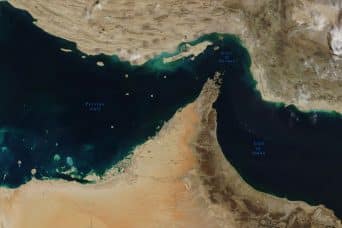
Israel-based maritime security firms Windward and Vantor are enhancing monitoring capabilities in the Strait of Hormuz to combat illicit shipping activities. This development could reduce geopolitical risks in a critical chokepoint through which roughly 20% of global oil flows, potentially stabilizing energy markets and shipping routes.
The Strait of Hormuz represents one of the world's most strategically important maritime passages, with approximately one-fifth of global petroleum transiting through its narrow channel annually. Enhanced surveillance systems deployed by Israeli technology firms address longstanding concerns about illicit maritime activities, sanctions evasion, and smuggling operations that create systemic risks for global commerce. Maritime monitoring technology has evolved significantly, incorporating satellite imagery, vessel tracking systems, and AI-powered analytics to detect anomalous shipping patterns and unauthorized transfers between vessels.
Geopolitical tensions in the Persian Gulf have historically created uncertainty around shipping security and insurance costs. Better monitoring infrastructure can reduce information asymmetries that bad actors exploit, potentially lowering insurance premiums and reducing shipping delays caused by security concerns. The technology enables more efficient enforcement of international sanctions and maritime law, strengthening the rules-based international order that underpins global trade.
For cryptocurrency and blockchain markets, maritime stability indirectly affects oil prices and broader macroeconomic conditions. Reduced geopolitical risk premium in energy markets could moderate inflation expectations and influence Federal Reserve policy trajectories, impacting cryptocurrency valuations. Shipping security also relates to supply chain transparency, where some blockchain initiatives aim to provide immutable records of goods movement.
Longer-term implications depend on adoption rates across international maritime authorities and whether enhanced monitoring translates to measurable deterrence of illicit activities. Regional actors' responses to surveillance expansion could either increase cooperation or trigger countermeasures, making escalation risk a key variable to monitor.
- →Enhanced maritime monitoring in the Strait of Hormuz addresses illicit activities affecting 20% of global oil shipments
- →Better surveillance infrastructure reduces shipping insurance costs and geopolitical risk premiums affecting global markets
- →Improved maritime security indirectly impacts cryptocurrency valuations through macroeconomic and inflation expectations channels
- →Technology deployment depends on international cooperation and enforcement mechanisms across multiple jurisdictions
- →Regional geopolitical responses could either strengthen or undermine the effectiveness of monitoring systems