22,940 AI articles curated from 50+ sources with AI-powered sentiment analysis, importance scoring, and key takeaways.
AIBullishBlockonomi · Jun 207/10
🧠Micron Technology (MU) stock has surged 300% during 2026, driven by robust AI-driven demand for memory chips. Analysts have raised price targets to $1,500 ahead of the company's June 24 earnings report, signaling confidence in sustained momentum from the AI sector's memory requirements.
AIBullishCrypto Briefing · Jun 207/10
🧠Japan announced a $2.3 trillion public-private investment plan targeting 2040, focusing on artificial intelligence, semiconductor manufacturing, and 15 other strategic sectors. The initiative aims to strengthen Japan's innovation capacity, economic growth, and global competitiveness in critical technology domains.
AIBullishCrypto Briefing · Jun 207/10
🧠Japan announced a $2.3 trillion investment plan through 2040 targeting AI, semiconductors, and space technology to address demographic decline and strengthen global competitiveness. This massive fiscal commitment signals Japan's strategic pivot toward high-tech sectors amid intensifying competition with the US and China.
AIBearishCrypto Briefing · Jun 197/10
🧠Major semiconductor manufacturers Samsung, Micron, and SK Hynix are prioritizing production of AI-grade memory chips, creating supply constraints that could drive up consumer technology prices and limit market accessibility. This industry shift signals a structural reallocation of chip manufacturing capacity toward high-margin AI applications at the expense of mainstream consumer electronics.
AINeutralCrypto Briefing · Jun 197/10
🧠Morgan Stanley projects $2.9 trillion in global data-center capital expenditure through 2028, driven by AI infrastructure demands. This massive investment wave could reshape financial markets and create new credit risks as companies race to monetize AI capabilities.
AIBearishCrypto Briefing · Jun 197/10
🧠Critical vulnerabilities in the LangChain framework have exposed Langflow servers to active exploitation attacks. The incident underscores growing security risks in AI infrastructure as developers increasingly adopt these frameworks without adequate protection measures.
AINeutralCrypto Briefing · Jun 197/10
🧠CPUs are resurging as viable alternatives for AI inference tasks, challenging Nvidia's entrenched GPU dominance in the semiconductor market. This competitive shift could fundamentally reshape the AI chip landscape and create opportunities for traditional chipmakers to capture market share from Nvidia's historically dominant position.
🏢 Nvidia
AIBullishCrypto Briefing · Jun 197/10
🧠Meta has secured a 1.6 gigawatt AI compute deal with Crusoe Energy spanning facilities in Texas and Missouri, signaling a strategic pivot toward specialized energy providers rather than traditional utilities. This agreement exemplifies the growing infrastructure demands of large-scale AI operations and the emergence of dedicated energy solutions tailored for compute-intensive workloads.
AINeutralTechCrunch – AI · Jun 197/10
🧠The US government forced Anthropic to remove its Fable 5 and Mythos 5 models citing national security concerns after reported guardrail bypass vulnerabilities. The move has drawn criticism from cybersecurity researchers who argue similar vulnerabilities exist across competing AI models, raising questions about whether the ban effectively protects security or inadvertently boosts Anthropic's reputation.
🏢 Anthropic
AIBearishTechCrunch – AI · Jun 197/10
🧠The US government forced Anthropic to withdraw its Fable 5 and Mythos 5 AI models citing national security concerns after Amazon researchers discovered guardrail bypass vulnerabilities. The decision has drawn criticism from cybersecurity experts who argue similar vulnerabilities exist across other AI models, raising questions about the consistency and effectiveness of regulatory enforcement.
🏢 Anthropic
AIBullishTechCrunch – AI · Jun 197/10
🧠Billionaire Mukesh Ambani's Reliance Industries is integrating artificial intelligence across its telecom services that reach over 500 million users, embedding AI capabilities into calls, applications, and smart home systems. This large-scale deployment represents a major commercial push to monetize AI infrastructure across consumer touchpoints in one of the world's largest telecom markets.
AIBullishBlockonomi · Jun 197/10
🧠Nvidia has captured the #1 position in data center Ethernet switching with $2.1B in Q1 2026 revenue, representing a 192.7% year-over-year increase according to IDC rankings. The achievement triggered a 3% stock price jump, signaling strong market confidence in Nvidia's expanding infrastructure dominance beyond GPUs.
🏢 Nvidia
AIBullishBlockonomi · Jun 197/10
🧠Butterfly Network (BFLY) surged 31% following the announcement of a $74M partnership with Midjourney Medical, which will integrate 40 of the company's Ultrasound-on-Chip modules into a new medical scanner. The deal validates BFLY's core technology and demonstrates significant commercial traction in the healthcare sector.
🧠 Midjourney
AIBullishAI News · Jun 197/10
🧠SAP and Google Cloud have launched an agentic commerce architecture designed to automate multi-agent marketing and retail operations at enterprise scale. The partnership addresses a critical gap where 78% of businesses view AI as essential for customer retention by 2026, yet fewer than 40% of companies effectively share customer data across CRM and customer experience platforms.
AIBullishBlockonomi · Jun 197/10
🧠OpenAI's GPT-5.5 Instant has demonstrated superior performance compared to physicians in healthcare accuracy benchmarks, with 71% fewer factuality errors in medical responses while serving 230 million weekly users. This development signals a significant milestone in AI's applicability to regulated, high-stakes domains like healthcare.
🏢 OpenAI🧠 GPT-5
AIBullishBlockonomi · Jun 197/10
🧠Google is leveraging its custom AI chip technology (TPUs) as a competitive counter to Nvidia's dominance in the AI chip market, backing a $3.2B data center investment and moving to directly sell TPUs to customers. This strategic shift mirrors Nvidia's vertical integration approach, positioning Alphabet to capture more value in the AI infrastructure supply chain while its stock gains 1.17%.
🏢 Nvidia
AIBullishBlockonomi · Jun 197/10
🧠Robinhood's stock surged 42% following the launch of its AI trading feature, which has attracted 50,000 users conducting millions in daily trades through autonomous agentic accounts. The development signals growing mainstream adoption of AI-driven trading tools and demonstrates market demand for algorithmic portfolio management services.
AIBearishCrypto Briefing · Jun 197/10
🧠China has implemented stricter export controls on indium, a critical material used in semiconductor manufacturing and AI infrastructure. This move reflects geopolitical tensions over technology supply chains and could force global tech companies to diversify sourcing or accelerate domestic production alternatives.
AIBullishMIT Technology Review · Jun 197/10
🧠AI startup Subquadratic emerged from stealth claiming to have solved a mathematical bottleneck limiting large language model performance. The breakthrough addresses computational constraints that have hindered LLM efficiency and scalability, potentially accelerating AI development across the industry.
AINeutralFortune Crypto · Jun 197/10
🧠OpenAI has filed preliminary confidential paperwork with the SEC, initiating the IPO process despite CEO Sam Altman's previous reluctance about leading a public company. This move positions OpenAI to capitalize on growing investor demand for AI-sector exposure as competition intensifies among AI companies pursuing public listings.
🏢 OpenAI
AIBearishFortune Crypto · Jun 197/10
🧠KPMG's global risk chief warns that corporate boards lack governance frameworks suited for AI's probabilistic and rapidly evolving nature. Traditional deterministic governance structures are inadequate for managing AI systems already embedded in core business processes, creating significant organizational risk.
AIBullishFortune Crypto · Jun 197/10
🧠AI-powered shopping tools generated $3 billion in sales during Black Friday with a 38% higher conversion rate than non-AI users, demonstrating clear competitive advantages for retailers who adopted the technology. This retail milestone signals that AI integration has moved beyond optional enhancement to essential business infrastructure across industries.
AIBullishCrypto Briefing · Jun 197/10
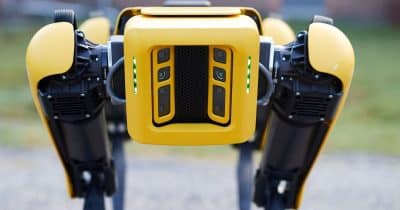
🧠Hyundai is acquiring SoftBank's remaining stake in Boston Dynamics for $325 million, completing its full ownership of the robotics company. This consolidation reflects Hyundai's strategic pivot toward autonomous robotics and industrial automation, positioning the conglomerate as a major player in the emerging robotics sector.
AIBullishMIT Technology Review · Jun 197/10
🧠Miami-based AI startup Subquadratic emerged from stealth claiming to have solved a decade-old mathematical bottleneck constraining large language model performance. The breakthrough could accelerate LLM capabilities and efficiency, though initial skepticism prompted the team to provide technical evidence.
AIBullishBlockonomi · Jun 197/10
🧠Dell's stock surged 250% over 12 months, driven by explosive demand for AI infrastructure as server revenue jumped 757% to $16.1B in Q1. The company's earnings per share of $4.86 exceeded analyst expectations, signaling strong market positioning in the AI hardware sector.