22,940 AI articles curated from 50+ sources with AI-powered sentiment analysis, importance scoring, and key takeaways.
AIBullishCrypto Briefing · Jun 47/10
🧠Flourish has secured $500M in funding led by Jeff Bezos and prominent venture capital firms to advance brain-inspired AI research. The investment signals growing institutional interest in neuroscience-driven approaches to artificial intelligence, which could improve AI efficiency and capabilities beyond current deep learning paradigms.
AIBullishCrypto Briefing · Jun 47/10
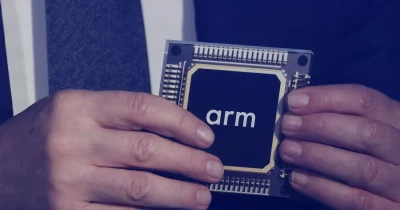
🧠Arm Holdings has experienced a remarkable stock surge of nearly 100% within weeks, achieving a $218 billion valuation driven by surging demand for AI chips. The dramatic appreciation reflects market enthusiasm for the semiconductor company's positioning in the AI infrastructure boom, though it raises questions about whether the company can deliver on elevated investor expectations.
AIBearishCrypto Briefing · Jun 47/10
🧠China has suspended robotaxi licenses following a Baidu autonomous vehicle malfunction that left passengers stranded in Wuhan, signaling heightened regulatory scrutiny of self-driving technology. The pause underscores growing concerns about safety protocols and may influence autonomous vehicle standards globally.
AIBullishCrypto Briefing · Jun 47/10
🧠Gulf Development Pcl announced a $4.3 billion expansion plan to build AI data center infrastructure in Thailand, positioning the country as a regional hub for digital infrastructure. The investment underscores Southeast Asia's growing importance in the global AI and data center market, with potential economic and technological spillover benefits for the region.
AIBullishDecrypt – AI · Jun 47/10
🧠Anthropic reports that AI systems now autonomously write most of their code and handle increasingly complex research tasks, with human involvement shifting toward problem selection rather than execution. This development suggests AI capabilities are accelerating beyond human-paced workflows, potentially reshaping how AI research and development scales.
🏢 Anthropic
AIBearishCrypto Briefing · Jun 47/10
🧠Broadcom missed its AI chip revenue forecast, triggering a 13% stock decline that erased approximately $250 billion in market capitalization. The shortfall signals potential deceleration in AI infrastructure investment and raises questions about whether market expectations for AI chip demand have been overestimated.
AIBullishCrypto Briefing · Jun 47/10
🧠Meta has launched its Business Agent and Business Agent Platform, leveraging AI to create new revenue streams beyond traditional advertising. This strategic move aims to diversify Meta's income sources while improving customer engagement across its ecosystem of platforms.
AIBullishCrypto Briefing · Jun 47/10
🧠Thomas Laffont reports that unicorn valuations have surged 70% since September 2024, with AI-focused unicorns receiving five times more funding per company. The concentration of capital in AI-driven startups signals a major shift in venture investment priorities, with implications for how capital flows across the technology sector.
AIBullishTechCrunch – AI · Jun 47/10
🧠Poke, an AI agent startup enabling users to interact with artificial intelligence via text messaging, has received approval as the first AI agent on Apple's Messages for Business platform. This milestone signals Apple's strategic embrace of AI-powered business communication tools and validates the emerging market for conversational AI agents integrated into mainstream messaging ecosystems.
AINeutralDecrypt · Jun 47/10
🧠Google DeepMind's CEO, a Nobel Prize-winning researcher, warns that artificial general intelligence (AGI) is approaching rapidly and humanity has limited time to prepare. The statement underscores growing consensus among AI leaders that transformative AI capabilities may arrive sooner than previously anticipated.
🏢 Google
AIBullishcrypto.news · Jun 47/10
🧠Apple is advancing plans to use Nvidia's Blackwell B200 chips hosted in Google data centers to power a long-delayed Siri overhaul, routing cloud-based AI requests through Google's infrastructure after internal testing. This partnership represents a significant shift in Apple's AI strategy, relying on external providers rather than proprietary infrastructure for its major AI initiative.
🏢 Nvidia
AINeutralCrypto Briefing · Jun 47/10
🧠Anthropic has filed for an initial public offering, citing the substantial capital requirements for developing advanced AI models as a primary driver for going public. The move underscores the capital-intensive nature of frontier AI development and signals a potential shift in how AI companies fund operations, with implications for investment flows and competitive dynamics in the sector.
🏢 Anthropic
AIBullishAI News · Jun 47/10
🧠Meta has launched Business Agent, an AI system that automates customer service and transactions directly within Instagram, Messenger, and WhatsApp. The technology enables retail brands to handle support tickets and execute transactions autonomously, embedding agentic AI into social commerce workflows at scale.
AIBullishCrypto Briefing · Jun 47/10
🧠Goldman Sachs projects SpaceX's AI revenue could reach $322 billion by 2030, a forecast that could substantially increase the company's IPO valuation. This projection highlights the growing convergence of aerospace and artificial intelligence capabilities, potentially reshaping competitive dynamics in the space industry.
AIBearishBlockonomi · Jun 47/10
🧠Broadcom's earnings report triggered a broad selloff in AI and semiconductor stocks, including Marvell and CrowdStrike, while crude oil prices simultaneously surged past $95 per barrel. The dual market movements reflect broader concerns about tech sector valuations and macroeconomic pressures from rising energy costs.
AIBullishTechCrunch – AI · Jun 47/10
🧠Hello Robot, a California startup, has released the fourth generation of its home assistance robot called Stretch. The product represents a significant step toward commercializing domestic robotics, signaling growing investor and industry confidence in bringing autonomous robots into residential settings.
AIBullishCrypto Briefing · Jun 47/10
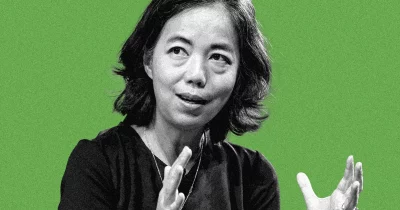
🧠Fei-Fei Li presents a framework for world models that could advance AI's spatial understanding and reasoning capabilities. This development has significant implications for robotics and gaming applications, enabling systems to better predict and interact with physical environments.
AIBearishCrypto Briefing · Jun 47/10
🧠A UK Member of Parliament has filed a lawsuit against xAI over a deepfake bikini image allegedly created by the Grok chatbot, raising significant questions about AI accountability and content moderation. The case is expected to establish important legal precedents regarding privacy rights, data protection, and the liability of AI companies for non-consensual intimate imagery generated by their systems.
🏢 xAI🧠 Grok
AIBearishCrypto Briefing · Jun 47/10
🧠Broadcom missed Q2 revenue expectations, triggering a 13% share price decline. The miss reflects intensifying competitive pressures and investor concerns about AI semiconductor market valuations and guidance, signaling potential volatility in the sector.
AIBearishThe Verge – AI · Jun 47/10
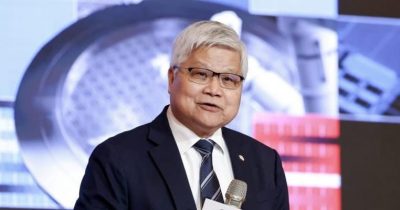
🧠TSMC, the world's largest semiconductor manufacturer, is struggling to meet surging AI-driven demand despite expanding US production capacity. CEO C.C. Wei warned that customer demand far exceeds supply capabilities, with the company concerned about becoming a supply bottleneck for years to come.
$MKR
AINeutralFortune Crypto · Jun 47/10
🧠Anthropic, valued at $965 billion, has confidentially filed for an IPO, marking a major liquidity event for early investors including Amazon and Google. The public offering will reveal the actual market valuation of the AI safety-focused company and determine the returns for its largest institutional backers.
🏢 Anthropic
AIBullishCrypto Briefing · Jun 47/10
🧠TSMC CEO C.C. Wei asserts that Taiwan's dominance in AI chip manufacturing is nearly impossible for competitors to challenge, underscoring the island's strategic advantage in global semiconductor supply chains. This statement reinforces Taiwan's critical role in the AI infrastructure ecosystem and highlights the geopolitical implications of chip production concentration.
AIBullishCrypto Briefing · Jun 47/10
🧠Nvidia is expanding its AI chip portfolio beyond data centers by launching the RTX Spark superchip for consumer laptops. This move threatens to disrupt the traditional PC market by enabling on-device AI capabilities and challenging incumbents like Intel and AMD in the consumer segment.
🏢 Nvidia
AIBullishBlockonomi · Jun 47/10
🧠Microsoft announced several AI initiatives at Build 2026, including Project Solara AI devices, Surface RTX Spark, and the MAI Thinking-1 model, alongside a partnership with Mayo Clinic. The announcements drove MSFT stock higher, reflecting investor confidence in the company's expanded AI product portfolio and healthcare applications.
AIBullishBlockonomi · Jun 47/10
🧠Generalist AI, an AI robotics startup, has closed a $400M funding round led by Radical Ventures, achieving a $2B valuation with backing from Nvidia and Jeff Bezos' Expeditions fund. This substantial capital injection reflects growing investor confidence in AI-powered robotics and highlights major tech players' strategic interest in autonomous systems development.
🏢 Nvidia