22,940 AI articles curated from 50+ sources with AI-powered sentiment analysis, importance scoring, and key takeaways.
AIBullishCrypto Briefing · Jun 27/10
🧠Micron Technology has reached a $1 trillion market capitalization milestone, driven by strong investor demand for AI-related semiconductor companies with backing from Nvidia. The achievement reflects a significant shift in capital flows from cryptocurrency investments toward artificial intelligence infrastructure, demonstrating the cyclical nature of technology sector investments.
🏢 Nvidia
AIBullishCrypto Briefing · Jun 27/10
🧠The US technology sector has experienced a 42% surge over two months, marking its largest rally in 24 years, driven primarily by AI's transformative impact on business models and investment strategies. This rally reflects shifting market dynamics as investors reassess growth potential in tech companies benefiting from artificial intelligence adoption.
AIBearishCrypto Briefing · Jun 27/10
🧠Arm Holdings' CEO has stated that implementing a US ban on AI CPU chip exports to China would be extremely difficult to enforce and could have severe consequences. Such restrictions risk disrupting global supply chains, hindering technological innovation, and escalating US-China technological tensions with ripple effects across worldwide markets.
AIBullishArs Technica – AI · Jun 27/10
🧠Microsoft has unveiled Project Solara, an Android-based operating system designed to run AI agents rather than traditional applications. This strategic pivot reflects Microsoft's recognition that it missed the mobile app era and is now positioning itself for an AI-agent-centric computing paradigm.
AIBullishDecrypt · Jun 27/10
🧠Microsoft is productizing OpenClaw as an enterprise AI agent called Scout, leveraging its massive Windows user base of 1.4 billion to drive adoption. This move positions Microsoft to dominate enterprise AI agent deployment at scale, though the technology itself is not new to the market.
AIBullishCrypto Briefing · Jun 27/10
🧠STMicroelectronics is planning to expand its Crolles fabrication facility by 2026 to meet surging demand for silicon photonics components driven by AI infrastructure growth. The expansion underscores the strategic importance of optical interconnect technology in supporting next-generation AI systems and reflects intensifying competition in semiconductor manufacturing.
AIBullishThe Verge – AI · Jun 27/10
🧠Microsoft Build 2026 featured major announcements including the Surface RTX Spark Dev Box, an AI-optimized mini PC for developers powered by Nvidia's Arm-based Spark RTX chip, alongside updates to AI models and a new always-on personal assistant. The event signals Microsoft's continued push to democratize local AI development and compete in the accelerating AI hardware market.
🏢 Nvidia
AIBullishBlockonomi · Jun 27/10
🧠Microsoft launched MAI-Code-1, an AI model that generates source code from written prompts, available through GitHub Copilot and Visual Studio Code. The company also introduced MAI-Thinking-1, a reasoning model optimized for lower token costs in private preview, as Microsoft continues building proprietary AI models alongside its OpenAI partnership.
🏢 OpenAI🏢 Microsoft🧠 Copilot
AIBullishBlockonomi · Jun 27/10
🧠Coherent Corporation's stock hit an all-time high of $427.29, driven by a 17.7% surge on strong demand for AI optical components. With year-to-date gains of 126% and backing from NVIDIA's $2 billion investment, the company is positioned at the center of the AI infrastructure boom.
🏢 Nvidia
AIBullishFortune Crypto · Jun 27/10
🧠A new policy brief contends that artificial intelligence is already contributing hundreds of billions of dollars to the global economy, yet traditional economic measurement systems fail to capture this value creation. This measurement gap has significant implications for policymakers and investors attempting to quantify AI's true economic impact.
AIBullishBlockonomi · Jun 27/10
🧠D-Wave Quantum's stock surged 70% following a $100M federal government equity investment, signaling strong institutional confidence in quantum computing technology. The company is also exploring a foundry partnership with IBM while maintaining Buy ratings from major analysts.
AIBullishThe Verge – AI · Jun 27/10
🧠Microsoft unveiled MAI-Thinking-1, its new flagship advanced reasoning AI model, at Build 2026. The medium-sized model matches leading competitors on software engineering benchmarks and was trained independently on clean data without relying on third-party distillation, marking Microsoft's continued push toward AI self-sufficiency following its loosened partnership with OpenAI.
🏢 OpenAI
AIBullishAI News · Jun 27/10
🧠Anthropic's IPO filing signals that generative AI has transitioned from experimental research to enterprise-grade infrastructure, with public markets now demanding the predictable revenue models and structured operations that venture-backed AI labs previously avoided. This shift realigns AI development incentives from pure compute optimization toward sustainable, scalable business practices that appeal to institutional investors.
🏢 Anthropic
AIBullishTechCrunch – AI · Jun 27/10
🧠Microsoft has introduced a specification enabling developers, compliance, and security teams to define and enforce AI agent behavior policies through portable policy files. This advancement addresses growing concerns about AI agent control and governance by providing a standardized framework for policy management across different deployment environments.
AIBullishThe Verge – AI · Jun 27/10
🧠Microsoft has launched Scout, an always-on AI personal assistant built on OpenClaw technology that integrates across Microsoft 365 applications like Outlook, OneDrive, and Teams. Unlike existing Copilot features, Scout functions as a dedicated personal assistant capable of handling calendar management, expense reporting, email drafting, and other productivity tasks for enterprise users.
🏢 Microsoft
AIBullishWired – AI · Jun 27/10
🧠Microsoft has introduced Scout, an AI agent that operates within Teams as a virtual coworker to automate routine office tasks. Built on OpenAI's agent architecture, Scout represents a significant step toward autonomous workplace automation, enabling organizations to delegate time-consuming administrative work to AI systems that operate continuously without human intervention.
AIBearishTechCrunch – AI · Jun 27/10
🧠Google is deploying AI-powered fake call detection technology to combat an emerging wave of deepfake impersonation scams where attackers spoof trusted numbers and use synthetic voices to impersonate authority figures, family members, or employers. This defense mechanism addresses a critical vulnerability in telecommunications security as traditional call avoidance behaviors make people more susceptible to social engineering attacks.
AIBullishThe Verge – AI · Jun 27/10
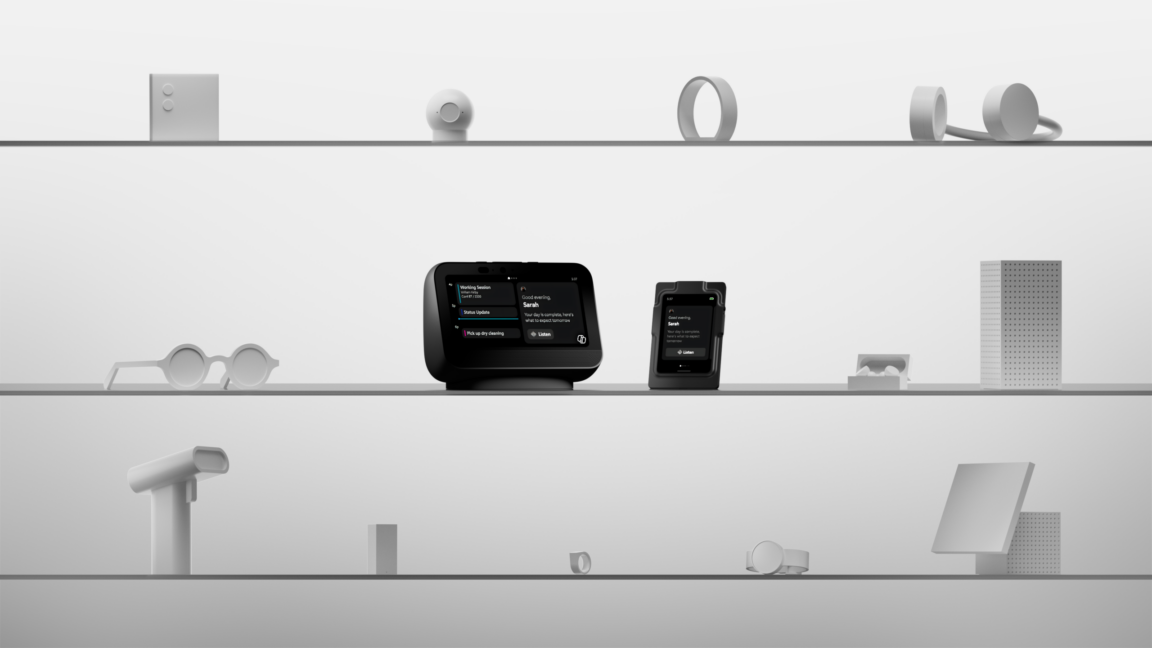
🧠Microsoft announced Project Solara at Build 2026, a new operating system built on Android designed specifically for AI agent-powered devices. The company demonstrated two concept devices—a desk-based unit similar to Amazon Echo Show and a wearable badge—both featuring AI agent integration with biometric security controls.
AIBullishBlockonomi · Jun 27/10
🧠Anthropic has expanded its Project Glasswing cybersecurity initiative to approximately 150 organizations across 15+ countries, including partners from critical infrastructure sectors such as power, water, healthcare, and communications. Early participants using Claude Mythos Preview have already identified over 10,000 high-severity and critical software vulnerabilities, demonstrating the practical value of AI-assisted vulnerability detection.
🏢 Anthropic🧠 Claude
AIBullishThe Verge – AI · Jun 27/10
🧠Microsoft unveiled the Surface RTX Spark Dev Box, a compact developer workstation powered by Nvidia's Arm-based RTX Spark chips, designed for sustained AI workloads and local computing tasks. The device features a 100-watt thermal envelope and 128GB of unified memory, positioning itself as a purpose-built alternative to traditional developer hardware in an increasingly AI-focused computing landscape.
🏢 Nvidia
AIBullishFortune Crypto · Jun 27/10
🧠Anthropic's experimental AI-powered vending machine has evolved into fully autonomous AI-run stores and cafes within a year, with Andon Labs co-founder suggesting AI performance now matches or exceeds human operational capability. This development demonstrates practical real-world deployment of autonomous AI systems in retail and food service, signaling accelerating automation in traditionally human-operated commercial spaces.
🏢 Anthropic
AIBullishBlockonomi · Jun 27/10
🧠Fluence Energy (FLNC) stock surged 44% following Nvidia's announcement of selecting it as the exclusive battery storage partner for AI data center design. Despite the significant stock rally, analyst firm Mizuho maintained an Underperform rating with a $15 price target, suggesting caution amid the enthusiasm.
🏢 Nvidia
AIBullishThe Verge – AI · Jun 27/10
🧠Microsoft's Build 2026 developer conference kicks off June 2nd in San Francisco with expected announcements on new AI models, agentic tools, a Copilot 'super app,' and Windows 11 improvements. The company has already launched the Surface Laptop Ultra powered by Nvidia's RTX Spark, signaling a strategic push into AI-accelerated hardware and Windows on ARM architecture.
🏢 Microsoft🏢 Nvidia
AIBullishBlockonomi · Jun 27/10
🧠Cisco's stock jumped nearly 5% to a 52-week high following the launch of Cloud Control, an agentic AI platform unveiled at Cisco Live. Bank of America simultaneously raised its price target to $135, signaling institutional confidence in the company's AI-driven product strategy.
AIBullishTechCrunch – AI · Jun 27/10
🧠Anthropic is expanding its Project Glasswing security vulnerability program and deploying Claude Mythos to 150 organizations across 15 countries, with focus on critical infrastructure sectors including power, water, healthcare, and communications. This initiative aims to strengthen AI security in high-stakes environments where breaches could impact 100 million people.
🏢 Anthropic🧠 Claude