22,940 AI articles curated from 50+ sources with AI-powered sentiment analysis, importance scoring, and key takeaways.
AIBullishCrypto Briefing · Jun 17/10
🧠Cadence Design Systems and Nvidia unveiled ChipStack AI Super Agent at Computex 2026, an AI-driven platform designed to accelerate semiconductor chip design and reduce development timelines. The technology represents a significant shift in how hardware design workflows operate, potentially disrupting traditional chip development cycles and reshaping competitive advantages in the semiconductor industry.
🏢 Nvidia
AIBullishCrypto Briefing · Jun 17/10
🧠SoftBank has surpassed Toyota to become Japan's largest company by market capitalization, marking a significant shift in the country's corporate hierarchy. This milestone reflects a broader transition in Japan's economy from traditional manufacturing dominance to technology and AI-driven growth as primary value drivers.
AIBullishMIT Technology Review · Jun 17/10
🧠China has approved an invasive brain-computer interface (BCI) chip, marking a regulatory milestone in neurotechnology. The device enabled a paralyzed patient to regain motor control, demonstrating practical medical applications for BCIs in treating spinal cord injuries.
AIBullishBlockonomi · Jun 17/10
🧠Micron Technology reached a $1 trillion market capitalization following strong Q2 financial results, with revenue tripling to $23.86 billion. The company's high-bandwidth memory (HBM) products are sold out through 2026, signaling robust demand for AI infrastructure chips, while analysts have set price targets around $1,625 per share.
AIBullishCrypto Briefing · Jun 17/10
🧠Nvidia has achieved full production of its Vera Rubin chip and improved assembly speed by 95%, enhancing supply chain stability. This manufacturing breakthrough could reduce earnings volatility and mitigate geopolitical risks for the semiconductor giant, benefiting both AI infrastructure developers and investors exposed to semiconductor supply constraints.
🏢 Nvidia
AIBearishCrypto Briefing · Jun 17/10
🧠Mo Gawdat discusses how human choices fundamentally shape AI's impact on society, emphasizing critical ethical concerns in military applications and the imminent disruption of employment sectors. The analysis highlights that technology's trajectory depends on deliberate human decisions rather than inevitable outcomes.
AIBullishAI News · Jun 17/10
🧠A Google Cloud survey reveals that 90% of developers are integrating AI into their workflows, with Steam showing 7,818 games disclosing AI use in 2025—a 681% increase year-over-year. This surge demonstrates AI's transformation from experimental tool to core infrastructure in game development pipelines.
AIBullishBlockonomi · Jun 17/10
🧠Nvidia has introduced the RTX Spark chip, combining an Arm CPU with its Blackwell GPU architecture to target the premium AI laptop market. This move positions Nvidia to compete directly with Intel, AMD, and Qualcomm's Windows PC processors, expanding its influence beyond traditional data center and gaming segments.
🏢 Nvidia
AIBullishBlockonomi · Jun 17/10
🧠Samsung Electronics surged 10.1% to record highs following Nvidia CEO Jensen Huang's planned Seoul visit, the launch of HBM4E chips, and resolution of labor strike threats. The stock rally reflects investor optimism around Samsung's high-bandwidth memory production capabilities and strengthened partnership prospects with Nvidia.
🏢 Nvidia
AIBullishBlockonomi · Jun 17/10
🧠Uber, Nvidia, and Autobrains have announced a partnership to deploy autonomous taxi services in Munich using agentic AI technology, though the service still awaits regulatory approval. This collaboration combines Uber's mobility platform, Nvidia's AI infrastructure, and Autobrains' autonomous driving capabilities to advance the robotaxi market in Europe.
🏢 Nvidia
AIBullishBlockonomi · Jun 17/10
🧠Nvidia unveiled the RTX Spark superchip at Computex 2026, delivering 1 petaflop of AI performance for consumer Windows PCs from major manufacturers Dell, HP, and Lenovo. This marks a significant shift in bringing enterprise-grade AI capabilities to the mainstream PC market, potentially reshaping demand for high-performance consumer hardware.
🏢 Nvidia
AIBullishCrypto Briefing · Jun 17/10
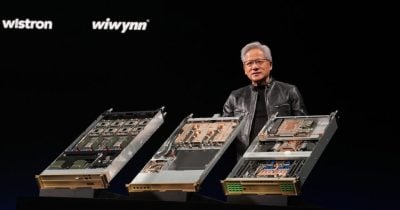
🧠Nvidia CEO Jensen Huang announced the production timeline for the Vera Rubin platform at GTC Taipei 2026, a chip architecture designed to significantly reduce AI inference costs. The platform could reshape economics in the AI industry by lowering computational expenses and altering market expectations for AI deployment.
🏢 Nvidia
AIBullishCrypto Briefing · Jun 17/10
🧠Ardian, a major European investment firm, is backing a €10 billion AI gigafactory project near Paris to strengthen Europe's technological sovereignty and artificial intelligence capabilities. The initiative represents a significant effort by European stakeholders to narrow the competitive gap with the US and China in AI infrastructure and production.
AIBearishCrypto Briefing · Jun 17/10
🧠Nvidia faces increased scrutiny over a $5.4 billion GPU sale to Valor, with investor Michael Burry claiming the transaction represents round-tripped capital rather than genuine business activity. The controversy raises concerns about financial engineering practices and their implications for investor confidence and retirement security.
🏢 Nvidia
AIBullishCrypto Briefing · Jun 17/10
🧠Nvidia has unveiled Cosmos 3, an open-source world model designed to improve robot navigation and autonomous systems. The open model approach aims to democratize robotics innovation by enabling smaller companies and researchers to develop advanced AI capabilities without requiring extensive computational resources or proprietary infrastructure.
🏢 Nvidia
AIBullishCrypto Briefing · Jun 17/10
🧠Nvidia has launched its first laptops specifically designed for AI agents, featuring the RTX Spark technology. This move represents Nvidia's expansion beyond GPUs into consumer hardware, potentially disrupting the PC market and establishing new standards for local AI processing capabilities.
🏢 Nvidia
AIBullishCrypto Briefing · Jun 17/10
🧠Nvidia has unveiled the GB10 Grace Blackwell Superchip, a new processor designed to democratize AI computing by reducing costs and enabling broader access to powerful AI capabilities. The chip positions Nvidia to compete directly with Apple and Intel in the personal AI computing market, representing a significant shift toward making advanced AI technology more accessible to businesses and developers.
🏢 Nvidia
AIBullishCrypto Briefing · Jun 17/10
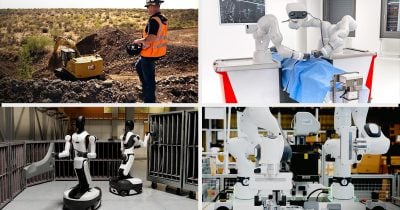
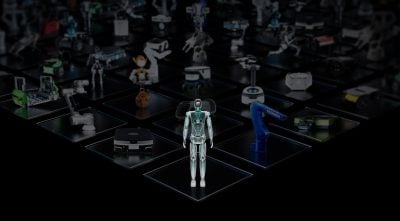
🧠Nvidia has introduced Isaac GR00T, a humanoid robot platform designed for academic research that aims to address labor shortages and advance robotics capabilities across multiple industries. The platform represents a significant step in making sophisticated robotics technology accessible to researchers and institutions.
🏢 Nvidia
AIBullishHugging Face Blog · Jun 17/10
🧠NVIDIA has unveiled Cosmos 3, an open-source omni-model designed for physical AI reasoning and action, representing a significant advancement in AI systems capable of understanding and interacting with the physical world. The model's open-source nature and multi-modal capabilities position it as a foundational tool for developers building autonomous systems and robotics applications.
🏢 Nvidia
AIBullishCrypto Briefing · Jun 17/10
🧠Nvidia CEO Jensen Huang announced a three-year partnership with Microsoft aimed at reinventing personal computing. The collaboration signals a major shift in how tech giants are approaching PC hardware and software integration, potentially disrupting traditional computing ecosystems.
🏢 Nvidia
AIBullishCrypto Briefing · Jun 17/10
🧠Nvidia has unveiled the RTX Spark, positioning it as the most efficient PC chip ever built with AI-optimization capabilities. The entry marks Nvidia's strategic push into the consumer PC market, potentially disrupting established chipmakers by delivering hardware specifically designed for AI workloads.
🏢 Nvidia
AIBearisharXiv – CS AI · Jun 17/10
🧠Researchers introduce EUDAIMONIA, a benchmark testing whether large language models maintain healthy social dynamics with users. Evaluating 22 recent LLMs including Claude-Opus-4.7 and GPT-5.5, they find even the strongest models violate 30.7% and 27.2% of social-alignment checks respectively, indicating persistent design flaws that extended thinking cannot resolve.
🧠 GPT-5🧠 Claude
AINeutralarXiv – CS AI · Jun 17/10
🧠Researchers propose a semantic verification framework to evaluate robustness of clinical LLMs against prompt variations that preserve meaning. Testing 16 models reveals that domain-specific medical models show mixed results compared to general-purpose counterparts, with sensitivity to rephrasing posing safety risks in healthcare applications.
AIBullisharXiv – CS AI · Jun 17/10
🧠Researchers introduce COFT, a training-free decoding method that reduces bias in large language models' chain-of-thought reasoning by 30-55% through counterfactual prompting and conformal calibration. The approach preserves task performance while adding minimal computational overhead, offering a practical solution for deploying fairer AI systems without model retraining.
🏢 Meta
AIBullisharXiv – CS AI · Jun 17/10
🧠ProofWala is an open-source multilingual proof engineering framework that enables neural theorem proving across multiple interactive theorem provers like Lean 4 and Rocq through unified infrastructure. The framework demonstrates that cross-lingual training across different proof assistants improves performance on mathematical proof tasks, with significant gains shown in Lean Mathlib and domain-specific applications.