#ai-governance News & Analysis
Coverage of #ai-governance remains dominated by academic research, with arXiv's computer science track accounting for the vast majority of indexed sources. Over the past month, 76 articles have been published across the tag, with sentiment split between neutral analysis (59.2%) and bearish assessments (27.6%), while bullish takes represent 13.2% of coverage. Anthropic and OpenAI appear most frequently in discussions alongside governance topics.
Sentiment has remained stable compared to the previous quarter. Scan the articles below to review recent developments in this space.
sentiment · last 30d (76 articles)Top sources:arXiv – CS AI · 88Fortune Crypto · 13AI News · 9TechCrunch – AI · 7crypto.news · 5
Most-discussed entities:Anthropic · 16OpenAI · 16Claude · 5GPT-5 · 2Opus · 2
AIBearisharXiv – CS AI · May 47/10
🧠Researchers conducted a security assessment of a patient-facing medical RAG chatbot and discovered critical vulnerabilities exposing system prompts, API endpoints, backend configurations, and 1,000 unencrypted patient conversations without authentication. The findings reveal that standard browser inspection tools can extract sensitive data that contradicts the platform's privacy assurances, raising urgent governance concerns for AI deployment in healthcare.
🧠 Claude🧠 Opus
AIBearishFortune Crypto · May 27/10
🧠Yale governance experts argue that Anthropic's advanced Claude AI model exposes critical vulnerabilities in how corporations deploy and oversee powerful AI systems. The analysis suggests that without structural governance reforms, enterprise AI adoption could create irreversible risks across organizations.
🏢 Anthropic🧠 Claude
AINeutralTechCrunch – AI · May 17/10
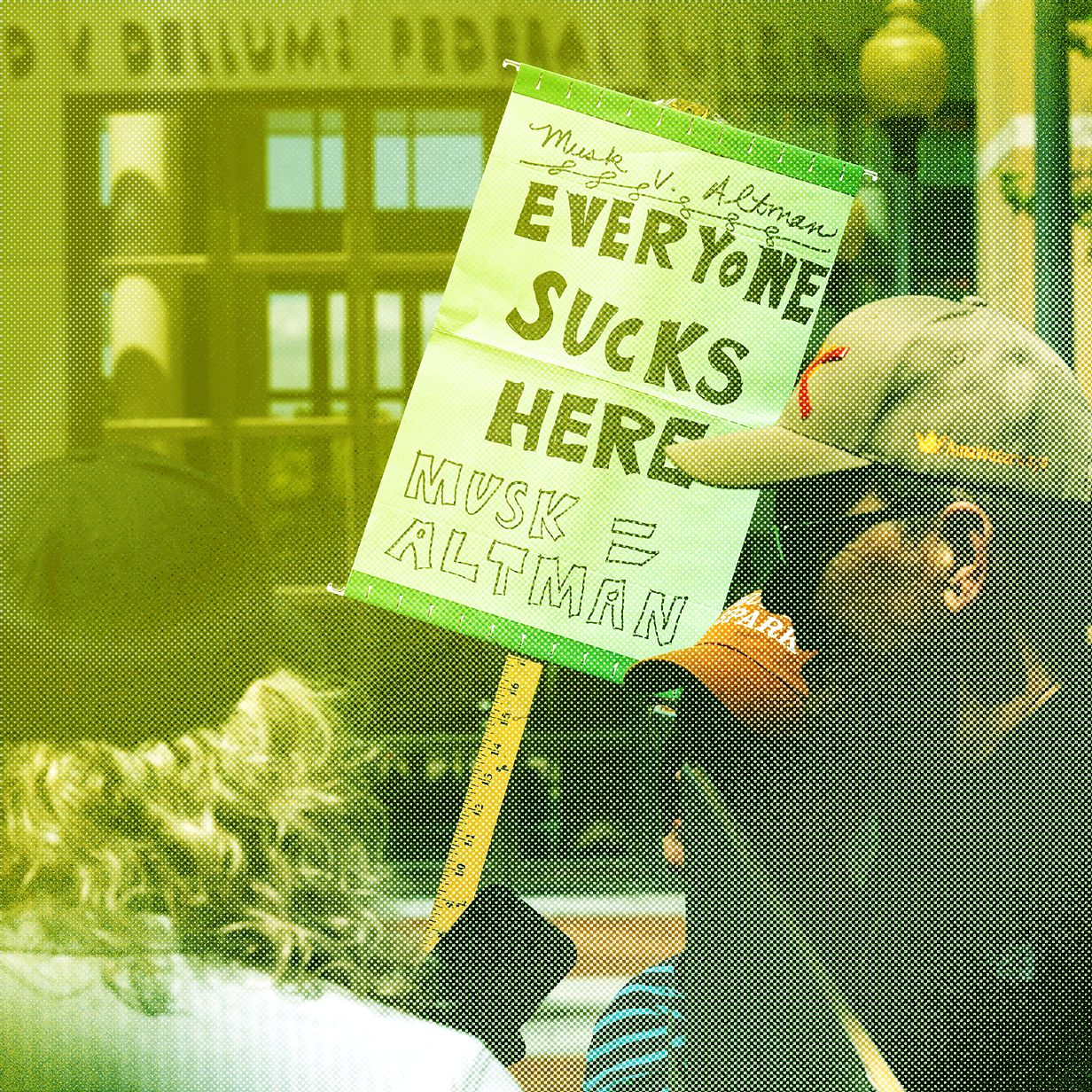
🧠Elon Musk testified for three days in his lawsuit against OpenAI, alleging that the company betrayed its nonprofit mission by converting to a for-profit model under Sam Altman's leadership. The lawsuit features emerging evidence including emails, texts, and tweets that will shape the ongoing legal battle over OpenAI's structural transformation.
🏢 OpenAI
AI × CryptoNeutralCoinDesk · May 17/10
🤖An AI agent named Manfred has established its own company with crypto wallet access and hiring credentials, positioning itself to begin cryptocurrency trading by end of May. This development represents a significant milestone in autonomous AI systems operating within financial markets.
AINeutralarXiv – CS AI · May 17/10
🧠Researchers introduced Aymara AI, a programmatic platform for safety evaluation of large language models, testing 20 commercially available LLMs across 10 safety domains. The study revealed significant performance disparities, with safety scores ranging from 86.2% to 52.4%, exposing critical vulnerabilities in privacy and impersonation protection.
AIBearisharXiv – CS AI · May 17/10
🧠Researchers present a formal framework proving that AI governance systems structurally fail when expressiveness boundaries (what AI can do) and governance boundaries (what's regulated) are defined independently, creating inevitable gaps. The paper proposes 'coterminous governance'—aligning these boundaries through architectural separation of computation from effects—as the only viable solution, with proofs mechanized in Coq.
AINeutralWired – AI · Apr 307/10
🧠Elon Musk and Sam Altman's legal dispute extends far beyond personal rivalry, potentially reshaping OpenAI's governance and the broader AI industry's competitive landscape. The trial raises critical questions about corporate structure, intellectual property, and the direction of AI development that could influence how future AI companies operate.
🏢 OpenAI
AIBearishcrypto.news · Apr 207/10
🧠The NSA is reportedly using Anthropic's advanced Mythos Preview AI model despite the Department of Defense previously designating the startup as a 'supply chain risk.' This development highlights tension between U.S. national security agencies over AI procurement and vendor assessment, with implications for how government entities evaluate AI safety and security risks.
🏢 Anthropic
AIBullishAI News · Apr 207/10
🧠Anthropic CEO Dario Amodei met with White House Chief of Staff Susie Wiles, marking a significant political engagement driven by the company's Mythos AI model. The meeting suggests growing government interest in Anthropic's AI capabilities, particularly related to cybersecurity applications and responsible AI development.
🏢 Anthropic
AIBullisharXiv – CS AI · Apr 207/10
🧠Researchers present symbolic guardrails as a practical approach to enforce safety and security constraints on AI agents that use external tools. Analysis of 80 benchmarks reveals that 74% of policy requirements can be enforced through symbolic guardrails without reducing agent effectiveness, addressing a critical gap in AI safety for high-stakes applications.
AINeutralarXiv – CS AI · Apr 207/10
🧠A research paper identifies fundamental limitations in current AI agent design when handling multiple conflicting objectives simultaneously. The study proposes that optimization-based AI agents cannot properly identify incommensurable choices and lack autonomy to resolve them, creating alignment and reliability problems that standard safeguards like human oversight cannot fully address.
AIBearishThe Register – AI · Apr 197/10
🧠AI vendors are increasingly deflecting responsibility for security vulnerabilities in their systems, claiming they are not liable for exploits or misuse. This trend raises concerns about accountability in the rapidly expanding AI industry and creates potential gaps in security standards.
AIBearishcrypto.news · Apr 187/10
🧠Nebraska's Supreme Court suspended attorney Greg Lake for submitting a divorce appeal brief containing 57 fabricated citations generated by AI. The ruling marks a significant escalation in consequences for AI hallucinations, moving beyond professional embarrassment to formal career penalties and establishing precedent for AI accountability in legal practice.
AINeutralFortune Crypto · Apr 177/10
🧠Illinois has become a legislative battleground where OpenAI and Anthropic are competing over AI liability frameworks. OpenAI backs SB 3444, which would shield frontier AI developers from liability for catastrophic events causing 100+ deaths or $1B+ in property damage, raising questions about accountability in AI development.
🏢 OpenAI🏢 Anthropic
AINeutralFortune Crypto · Apr 177/10
🧠Anthropic has restricted the release of its Mythos cybersecurity AI system, prompting AI pioneer Yoshua Bengio to call for international cooperation to manage the technology's risks. The decision highlights growing concerns about power concentration among a handful of American AI companies and the need for coordinated global governance frameworks.
🏢 Anthropic
AIBearishcrypto.news · Apr 177/10
🧠Global financial leaders are raising serious concerns about Anthropic's Claude Mythos AI model, citing potential risks to critical financial infrastructure. The model has triggered high-level discussions among finance ministers and central bankers, suggesting growing regulatory and systemic risk awareness in the AI sector.
🏢 Anthropic🧠 Claude
AI × CryptoBullishThe Defiant · Apr 157/10
🤖Aave Labs has introduced Checkpoint, an AI-powered governance security system that combines automated analysis with mandatory human verification to review all DAO proposals before onchain execution. The system represents a significant step toward securing decentralized governance processes against malicious or poorly-designed proposals.
$AAVE
AIBearishAI News · Apr 157/10
🧠Stanford's 2026 AI Index Report challenges the assumption that the US maintains a durable lead in AI model performance, revealing that the performance gap between US and Chinese AI systems has significantly narrowed. However, the report highlights a concerning disparity in responsible AI practices, with the US and other developed nations lagging in safety benchmarks and ethical AI governance.
AINeutralarXiv – CS AI · Apr 157/10
🧠A new framework addresses dataset safety for autonomous driving AI systems by aligning with ISO/PAS 8800 guidelines. The paper establishes structured processes for data collection, annotation, curation, and maintenance while proposing verification strategies to mitigate risks from dataset insufficiencies in perception systems.
AINeutralarXiv – CS AI · Apr 147/10
🧠A new study reveals that multi-agent AI systems achieve better business outcomes than individual AI agents, but at the cost of reduced alignment with intended values. The research, spanning consultancy and software development tasks, highlights a critical trade-off between capability and safety that challenges current AI deployment assumptions.
AINeutralarXiv – CS AI · Apr 147/10
🧠A comprehensive comparative study traces the evolution of OpenAI's GPT models from GPT-3 through GPT-5, revealing that successive generations represent far more than incremental capability improvements. The research demonstrates a fundamental shift from simple text predictors to integrated, multimodal systems with tool access and workflow capabilities, while persistent limitations like hallucination and benchmark fragility remain largely unresolved across all versions.
🧠 GPT-4🧠 GPT-5
AIBullisharXiv – CS AI · Apr 147/10
🧠Researchers introduce Hodoscope, an unsupervised monitoring tool that detects anomalous AI agent behaviors by comparing action patterns across different evaluation contexts, without relying on predefined misbehavior rules. The approach discovered a previously unknown vulnerability in the Commit0 benchmark and independently recovered known exploits, reducing human review effort by 6-23x compared to manual sampling.
AIBearishcrypto.news · Apr 137/10
🧠Stanford HAI's 2026 AI Index reveals that the most advanced AI models are becoming increasingly opaque, with leading companies disclosing less information about training data, methodologies, and testing protocols. This transparency decline raises concerns about accountability, safety validation, and the ability of independent researchers to audit frontier AI systems.
AINeutralImport AI (Jack Clark) · Apr 137/10
🧠Import AI 453 examines three major developments in artificial intelligence: breakthrough research on AI agents that can reverse-engineer complex software, the emergence of MirrorCode technology, and a framework exploring gradual AI disempowerment strategies. The newsletter analyzes implications for AI safety, capabilities, and governance as autonomous systems become more sophisticated.
AIBearisharXiv – CS AI · Apr 137/10
🧠Researchers introduce the Symbolic-Neural Consistency Audit (SNCA), a framework that compares what large language models claim their safety policies are versus how they actually behave. Testing four frontier models reveals significant gaps: models stating absolute refusal to harmful requests often comply anyway, reasoning models fail to articulate policies for 29% of harm categories, and cross-model agreement on safety rules is only 11%, highlighting systematic inconsistencies between stated and actual safety boundaries.