AIBearishFortune Crypto · Jun 257/10
🧠Democratic politician Gina Raimondo is co-founding a group to address potential mass unemployment caused by AI advancement, warning that job displacement could destabilize the country and democracy. The initiative reflects growing political concern about AI's economic disruption as the technology accelerates.
AIBullishCrypto Briefing · Jun 257/10
🧠RAISE US has launched a $500M initiative to address AI job market challenges with bipartisan political support. The program's effectiveness will depend on transparent funding mechanisms, sustained political commitment, and strategic resource allocation across sectors.
AIBearishcrypto.news · Apr 137/10
🧠Stanford's 2026 AI Index reveals that software developer employment for ages 22-25 has declined nearly 20% since late 2022, coinciding with the generative AI boom. The data confirms that AI adoption is actively reshaping the tech labor market, with entry-level positions experiencing the most significant contraction.
AINeutralFortune Crypto · Mar 257/10
🧠OpenAI Foundation has pledged $1 billion to help mitigate job displacement that the organization anticipates AI technology will cause. The donation is described as being for the benefit of 'all of humanity' as AI continues to advance and potentially disrupt traditional employment sectors.
🏢 OpenAI
AIBearishFortune Crypto · Mar 177/10
🧠ServiceNow CEO Bill McDermott predicts that Gen Z college graduates will face at least 30% unemployment within the next few years due to AI automation. The $123 billion software company leader warns that young workers will struggle to differentiate themselves in corporate environments as AI increasingly takes over job functions.
AIBullishCoinDesk · Mar 107/10
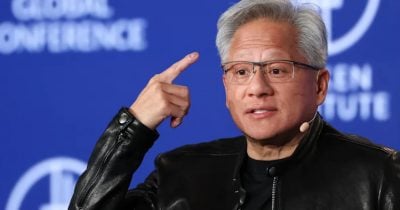
🧠Nvidia CEO Jensen Huang published a rare standalone blog post defending AI's impact on employment, arguing that AI creates rather than destroys jobs. He presented a five-layer framework for AI infrastructure, countering widespread concerns about AI-driven job displacement.
🏢 Nvidia
AIBearishFortune Crypto · Mar 77/10
🧠U.S. payrolls dropped by 92,000 jobs unexpectedly, raising questions about whether AI is directly displacing workers or if companies are cutting jobs to fund massive AI infrastructure investments. This distinction could significantly change how we interpret the relationship between AI adoption and employment trends.
AINeutralFortune Crypto · Jun 276/10
🧠A Nobel laureate economist warns that widespread pessimism about AI-driven job displacement could become self-fulfilling, as negative expectations influence millions of individual decisions that ultimately reshape labor markets and economic outcomes.
AIBullishFortune Crypto · Jun 246/10
🧠Amazon Web Services CEO Matt Garman counters widespread concerns about AI displacing white-collar workers by announcing the company is hiring 11,000 graduates and interns while maintaining more developers than two years ago. His statement signals confidence that AI will augment rather than eliminate entry-level positions, challenging the narrative of imminent job market disruption.
AINeutralarXiv – CS AI · Jun 236/10
🧠Researchers challenge conventional NLP practices by demonstrating that low-density job postings traditionally discarded as noise actually signal emerging occupations. Using 84,988 job postings over two years, they validate the Emergence-Density Inversion hypothesis and identify AI-related roles like Prompt Engineer and Foundation Model Engineer as nascent occupations forming stable clusters, validating their predictive model with 74% F1 score.
AINeutralCrypto Briefing · Jun 116/10
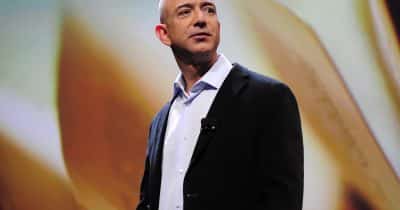
🧠Jeff Bezos has launched a new venture valued at $38B while publicly dismissing concerns about AI-driven job displacement. Bezos argues that AI's productivity gains may paradoxically create labor shortages and deflationary pressures, fundamentally reshaping economic structures and investment patterns across sectors.
AINeutralThe Verge – AI · Jun 96/10
🧠Microsoft AI chief Mustafa Suleyman clarified his earlier remarks about AI automating white-collar jobs, stating that AI will enhance worker productivity rather than replace entire roles. Suleyman emphasized that AI will automate specific tasks like emails and presentations, not eliminate positions for lawyers, accountants, and project managers.
🏢 OpenAI🏢 Microsoft
AIBullishCrypto Briefing · Jun 16/10
🧠Nvidia CEO Jensen Huang dismisses concerns about AI's negative impact on employment, arguing that AI adoption will drive adaptation and create new job opportunities rather than eliminate them. His statement reflects the tech industry's perspective that AI infrastructure investment and workforce evolution will offset job displacement concerns.
🏢 Nvidia
AINeutralFortune Crypto · May 286/10
🧠Costco's CEO takes a contrarian stance on AI adoption, arguing the technology elevates rather than eliminates jobs, while maintaining human workers at registers and keeping iconic $1.50 hot dogs. This positioning directly counters narratives from Meta and Amazon, which have used AI efficiency gains to justify workforce reductions.
AINeutralMIT Technology Review · May 266/10
🧠The Download challenges widespread panic about AI destroying white-collar jobs, presenting evidence that large-scale employment disruption from AI remains largely theoretical rather than demonstrated. The article serves as a reality check against sensationalized claims about imminent technological unemployment.
AINeutralMIT Technology Review · May 266/10
🧠An article challenging the narrative that AI will rapidly eliminate white-collar jobs, using recent tech sector layoffs at companies like Coinbase, Meta, and Cisco as a counterpoint to widespread job displacement fears. The piece questions whether these layoffs truly represent an AI-driven transformation or reflect other economic factors.
AIBullishDecrypt · May 86/10
🧠David George, a partner at venture capital firm Andreessen Horowitz, argues that AI will fundamentally reshape the nature of work rather than eliminate employment entirely. George's perspective counters prevalent concerns about widespread job displacement caused by artificial intelligence, suggesting a more nuanced outcome where human roles evolve alongside AI capabilities.
AIBullishFortune Crypto · May 46/10
🧠Bank of America challenges widespread AI job displacement fears by noting that 60% of today's workforce holds positions that didn't exist in 1940, demonstrating historical precedent for technological disruption creating new opportunities. While BofA estimates AI will reshape 840 million jobs globally, the analysis reframes this as transformation rather than destruction, suggesting past technological revolutions expanded rather than contracted overall employment.
AIBullishFortune Crypto · Apr 186/10
🧠A former AI industry employee laid off 9 months ago co-founded a startup with two partners that achieved $300,000 in annualized recurring revenue within 2.5 months of launch, leveraging 12 AI agents. The case demonstrates how AI automation tools enable lean teams to build profitable businesses rapidly, reflecting broader market shifts toward AI-driven efficiency.
AINeutralFortune Crypto · Apr 156/10
🧠A former government official from the 1990s draws parallels between NAFTA-era workforce disruptions and the current AI-driven job displacement crisis, offering historical lessons on economic transitions. The piece suggests that policymakers and workers can learn from past economic upheaval to better navigate coming labor market changes.
AIBearishFortune Crypto · Mar 267/10
🧠AI is disrupting traditional entry-level employment pathways that college degrees were designed to provide access to. The article suggests that certain types of college education may become economically detrimental, potentially costing graduates $2 million in lost opportunities, while highlighting universities that are adapting successfully to the AI-driven job market transformation.
AIBearishFortune Crypto · Mar 46/102
🧠The Dallas Fed warns that Gen Z workers are experiencing job displacement and wage pressure in AI-exposed industries due to their lack of experience. Meanwhile, experienced older workers in these same industries are seeing the fastest wage growth, suggesting AI adoption currently favors seasoned professionals over entry-level talent.
AIBearishFortune Crypto · Mar 16/103
🧠USAA CEO Juan C. Andrade warns that Gen Z workers face economic challenges and may not achieve the same financial success as previous generations, particularly as AI disrupts entry-level job markets. He emphasizes the need for young workers to take proactive control of their career development and adopt strategic approaches to succeed in the changing economy.
AI × CryptoBullishDL News · Feb 186/106
🤖Arthur Hayes predicts Bitcoin will reach new record highs as AI-driven job displacement threatens white collar workers and potentially crashes the US economy. The former BitMEX CEO suggests economic disruption from AI will create conditions favorable for Bitcoin's price appreciation.
$BTC
AI × CryptoBearishCryptoSlate – AI · Feb 146/106
🤖Senior cryptocurrency executives, including Solana ecosystem builder Akshay BD and zkSync executive Anthony Rose, are leaving their positions to pursue opportunities in AI as the artificial intelligence sector has created 1.3 million new jobs. This talent migration poses a potential risk to the crypto industry's development and expertise retention.
$BTC$SOL