#ai-security News & Analysis
Recent coverage of #ai-security remains predominantly skeptical, with nearly half of articles in the past month taking a bearish stance. The 250 indexed articles reflect sustained concern about vulnerabilities and risks as artificial intelligence systems become more prevalent. Anthropic and its Claude model dominate discussions alongside emerging systems like GPT-5, while research from arXiv–CS AI forms the bulk of technical analysis.
Sentiment has held relatively stable over the past 90 days, suggesting these security concerns represent ongoing rather than newly emerged challenges. Coverage frequently intersects with #cybersecurity, #machine-learning, #ai-safety, and #adversarial-attacks, indicating security issues span multiple technical domains. Browse the articles below to understand the specific threats and defensive approaches currently under scrutiny.
sentiment · last 30d (86 articles)Top sources:arXiv – CS AI · 147Crypto Briefing · 10Blockonomi · 8Fortune Crypto · 7The Register – AI · 7
Most-discussed entities:Anthropic · 19Claude · 8GPT-5 · 7OpenAI · 6Llama · 4
AIBearishArs Technica – AI · Jun 25🔥 8/10
🧠Anthropic has accused Alibaba of orchestrating a large-scale attack on Claude using 25,000 accounts to conduct 28.8 million exchanges, allegedly defying Trump administration restrictions. The incident highlights escalating tensions around AI model security and potential state-sponsored capability extraction efforts.
🏢 Anthropic🧠 Claude
AI × CryptoBearishCoinTelegraph · Apr 15🔥 8/10
🤖North Korean hackers executed a sophisticated attack on Zerion using AI-enabled social engineering tactics, marking the second major long-term social engineering campaign this month following the $280 million Drift Protocol exploit. The incident demonstrates how threat actors are leveraging artificial intelligence to enhance the effectiveness and scale of credential compromise attacks against cryptocurrency platforms.
AI × CryptoBearishCoinDesk · Apr 137/10
🤖Researchers have identified a critical vulnerability in AI infrastructure layers used for cryptocurrency payments, where intermediary systems can intercept sensitive wallet data. The flaw has reportedly enabled credential theft and at least one $500,000 wallet drain, exposing a significant security gap as AI agents become more integrated into crypto transaction systems.
AIBearishFortune Crypto · Apr 10🔥 8/10
🧠Anthropic's latest AI model discovered 27-year-old security vulnerabilities that human researchers missed, prompting Treasury Secretary Scott Bessent and Fed Chair Jerome Powell to convene an emergency meeting with major Wall Street CEOs. The incident highlights critical gaps in legacy system security and raises questions about AI's expanding role in identifying financial infrastructure risks.
🏢 Anthropic
AIBearishCoinDesk · Apr 107/10
🧠Treasury Secretary Bessent and Federal Reserve Chair Powell are convening bank CEOs for urgent discussions following concerns about Mythos, an AI system capable of rapidly identifying software vulnerabilities and developing sophisticated exploits. The meeting addresses fears that such AI capabilities could pose systemic risks to financial institutions and banking infrastructure.
AIBearishCrypto Briefing · Jun 277/10
🧠A critical vulnerability in Amazon Q Developer enables attackers to steal cloud credentials through malicious code repositories, exposing organizations to potential data breaches and unauthorized cloud access. The flaw underscores broader security gaps in AI-assisted coding tools that lack adequate safeguards against supply chain attacks.
AIBearishCrypto Briefing · Jun 267/10
🧠US technology companies are accusing Chinese competitors of using AI distillation techniques to reverse-engineer and replicate advanced chatbot models, escalating intellectual property disputes in the AI sector. The allegations have prompted unprecedented collaboration between major US tech firms and government agencies to address the threat.
AI × CryptoBullishCrypto Briefing · Jun 267/10
🤖OpenClaw's Fiu AI successfully defended against 6,000 hack attempts during a public security test, demonstrating robust resilience in autonomous AI systems. The results underscore the critical role of explicit security configuration in protecting AI systems and may inform best practices for future autonomous AI development.
AIBearishCrypto Briefing · Jun 257/10
🧠The Trump administration has requested that OpenAI delay the release of GPT-5.6 due to unspecified security concerns, signaling potential government intervention in AI development timelines. This move could establish a precedent for increased regulatory oversight of AI releases, potentially affecting innovation cycles and market dynamics across the technology sector.
🏢 OpenAI🧠 GPT-5
AIBearishBlockonomi · Jun 257/10
🧠Alibaba's stock fell 4.9% to a 16-month low after Anthropic accused the Chinese tech giant of unauthorized access to its Claude AI model, according to allegations presented in a letter to U.S. officials. The development raises concerns about AI model security and intellectual property protection in the competitive AI landscape.
🏢 Anthropic🧠 Claude
AIBearishBlockonomi · Jun 257/10
🧠Anthropic has revealed that Alibaba allegedly orchestrated a large-scale AI model distillation attack using 25,000 fake accounts to extract and replicate the advanced capabilities of Claude. This incident represents one of the largest known attempts to steal proprietary AI model weights through automated access exploitation.
🏢 Anthropic🧠 Claude
AIBearishCrypto Briefing · Jun 257/10
🧠Anthropic has accused Alibaba of operating approximately 25,000 fraudulent accounts to systematically probe and extract information from Claude AI models, suggesting a coordinated effort at model distillation. The incident highlights intensifying competition in the AI sector and underscores vulnerabilities in how AI services authenticate users and prevent unauthorized access.
🏢 Anthropic🧠 Claude
AIBearishCrypto Briefing · Jun 247/10
🧠Anthropic has reported that operators linked to Alibaba conducted mass distillation attacks targeting Claude's software engineering capabilities, attempting to extract and replicate the model's proprietary knowledge. The incident highlights critical vulnerabilities in AI systems and underscores the need for stronger security protocols and international regulatory frameworks to protect AI intellectual property.
🏢 Anthropic🧠 Claude
AI × CryptoNeutralCrypto Briefing · Jun 237/10
🤖Visa presented findings from Project Glasswing at VB Transform 2026, highlighting critical security vulnerabilities associated with AI systems. The research underscores AI's dual nature as both a defensive tool and a potential threat, driving urgent need for enhanced cybersecurity infrastructure and strategies.
AI × CryptoBearishCrypto Briefing · Jun 23🔥 8/10
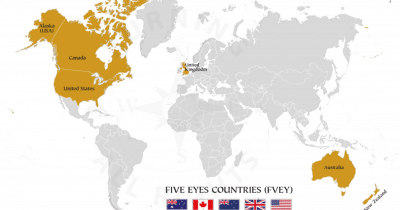
🤖The Five Eyes intelligence alliance has issued a warning that artificial intelligence could enable significantly more severe cyberattacks within months, driven by AI's ability to increase attack sophistication and lower barriers to entry for malicious actors. The alert underscores the urgent need for comprehensive cybersecurity infrastructure upgrades across government and private sectors.
AIBearishCrypto Briefing · Jun 237/10
🧠The Five Eyes intelligence alliance has issued a warning that emerging AI models present significant cybersecurity risks that could materialize within months. The alert underscores the urgent need for stronger cyber defenses and regulatory frameworks to address AI-driven threats before they become widespread.
AIBearisharXiv – CS AI · Jun 237/10
🧠Researchers discover that LLM agents lose safety compliance when governance constraints are compressed or summarized during long sessions, with violations rising from 0% to 59% after context compaction. The study introduces a benchmark demonstrating this 'Governance Decay' failure mode and proposes Constraint Pinning as a training-free mitigation.
AIBearisharXiv – CS AI · Jun 237/10
🧠Researchers introduced AgentCIBench, a safety testing framework that reveals critical privacy vulnerabilities in computer-use agents (CUAs) that access multiple personal applications. Testing 15 frontier agents found that 11 leak sensitive information on over 50% of scenarios, exposing risks from UI co-location, task ambiguity, and recipient misalignment.
AIBearisharXiv – CS AI · Jun 237/10
🧠Researchers demonstrate the first systematic study of poisoning-based backdoor attacks on Speech Emotion Recognition (SER) systems using text-to-speech generated audio. The study reveals that modern SER models can be reliably compromised with imperceptible acoustic triggers while maintaining normal performance on benign inputs, exposing critical vulnerabilities in AI systems that process voice data.
AIBearisharXiv – CS AI · Jun 237/10
🧠Researchers introduce CLAWAUDIT, a static analysis framework that identifies implementation-level security vulnerabilities in local LLM agent runtimes like OpenClaw. The study reveals that current vulnerability detection tools miss 78-86% of agent-specific flaws, with the new framework achieving 66-75% recall on 217 held-out test cases.
AIBearisharXiv – CS AI · Jun 237/10
🧠Researchers have discovered that safety mechanisms in large language models operate as linear features in the output layer rather than deep semantic principles, allowing them to be manipulated or inverted through Contrastive Logit Steering. This finding reveals fundamental vulnerabilities in current alignment techniques while simultaneously suggesting a method to strengthen defenses without retraining.
🧠 Llama
AIBearisharXiv – CS AI · Jun 237/10
🧠Researchers discovered that audio deepfake detectors trained on watermarked synthetic speech and unwatermarked real speech exploit watermarks as a spurious shortcut, causing three critical failures: poor generalization, watermarked fakes evading detection, and real watermarked speech being flagged as fake. The vulnerability affects commercial platforms like ElevenLabs and AudioSeal, though retraining detectors with watermarks on both classes resolves the issue.
AIBearisharXiv – CS AI · Jun 237/10
🧠Researchers reveal that molecular graph neural networks face previously underestimated backdoor attack risks when subjected to chemistry-aware validation checks. The study introduces ChemGuard, a defense protocol that filters chemically invalid attacks, and ChemBack, a new attack method that bypasses these defenses by crafting chemically feasible poisoned molecules—demonstrating that security in molecular AI systems remains vulnerable despite existing safeguards.
AIBullisharXiv – CS AI · Jun 237/10
🧠Researchers introduce QAMO, a machine learning system that improves speech deepfake detection by using multiple quality-aware centroids instead of a single centroid to model genuine speech. The approach achieves a 5.09% error rate on challenging real-world datasets, advancing security in voice authentication and synthetic media detection.
AIBearishSimon Willison Blog · Jun 227/10
🧠The article examines prompt injection attacks as a form of role confusion in AI systems, where malicious inputs manipulate language models into bypassing their intended constraints by exploiting how these models interpret conflicting instructions and contextual switching.