CryptoBearishU.Today · Apr 157/10
⛓️Cardano founder Charles Hoskinson has publicly questioned Bitcoin's post-quantum cryptography defense strategy, reigniting debate about whether the leading cryptocurrency is adequately preparing for threats posed by quantum computing advancement. This clash between two major crypto figures highlights fundamental disagreements about timeline urgency and technical implementation approaches.
$BTC$ADA
AI × CryptoBearishBitcoinist · Apr 147/10
🤖UC researchers discovered that autonomous AI agents operating within crypto infrastructure can be exploited to drain wallets, with a proof-of-concept attack successfully siphoning funds from a test wallet connected to third-party AI routers. While the immediate financial loss was minimal, the vulnerability exposes a critical security gap in AI-assisted cryptocurrency systems as these agents become more prevalent.
$ETH
CryptoBearishCoinTelegraph · Apr 137/10
⛓️A musician lost approximately $420,000 worth of Bitcoin after downloading a counterfeit Ledger hardware wallet application. Blockchain analyst ZachXBT confirmed the stolen 5.9 BTC was transferred to KuCoin deposit addresses, highlighting the ongoing security risks users face from sophisticated phishing schemes targeting cryptocurrency holders.
$BTC
CryptoNeutralBitcoinist · Apr 107/10
⛓️Operation Atlantic represents a coordinated law enforcement and crypto industry initiative to dismantle fraud schemes and approval-phishing attacks in near real-time. This rare collaborative effort aims to block scammers before stolen funds move irreversibly on-chain, marking a significant shift in how authorities tackle crypto crime.
AI × CryptoBullisharXiv – CS AI · Apr 77/10
🤖Researchers introduce LOCARD, the first agentic framework for blockchain forensics that uses AI agents to conduct dynamic investigations rather than static analysis. The framework successfully traced complex cross-chain transactions in a dataset of over 151k real-world forensic records, demonstrating its effectiveness on laundering patterns from the Bybit hack.
CryptoBearishCrypto Briefing · Apr 77/10
⛓️Alex Pruden warns that quantum computing advancements pose a significant threat to elliptic curve cryptography used in blockchain systems. Utility-scale quantum systems could emerge by the end of the decade, creating an urgent need for post-quantum security solutions to protect cryptocurrency infrastructure.
AI × CryptoBullishcrypto.news · Apr 67/10
🤖Algorand's ALGO token surged 50% this month from $0.079 to $0.126 after Google's Quantum AI team referenced the blockchain 32 times in a research paper about quantum threats to cryptocurrency. The citations positioned Algorand as a potential security model for quantum-resistant blockchain infrastructure.
CryptoBullishDecrypt – AI · Apr 67/10
⛓️Circle's Arc blockchain network is developing quantum resistance capabilities through a multi-step roadmap to address emerging quantum computing threats. This development comes as major cryptocurrencies like Bitcoin and Ethereum face potential vulnerabilities to quantum attacks.
$BTC$ETH
AI × CryptoBearishCoinDesk · Apr 57/10
🤖Ledger CTO Charles Guillemet warns that artificial intelligence is exacerbating cryptocurrency security vulnerabilities by making hacks more affordable and efficient to execute. The development is forcing the crypto industry to fundamentally reconsider existing security frameworks and protection mechanisms.
CryptoBearishBlockonomi · Apr 57/10
⛓️Google research suggests quantum computers could potentially crack Bitcoin's encryption in just 9 minutes, putting approximately 6.5 million BTC at risk. Cryptocurrency developers are actively working on quantum-resistant solutions to protect against this emerging technological threat.
$BTC
CryptoNeutralCoinDesk · Apr 57/10
⛓️Bitcoin developers are actively working on quantum-proofing initiatives for the world's largest blockchain network as quantum computing threats evolve from theoretical to practical concerns. The $1.3 trillion Bitcoin network faces potential security vulnerabilities that require proactive cryptographic upgrades to maintain its integrity against future quantum attacks.
$BTC
CryptoNeutralcrypto.news · Mar 267/10
⛓️The article discusses how Fully Homomorphic Encryption (FHE) could protect cryptocurrency networks from quantum computing threats that could potentially cripple Bitcoin and other blockchain systems. It explores quantum-resistant encryption solutions as a critical preparation for the post-quantum era when current cryptographic methods may become vulnerable.
CryptoBearishCoinTelegraph · Mar 267/10
⛓️Crypto entrepreneur Nic Carter suggests Bitcoin developers are lagging behind Ethereum in implementing quantum-resistance measures. This technological gap could potentially favor Ethereum as quantum computing threats become more realistic concerns for blockchain security.
$BTC$ETH
AI × CryptoBearishDecrypt · Mar 257/10
🤖Google has set a 2029 deadline to implement quantum-resistant encryption across its systems in response to the growing quantum computing threat. This development raises concerns about Bitcoin's vulnerability to quantum attacks, as the cryptocurrency may not have adequate time to implement similar protections.
$BTC
AI × CryptoBullisharXiv – CS AI · Mar 177/10
🤖Researchers benchmarked state-of-the-art LLMs for detecting vulnerabilities in Solidity smart contracts using zero-shot prompting strategies. The study found that Chain-of-Thought and Tree-of-Thought approaches significantly improved recall (95-99%) but reduced precision, while Claude 3 Opus achieved the best performance with a 90.8 F1-score in vulnerability classification.
🧠 Claude
CryptoBullishBlockonomi · Mar 157/10
⛓️Vitalik Buterin argues that Ethereum's Proof-of-Stake consensus mechanism is more secure than Proof-of-Work, requiring over $80 billion in ETH to successfully attack the network. The system includes automatic slashing mechanisms that burn validators' coins for malicious behavior and community governance options to counter censorship attacks.
$ETH
AI × CryptoBullishThe Defiant · Mar 117/10
🤖CoinFello has developed a new OpenClaw skill that enables AI agents to perform cryptocurrency transactions through MetaMask without requiring access to private keys. This innovation addresses a critical security vulnerability in AI-crypto integrations.
CryptoNeutralBitcoinist · Mar 77/10
⛓️A CoinShares report reveals that only 10,230 Bitcoin out of nearly 20 million in circulation are currently vulnerable to quantum computing attacks. This finding comes as quantum computing facilities continue to expand, raising questions about Bitcoin's long-term security against quantum threats.
$BTC
AI × CryptoBearishCoinTelegraph – AI · Mar 67/10
🤖Construction has begun on a PsiQuantum quantum computing facility that could potentially have enough power to break Bitcoin's cryptography. However, PsiQuantum co-founder Terry Rudolph stated in July that the company has no plans to attack Bitcoin, even if the facility becomes capable of breaking blockchain cryptography.
$BTC
CryptoBearishBitcoinist · Mar 37/103
⛓️The XRP Ledger's BatchGate incident has sparked intense debate about protocol security oversight and amendment scrutiny processes. Validator operator Daniel Keller identified the XLS-56 near-miss as revealing systemic failures in the network's governance and safety protocols.
$XRP$NEAR
CryptoBullishUnchained · Feb 277/103
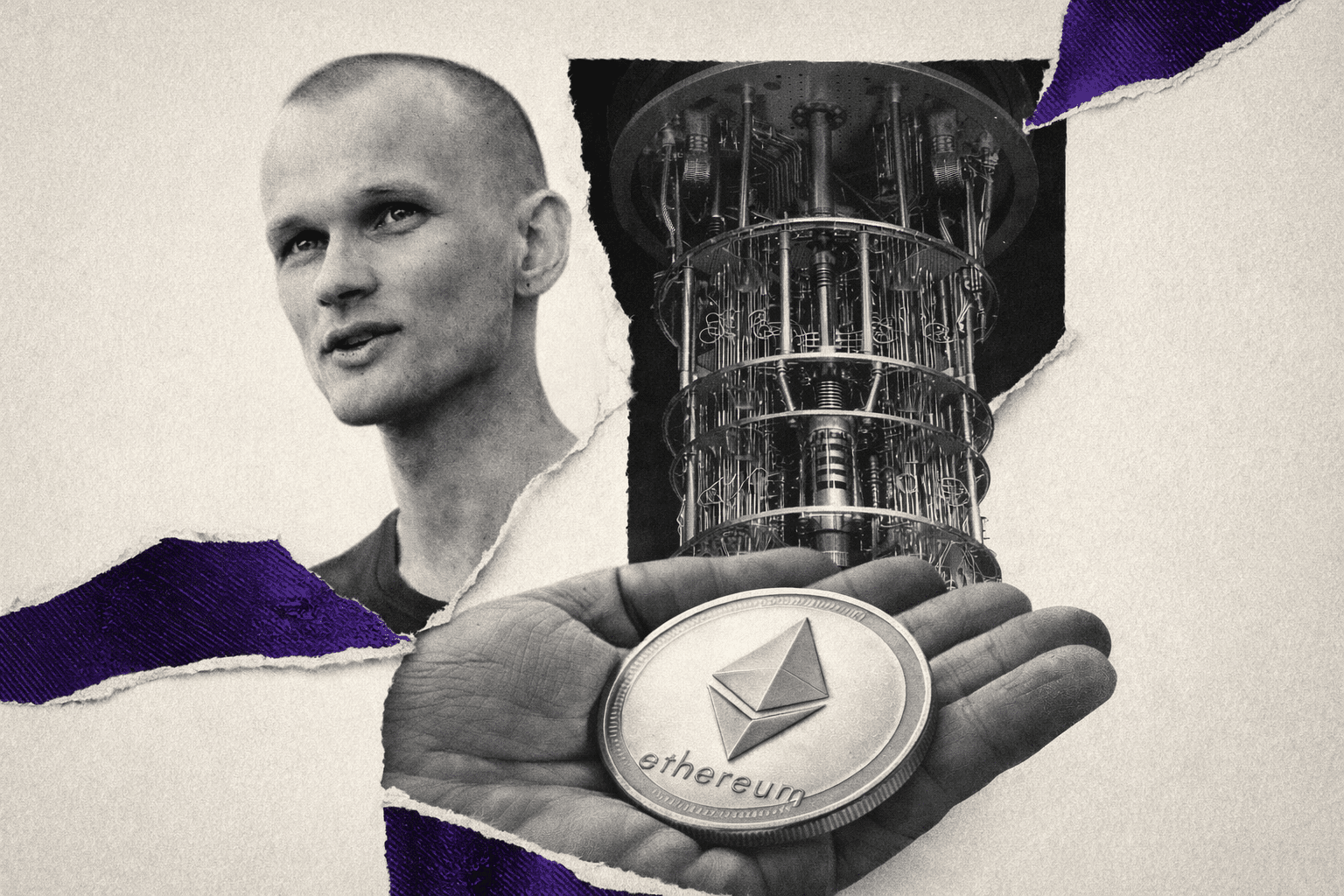
⛓️Vitalik Buterin has outlined a quantum defense strategy for Ethereum to protect the network against future quantum computing threats. The proposal aims to implement quantum-resistant cryptographic measures to safeguard Ethereum's infrastructure and user funds from potential quantum attacks.
$ETH
AI × CryptoNeutralCoinTelegraph – AI · Feb 277/105
🤖The XRPL Foundation successfully patched a critical vulnerability in the Ripple blockchain codebase before it reached mainnet deployment. An AI bug hunter identified the security flaw during code scanning, allowing engineers to fix the issue proactively.
$XRP
CryptoBullishDecrypt – AI · Feb 267/107
⛓️Ethereum co-founder Vitalik Buterin has presented a detailed roadmap for upgrading Ethereum's cryptographic infrastructure to defend against quantum computing threats. The phased approach targets replacing four core vulnerable cryptographic components that could be compromised by future quantum computers.
$ETH
CryptoBullishDL News · Feb 267/106
⛓️Ethereum founder Vitalik Buterin has proposed a 'quantum roadmap' to protect the Ethereum blockchain from potential quantum computer threats. The proposal suggests that implementation could begin as early as the end of this year.
$ETH
AI × CryptoBullishThe Defiant · Feb 187/106
🤖OpenAI has partnered with Paradigm to launch EVMbench, a new AI benchmark tool designed to evaluate artificial intelligence agents' capabilities in detecting, patching, and exploiting smart contract vulnerabilities. This tool represents a significant step forward in using AI to enhance blockchain security infrastructure.