CryptoBearishBitcoinist · Jun 57/10
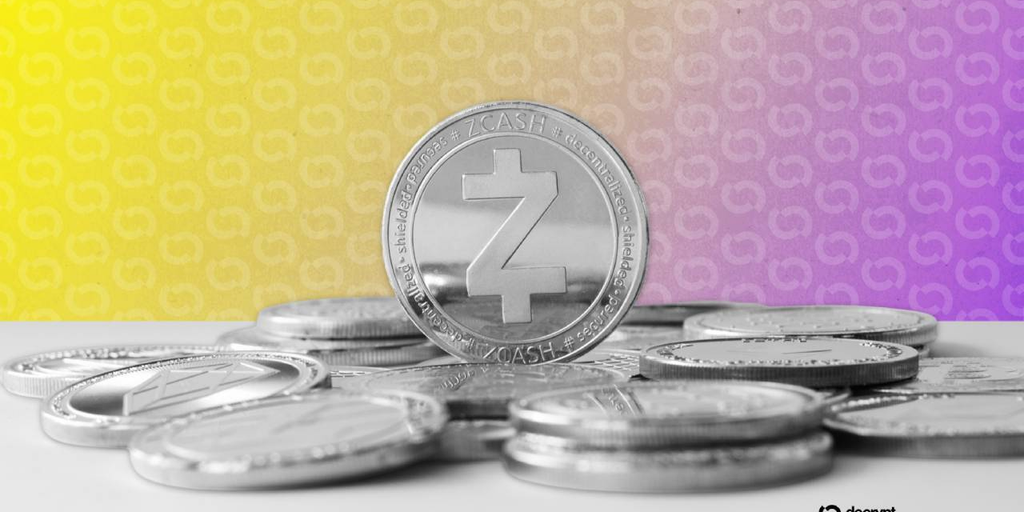
⛓️A critical vulnerability in Zcash's Orchard shielded pool could have enabled attackers to mint unlimited ZEC without detection. The flaw was discovered May 29 and patched by June 2 through an emergency response, raising questions about the security of privacy-focused cryptocurrency infrastructure.
AI × CryptoBullisharXiv – CS AI · Jun 57/10
🤖Researchers propose a zero-knowledge proof architecture for verifying frontier AI model training compute, addressing a critical governance gap where current frameworks rely on self-reporting. The system combines pre-committed specifications, network observations, and Merkle commitments verified through a specialized zkVM, potentially deployable within 36 months with minimal training overhead.
AI × CryptoBullishCrypto Briefing · Jun 47/10
🤖Artificial intelligence has solved a complex mathematical problem that eluded human mathematicians for 80 years, demonstrating AI's expanding capability in abstract problem-solving. This breakthrough has significant implications for cryptography, protocol design, and financial risk modeling—all critical infrastructure for blockchain and cryptocurrency systems.
CryptoBearishcrypto.news · Jun 47/10
⛓️Bitcoin is trading near $62K as analyst Charles Edwards highlights a 28% 'quantum discount'—a valuation reduction reflecting market concerns about delayed post-quantum cryptography adoption. This metric suggests investors are pricing in risks from quantum computing threats to blockchain security.
$BTC
AI × CryptoBearishCrypto Briefing · Jun 47/10
🤖Microsoft has achieved significant quantum computing breakthroughs through partnerships with Atom Computing and EeroQ, advancing quantum hardware and software capabilities. These developments raise urgent concerns about post-quantum cryptography adoption, as quantum computers could potentially threaten current blockchain security protocols and cryptographic standards.
AI × CryptoNeutralarXiv – CS AI · Jun 47/10
🤖Researchers propose Sello, a cryptographic protocol that addresses a critical vulnerability in AI agent observability by having external services sign tamper-evident receipts of agent actions rather than agents logging their own activity. The system uses receiver-side signing, encryption, and public transparency logs to create an independent audit trail that prevents compromised agents from falsifying records.
CryptoBearishDecrypt · Jun 37/10
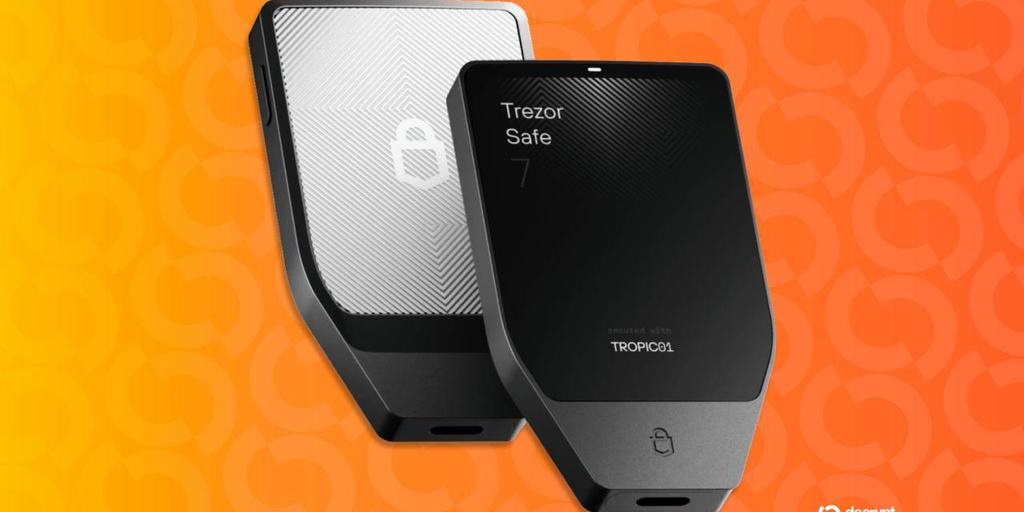
⛓️Trezor's TROPIC01 Secure Element chip contains a vulnerability discovered by Ledger Donjon's audit team. Despite the security flaw, Trezor asserts that user funds remain safe, though the incident raises questions about hardware wallet security assurance and the effectiveness of existing safeguards.
AI × CryptoBearishDecrypt – AI · Jun 37/10
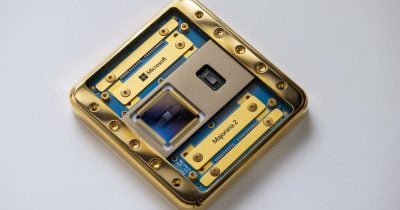
🤖Microsoft announced a new quantum chip called Majorana 2 that is 1,000x more reliable than previous iterations, with AI playing a key role in accelerating its development. The advancement reignites discussions about the timeline for quantum computers becoming powerful enough to break Bitcoin's cryptographic security.
$BTC
AI × CryptoBearishBankless · Jun 27/10
🤖Ethereum researcher Justin Drake has estimated a 50% probability that quantum computers could break current cryptographic systems by 2032, significantly accelerating the timeline for crypto's potential vulnerability to quantum threats. This assessment raises urgent questions about the security of blockchain infrastructure and the cryptocurrency industry's readiness for post-quantum cryptography migration.
CryptoBullishBitcoinist · Jun 17/10
⛓️Circle is implementing post-quantum cryptographic security measures for USDC to protect against future threats from quantum computers. The company proposes recovery frameworks using cryptographic proofs, seed phrases, exchange records, and court orders to ensure users don't lose assets during migration periods.
CryptoBearishCrypto Briefing · May 307/10
⛓️Security researchers warn that Bitcoin faces significant vulnerabilities to quantum computing attacks, with adversaries allegedly collecting and storing encrypted blockchain data for future decryption. Bitcoin's governance limitations and slow upgrade cycles may disadvantage it compared to faster-adapting cryptocurrencies in addressing this emerging threat.
$BTC
AI × CryptoBearishCoinDesk · May 307/10
🤖A prominent venture capitalist who funded quantum hardware companies warns that Bitcoin's quantum vulnerability extends beyond wallet private keys to a potentially more critical threat. Google's security team reached similar conclusions in March, suggesting the industry may be focused on the wrong attack vector.
$BTC
AI × CryptoNeutralCrypto Briefing · May 287/10
🤖IBM announced a $10 billion investment to develop a large-scale quantum computer by 2029, marking a significant acceleration in quantum computing development. This initiative carries implications for cryptography, national security, and competitive positioning across technology sectors, with potential ripple effects on cryptocurrency security protocols.
AI × CryptoBearishcrypto.news · May 287/10
🤖A new quantum computing report warns that the cryptocurrency industry may have less time than previously estimated to prepare for potential cryptographic attacks that could threaten over $2 trillion in digital assets. The findings suggest that quantum computing advances are accelerating faster than the industry's defensive preparations, creating an urgent need for crypto protocols to implement quantum-resistant cryptography.
$BTC
CryptoNeutralWu Blockchain · May 277/10
⛓️Bitcoin's foundational concepts did not originate with Satoshi Nakamoto in 2008, but rather trace their intellectual roots to the 1970s through developments in monetary theory, computer science, and cryptography. Understanding this genealogy reveals how Bitcoin represents the convergence of three decades of academic and practical innovation rather than a spontaneous creation.
$BTC
CryptoBearishU.Today · May 257/10
⛓️SlowMist, a blockchain security firm, has identified a sophisticated 'TrapDoor' virus executing a cross-registry supply chain attack targeting developers in Solana, DeFi, and AI sectors to steal private keys. The campaign demonstrates evolving threats beyond traditional exchange hacks, directly compromising developer wallets and private key infrastructure.
$SOL
AI × CryptoBullishBankless · May 237/10
🤖Venice AI applies cypherpunk principles to artificial intelligence inference, building privacy protections into AI systems rather than treating it as an afterthought. The project draws philosophical parallels to the cypherpunk movement's core belief that privacy must be architecturally embedded, not granted by benevolent actors.
CryptoNeutralGlassnode Insights · May 207/10
⛓️Researchers have mapped Bitcoin's quantum-exposed supply by identifying public keys visible on the blockchain, categorizing them as either structurally exposed (from reused addresses) or operationally exposed (from transaction mechanics). This analysis quantifies the vulnerability window before quantum computers could theoretically compromise Bitcoin holdings.
$BTC
AIBearisharXiv – CS AI · May 117/10
🧠Researchers demonstrate significant privacy vulnerabilities in tabular diffusion models (TDMs), which are increasingly used to generate synthetic data as privacy-preserving alternatives. Through membership inference attacks in both black-box and white-box settings, the study reveals that attackers can successfully breach these systems without perfect knowledge of training data or massive computational resources, while also exposing flaws in commonly-used privacy metrics.
CryptoNeutralDecrypt – AI · May 107/10
⛓️Cryptocurrency firms are actively developing quantum-resistant wallet technology to protect digital assets from future quantum computing threats. While these upgrades are underway, significant security gaps remain across Bitcoin and Ethereum networks, creating a race against time before quantum computers become powerful enough to compromise current cryptographic standards.
$BTC$ETH
AI × CryptoBullishCrypto Briefing · May 97/10
🤖Vitalik Buterin has highlighted zero-knowledge (ZK) payments as a critical infrastructure standard for the emerging agent era, signaling blockchain's evolution toward privacy-preserving AI transactions. This development could enhance privacy in autonomous agent operations while driving broader adoption of ZK technology across industries beyond cryptocurrency.
AI × CryptoNeutralCrypto Briefing · May 97/10
🤖China has unveiled the LineShine supercomputer with ambitions to surpass the US's El Capitan system, potentially reshaping global technological competition. This development carries significant implications for AI advancement, cryptographic capabilities, and the broader geopolitical tech landscape.
CryptoBullishCrypto Briefing · May 87/10
⛓️Zcash is advancing quantum-resistant wallet technology and scaling solutions to achieve Visa-level transaction throughput while maintaining privacy. The cryptocurrency has experienced a 75% monthly price gain, reflecting market optimism around these technical developments that could position it as a leader in privacy-preserving, quantum-safe infrastructure.
CryptoBullishDecrypt · May 87/10
⛓️Zcash is advancing its post-quantum cryptography roadmap with plans to launch a quantum-recoverable wallet within one month, targeting a full post-quantum migration by 2027. This initiative addresses growing concerns about quantum computing's threat to current cryptographic standards and positions Zcash as a leader in quantum-resistant privacy solutions.
CryptoBullishU.Today · May 87/10
⛓️Zcash has announced a 2027 roadmap emphasizing quantum-resistant cryptography and increased payment throughput, aiming to position ZEC as a privacy-centric payment alternative comparable to traditional payment networks like Mastercard and Visa. The initiative combines enhanced security protocols with scaling solutions to expand ZEC's utility beyond store-of-value to become a practical transaction medium.
$BTC