#enterprise-ai News & Analysis
Coverage of #enterprise-ai spans 292 indexed articles, with 114 pieces published in the last month. Discussion centers on implementations of AI systems within organizational settings, with OpenAI, Anthropic, and ChatGPT emerging as the most frequently mentioned entities. Related conversations touch on AI agents, infrastructure requirements, and broader adoption patterns across sectors.
Recent sentiment has remained stable, holding at 65.8% bullish over the past 30 days with only minimal bearish coverage at 4.4%. Leading sources include arXiv's computer science AI research, along with cryptocurrency-focused publications Blockonomi and Fortune Crypto. Browse the articles below to explore the latest reporting on enterprise applications and deployments.
sentiment · last 30d (114 articles)Top sources:arXiv – CS AI · 56Blockonomi · 37Fortune Crypto · 18OpenAI News · 15TechCrunch – AI · 14
Most-discussed entities:OpenAI · 25Anthropic · 19ChatGPT · 10Claude · 10Nvidia · 9
AIBullishBlockonomi · May 296/10
🧠SoundHound AI (SOUN) stock rose 6.2% following Snowflake's better-than-expected earnings results, which demonstrated resilience in AI software despite concerns about AI disruption. The positive earnings performance lifted sentiment across the broader AI software sector.
AIBullishOpenAI News · May 296/10
🧠Braintrust engineers leverage OpenAI's Codex with GPT-5.5 to accelerate software development by converting customer requests directly into functional code. This integration demonstrates how AI-assisted development tools are reducing engineering cycles and improving productivity in real-world enterprise environments.
🧠 GPT-5
AINeutralFortune Crypto · May 296/10
🧠The article uses Schlitz beer's historical decline as a cautionary tale for AI adoption in enterprises. It examines why employees resist AI integration despite potential benefits, drawing parallels between how Schlitz lost market trust through a product reformulation and how organizations struggle to build employee confidence in AI systems.
AINeutralarXiv – CS AI · May 296/10
🧠Researchers introduce HiKEY, a hierarchical multimodal retrieval framework designed to improve document-based question answering systems by leveraging document structure as a core retrieval signal. The system addresses critical limitations in existing approaches by implementing a coarse-to-fine retrieval strategy and demonstrating significant performance improvements on ODQA benchmarks.
AINeutralarXiv – CS AI · May 296/10
🧠Researchers introduce MPDocBench-Parse, a new benchmark dataset for evaluating multi-page document parsing systems across realistic, complex scenarios. The benchmark comprises 433 manually annotated documents spanning 3,246 pages in 15 document types, revealing that existing AI models excel at basic text extraction but struggle with semantic continuity, visual content preservation, and hierarchical structure recovery.
AIBullishCrypto Briefing · May 296/10
🧠Glean, an enterprise AI platform, has reached $300M in annual recurring revenue, demonstrating strong growth despite broader AI budget constraints across the industry. The company's success underscores how compliance-focused, tailored AI solutions are gaining traction among enterprises seeking practical applications rather than speculative AI investments.
AIBullishTechCrunch – AI · May 296/10
🧠Enterprise AI search startup Glean has crossed $300M in annual revenue, tripling its top line despite increased competition from major tech giants entering the market. The company's growth is primarily driven by its value proposition around cost reduction for AI implementations, positioning budget optimization as a key differentiator in an increasingly crowded enterprise AI landscape.
AIBullishThe Verge – AI · May 286/10
🧠Microsoft has launched a redesigned Microsoft 365 Copilot with significant performance improvements, claiming twice-as-fast load times and a cleaner interface. The update introduces 'progressive disclosure' to show contextual tools based on user prompts and enhances the prompt box with inline text formatting capabilities.
🏢 Microsoft
AIBullishTechCrunch – AI · May 286/10
🧠Asana has acquired Stack AI, a no-code platform for building AI agents, integrating it into its workflow automation suite. This move strengthens Asana's AI capabilities and reflects the growing trend of enterprises embedding AI agents into productivity tools.
AINeutralFortune Crypto · May 286/10
🧠The article argues that measuring AI ROI through token consumption is fundamentally flawed, as productivity gains require comprehensive workflow redesign rather than simply tracking usage metrics. This challenges the prevailing "tokenmaxxing" approach that has dominated AI adoption strategies.
AIBearishFortune Crypto · May 286/10
🧠Starbucks decommissioned an AI agent deployed to manage inventory and operations after just months of use due to persistent hallucinations and performance degradation that ultimately slowed barista workflows. The failure highlights critical challenges in deploying large language models to real-world operational tasks where accuracy directly impacts business efficiency.
AIBullishCrypto Briefing · May 286/10
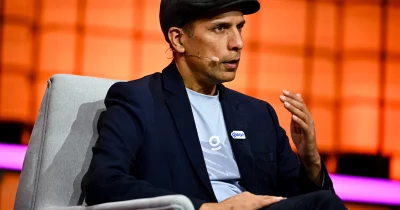
🧠Joe Lonsdale discusses how AI advancement is accelerating startup growth and argues that investors should consider launching their own ventures. He emphasizes that productivity improvements are the key focus area for AI companies as the technology reshapes innovation and startup ecosystems.
AIBullishBlockonomi · May 286/10
🧠Snowflake (SNOW) surged 35% following strong earnings results and a major $6 billion AWS partnership announcement, while drone stocks jumped 67% on Pentagon interest. The gains reflect broader market momentum driven by AI-related developments pushing equities near record levels.
AINeutralDecrypt · May 286/10
🧠Anthropic announced that its Claude Mythos AI model will likely become available to broader audiences within weeks following limited testing phases. The release comes amid ongoing concerns about cybersecurity implications and potential risks associated with the advanced AI system.
🏢 Anthropic🧠 Claude
AINeutralCrypto Briefing · May 286/10
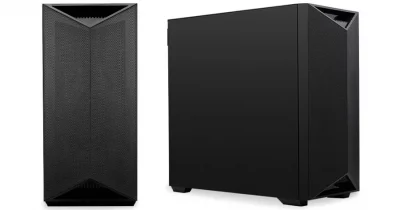
🧠Corsair Gaming is entering the enterprise AI hardware market with a new Pro workstation lineup, signaling a strategic pivot toward high-margin AI infrastructure. This move positions the company to capture revenue from the growing demand for enterprise-grade AI computing resources and compete with established players in the sector.
🏢 Nvidia
AINeutralTechCrunch – AI · May 286/10
🧠Databricks' co-founder highlighted at TechCrunch Disrupt 2026 that enterprise AI adoption has shifted from evaluating AI's potential to assessing deployment safety and risk management. This marks a critical inflection point where practical concerns about security, compliance, and operational reliability now determine deal closures rather than technological capability.
AIBullishCrypto Briefing · May 286/10
🧠EY and Microsoft announced a partnership committing over $1 billion to accelerate AI adoption across enterprise sectors. The initiative aims to enhance productivity and transform workflows while maintaining workforce size, signaling enterprise AI integration as a priority for major technology and consulting firms.
AIBullishTechCrunch – AI · May 286/10
🧠General Compute is positioning SambaNova as a potential breakout AI chipmaker following competitive dynamics in specialized compute hardware. The bet reflects growing investor interest in alternatives to established players like Cerebras, as demand for AI infrastructure accelerates.
AINeutralCrypto Briefing · May 286/10
🧠Google Cloud has announced an AI Threat Defense platform designed to automate cybersecurity threat management using artificial intelligence. While the platform promises to enhance security efficiency, concerns exist about autonomous AI systems making critical decisions without human oversight, potentially creating new trust and error management challenges.
AIBullisharXiv – CS AI · May 286/10
🧠Agyn is an open-source platform designed to operationalize AI agents at scale with production-grade security, governance, and isolation. Built around a stateful serverless Kubernetes runtime, Infrastructure-as-Code provisioning via Terraform, and zero-trust security principles, the platform addresses the emerging engineering challenge of deploying autonomous agents safely across enterprise environments.
AINeutralarXiv – CS AI · May 286/10
🧠Researchers systematically evaluate Retrieval-Augmented Generation (RAG) pipelines that combine Large Language Models with information retrieval techniques for space operations. The study demonstrates that RAG systems can effectively process vast technical documentation and operational guidelines, enhancing decision-making accuracy and reliability in complex space environments.
AINeutralarXiv – CS AI · May 286/10
🧠Tool Forge presents a validation-carrying toolchain that converts natural-language descriptions into governed, sandbox-verified tools for large language model agents. The system achieves 99.2% reduction in context requirements while maintaining 0.940 micro-F1 accuracy, addressing critical infrastructure gaps in enterprise agentic execution.
AIBullisharXiv – CS AI · May 286/10
🧠Researchers introduce DeltaMCP, an incremental regeneration tool that automatically updates Model Context Protocol servers when enterprise APIs change, rather than requiring full manual regeneration. Benchmarked against existing methods using Azure REST APIs, DeltaMCP reduces developer overhead while maintaining synchronization between evolving APIs and their corresponding MCP implementations.
AINeutralarXiv – CS AI · May 286/10
🧠Researchers present twelve token optimization strategies for using LLMs to migrate Oracle databases to PostgreSQL, addressing cost and quality degradation challenges. Adaptive routing emerges as the optimal approach, reducing token consumption by 8.72% while maintaining 88.40% semantic match accuracy, demonstrating that token optimization requires balancing multiple objectives rather than simple prompt shortening.
AIBullisharXiv – CS AI · May 286/10
🧠Researchers present an LLM-powered framework that enables non-expert end users to re-optimize deployed decision-support systems through natural language interaction, eliminating dependency on operations research specialists. The system combines language models with an optimization toolbox to dynamically adapt models to changing business conditions while maintaining solution quality and interpretability.