AINeutralarXiv – CS AI · Jun 26/10
🧠Researchers present a theoretical framework and practical algorithms for achieving fairness in multi-class machine learning classification tasks, addressing a gap where most bias mitigation techniques focus on binary settings. The work proposes both in-processing and post-processing methods that converge to an optimal accuracy-fairness Pareto frontier, with experimental validation across multiple datasets.
🏢 Meta
AINeutralarXiv – CS AI · Jun 26/10
🧠Researchers introduce COPF, a framework for monitoring and controlling fairness in online link recommendation systems on evolving graphs. The system addresses the challenge that recommendation algorithms are performative—they change user behavior and create feedback loops that make traditional fairness estimates unreliable after deployment.
AINeutralarXiv – CS AI · May 296/10
🧠Researchers introduce CB-SLICE, a new method for identifying systematic errors in deep learning models by leveraging Concept Bottleneck Models to detect error patterns linked to human-understandable concepts. The approach outperforms existing techniques in uncovering model biases and provides more accurate, interpretable explanations of failure modes across multiple benchmarks.
AIBearishDecrypt – AI · May 266/10
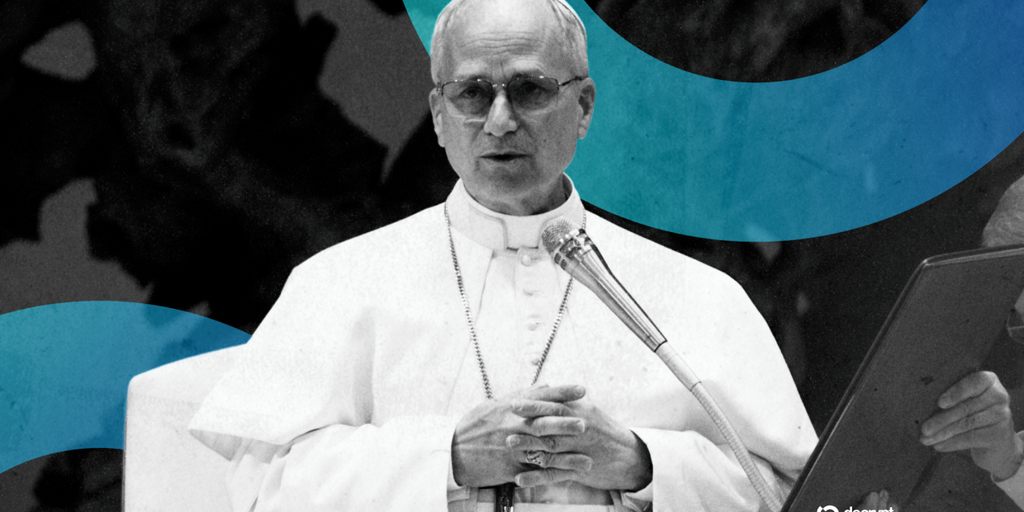
🧠Researchers have identified systematic bias in AI chatbots that steer users toward Catholicism while steering them away from religions like Jehovah's Witnesses. This finding raises concerns about the neutrality and fairness of widely-used AI systems in handling sensitive topics like religion.
AINeutralarXiv – CS AI · May 96/10
🧠Researchers introduce CrossCult-KIBench, a benchmark dataset for evaluating how multimodal large language models (MLLMs) handle cross-cultural knowledge insertion across English, Chinese, and Arabic contexts. The work reveals that current AI models struggle to adapt to specific cultural contexts without degrading performance in other cultures, establishing a new research direction for culturally-aware AI systems.
AINeutralarXiv – CS AI · May 16/10
🧠Researchers propose PecMan, a human-AI framework designed to optimize fairness, accuracy, and clinical workflow integration simultaneously in medical image analysis. The framework addresses the gap between high-performing AI diagnostic systems and their limited real-world adoption by balancing performance across diverse patient populations while respecting clinician workload constraints.
🏢 Meta
AINeutralarXiv – CS AI · May 16/10
🧠Researchers introduce FairMind, an automated tool that detects fairness bias in machine learning datasets using causal analysis and LLM-generated reports. The software applies the standard fairness model to evaluate how protected variables influence predictions through counterfactual reasoning, addressing a critical gap in existing AutoML frameworks that typically ignore fairness considerations.
AINeutralarXiv – CS AI · Apr 146/10
🧠Researchers propose a geometric methodology using a Topological Auditor to detect and eliminate shortcut learning in deep neural networks, forcing models to learn fair representations. The approach reduces demographic bias vulnerabilities from 21.18% to 7.66% while operating more efficiently than existing post-hoc debiasing techniques.
AINeutralarXiv – CS AI · Apr 136/10
🧠Researchers have developed RandSymKL, a debiasing technique for Bangla language models that mitigates gender bias in classification tasks like sentiment analysis and hate speech detection. The study introduces four manually annotated benchmark datasets with gender-perturbation testing and demonstrates that the approach effectively reduces bias while maintaining competitive accuracy compared to existing methods.
AIBullisharXiv – CS AI · Apr 76/10
🧠Researchers propose APPA, a new framework for aligning large language models with diverse human preferences in federated learning environments. The method dynamically reweights group-level rewards to improve fairness, achieving up to 28% better alignment for underperforming groups while maintaining overall model performance.
🏢 Meta🧠 Llama
AIBearisharXiv – CS AI · Mar 266/10
🧠Research reveals that Retrieval-Augmented Generation (RAG) systems exhibit fairness issues, with queries from certain demographic groups systematically receiving higher accuracy than others. The study identifies three key factors affecting fairness: group exposure in retrieved documents, utility of group-specific documents, and attribution bias in how generators use different group documents.
🏢 Meta
AINeutralarXiv – CS AI · Mar 176/10
🧠Researchers propose MESD (Multi-category Explanation Stability Disparity), a new metric to detect procedural bias in AI models across intersectional groups. They also introduce UEF framework that balances utility, explanation quality, and fairness in machine learning systems.
AINeutralarXiv – CS AI · Mar 176/10
🧠Researchers introduce a structural taxonomy and unified evaluation framework for Audio Large Language Models (ALLMs) to assess fairness, safety, and security. The study reveals systematic differences in how ALLMs handle audio versus text inputs, with FSS behavior closely tied to acoustic information integration methods.
AIBullisharXiv – CS AI · Mar 176/10
🧠Researchers introduce Flare, a new AI fairness framework that ensures ethical outcomes without requiring demographic data, addressing privacy and regulatory concerns in human-centered AI applications. The system uses Fisher Information to detect hidden biases and includes a novel evaluation metric suite called BHE for measuring ethical fairness beyond traditional statistical measures.
🏢 Meta
AINeutralarXiv – CS AI · Mar 166/10
🧠Researchers propose integrating causal methods into machine learning systems to balance competing objectives like fairness, privacy, robustness, accuracy, and explainability. The paper argues that addressing these principles in isolation leads to conflicts and suboptimal solutions, while causal approaches can help navigate trade-offs in both trustworthy ML and foundation models.
AINeutralarXiv – CS AI · Mar 26/1019
🧠Researchers developed BRIDGE, a framework to reduce bias in AI-powered automated scoring systems that unfairly penalize English Language Learners (ELLs). The system addresses representation bias by generating synthetic high-scoring ELL samples, achieving fairness improvements comparable to using additional human data while maintaining overall performance.
AINeutralarXiv – CS AI · Mar 26/1017
🧠Researchers conducted a systematic benchmark study on multimodal fusion between Electronic Health Records (EHR) and chest X-rays for clinical decision support, revealing when and how combining data modalities improves healthcare AI performance. The study found that multimodal fusion helps when data is complete but benefits degrade under realistic missing data scenarios, and released an open-source benchmarking toolkit for reproducible evaluation.
AINeutralarXiv – CS AI · Mar 27/1019
🧠Researchers have developed an automated pipeline to detect hidden biases in Large Language Models that don't appear in their reasoning explanations. The system discovered previously unknown biases like Spanish fluency and writing formality across seven LLMs in hiring, loan approval, and university admission tasks.
GeneralBearishCrypto Briefing · Jun 235/10
📰FIFA has implemented new tiebreaker rules for World Cup group stages that may inadvertently reduce competitive intensity in final matches, raising concerns about fairness and fan engagement. The rule changes could alter traditional incentive structures in tournament play, potentially impacting viewership and the integrity of group-stage conclusions.
AINeutralarXiv – CS AI · Mar 175/10
🧠Researchers propose a formal abductive explanation framework to analyze AI predictions of mental health help-seeking in tech workplaces. The framework aims to provide rigorous justifications for model outputs while examining the influence of sensitive attributes like gender to ensure fairness in AI-driven mental health interventions.
AINeutralarXiv – CS AI · Mar 54/10
🧠Researchers introduce ACES, a new method to analyze how automatic speech recognition systems perform differently across accents. The study finds that accent information is concentrated in early neural network layers and is deeply intertwined with speech recognition capabilities, making simple bias removal ineffective.
AINeutralarXiv – CS AI · Mar 54/10
🧠Researchers propose DSRM-HRL, a new framework that uses diffusion models to purify user preference data and hierarchical reinforcement learning to balance recommendation accuracy with fairness. The system addresses bias in interactive recommendation systems by separating state estimation from decision-making, achieving better outcomes on both utility and exposure equity.
AINeutralarXiv – CS AI · Mar 44/103
🧠Researchers present a framework for social planners to strategically reveal positive and negative role models to influence agent behavior in social networks. The study addresses optimization challenges when disclosure budgets are limited and proposes algorithms to maximize social welfare while maintaining fairness across different groups.
AINeutralarXiv – CS AI · Mar 44/103
🧠Researchers propose HRL4PFG, a new interactive recommendation framework using hierarchical reinforcement learning to promote fairness by guiding user preferences toward long-tail items. The approach aims to balance item-side fairness with user satisfaction, showing improved performance in cumulative interaction rewards and user engagement length compared to existing methods.
AINeutralarXiv – CS AI · Mar 24/105
🧠Researchers conducted interviews with 11 practitioners at major tech companies to study how fairness considerations are integrated into recommender system workflows. The study identified key challenges including defining fairness in RS contexts, balancing stakeholder interests, and facilitating cross-team communication between technical, legal, and fairness teams.