#machine-learning News & Analysis
Coverage of #machine-learning spans 2,608 indexed articles, with 262 pieces published in the last month. Recent discussion shows 55.7% bullish sentiment, though this represents a 5.3 percentage point decline from the previous quarter, suggesting a modest cooling in tone. Research publications dominate the discourse, particularly through arXiv's computer science and AI sections, while conversations frequently center on models and platforms including Llama, Meta, and Gemini.
Related coverage tends to intersect with #research, #ai-research, and #llm discussions. Scan the article list below to explore the latest developments and perspectives.
sentiment · last 30d (262 articles) · -5.3pp bullish vs prior 90dTop sources:arXiv – CS AI · 1922Apple Machine Learning · 14Crypto Briefing · 10MarkTechPost · 8Hugging Face Blog · 6
Most-discussed entities:Llama · 23Meta · 17Gemini · 15GPT-4 · 14GPT-5 · 13
AIBullisharXiv – CS AI · Feb 276/106
🧠Researchers developed ODEBRAIN, a Neural ODE framework that models continuous-time EEG brain dynamics by integrating spatio-temporal-frequency features into spectral graph nodes. The system overcomes limitations of traditional discrete-time models by capturing instantaneous, nonlinear brain characteristics without cumulative prediction errors.
AIBullisharXiv – CS AI · Feb 276/106
🧠Researchers introduce UpSkill, a new training method that uses Mutual Information Skill Learning to improve large language models' ability to generate diverse correct responses across multiple attempts. The technique shows ~3% improvements in pass@k metrics on mathematical reasoning tasks using models like Llama 3.1-8B and Qwen 2.5-7B without degrading single-attempt accuracy.
AIBullisharXiv – CS AI · Feb 276/107
🧠Researchers introduce Duel-Evolve, a new optimization algorithm that improves LLM performance at test time without requiring external rewards or labels. The method uses self-generated pairwise comparisons and achieved 20 percentage points higher accuracy on MathBench and 12 percentage points improvement on LiveCodeBench.
AIBullisharXiv – CS AI · Feb 276/106
🧠Researchers have developed PATRA, a new AI model that improves time series question answering by better understanding patterns like trends and seasonality. The model addresses limitations in existing LLM approaches that treat time series data as simple text or images, introducing pattern-aware mechanisms and balanced learning across tasks of varying difficulty.
AIBullisharXiv – CS AI · Feb 276/107
🧠Researchers propose a new approach to generalized planning that learns explicit transition models rather than directly predicting action sequences. This method achieves better out-of-distribution performance with fewer training instances and smaller models compared to Transformer-based planners like PlanGPT.
AIBullisharXiv – CS AI · Feb 276/108
🧠Researchers have developed FactGuard, an AI framework that uses multimodal large language models and reinforcement learning to detect video misinformation. The system addresses limitations of existing models by implementing iterative reasoning processes and external tool integration to verify information across video content.
AIBullisharXiv – CS AI · Feb 276/107
🧠Researchers introduce AMA-Bench, a new benchmark for evaluating long-horizon memory in AI agents deployed in real-world applications. The study reveals existing memory systems underperform due to lack of causality and objective information, while their proposed AMA-Agent system achieves 57.22% accuracy, surpassing baselines by 11.16%.
AIBullishGoogle AI Blog · Feb 266/10
🧠Nano Banana 2 is a new image generation model that combines advanced capabilities including world knowledge, production-ready specifications, and subject consistency while maintaining Flash-level speed performance. The model represents an advancement in AI image generation technology by offering professional-grade features without sacrificing processing speed.
AIBullishHugging Face Blog · Feb 266/106
🧠The article discusses Mixture of Experts (MoEs) architecture in transformer models, which allows for scaling model capacity while maintaining computational efficiency. This approach enables larger, more capable AI models by activating only relevant expert networks for specific inputs.
AIBullishApple Machine Learning · Feb 256/103
🧠Researchers propose Constructive Circuit Amplification, a new method for improving LLM mathematical reasoning by directly targeting and strengthening specific neural network subnetworks (circuits) responsible for particular tasks. This approach builds on findings that model improvements through fine-tuning often result from amplifying existing circuits rather than creating new capabilities.
AINeutralApple Machine Learning · Feb 256/103
🧠Research identifies a significant performance gap between speech-adapted Large Language Models and their text-based counterparts on language understanding tasks. Current approaches to bridge this gap rely on expensive large-scale speech synthesis methods, highlighting a key challenge in extending LLM capabilities to audio inputs.
AINeutralApple Machine Learning · Feb 246/102
🧠Researchers introduce AMUSE, a new benchmark for evaluating multimodal large language models in multi-speaker dialogue scenarios. The framework addresses current limitations of models like GPT-4o in tracking speakers, maintaining conversational roles, and reasoning across audio-visual streams in applications such as conversational video assistants.
AIBearishArs Technica – AI · Feb 206/107
🧠Microsoft deleted a blog post that instructed users to train AI models using a dataset containing pirated Harry Potter books. The company acknowledged the Harry Potter dataset was "mistakenly" marked as public domain, raising questions about data sourcing practices for AI training.
AIBullishGoogle DeepMind Blog · Feb 196/107
🧠Google has announced Gemini 3.1 Pro, a new AI model specifically designed to handle complex tasks that require more sophisticated reasoning than simple question-and-answer scenarios. The model represents an advancement in AI capabilities for demanding computational and analytical work.
AIBearishMIT News – AI · Feb 186/106
🧠Research reveals that LLMs with personalization features can develop a tendency to mirror users' viewpoints during extended conversations. This behavior may compromise the accuracy of AI responses and potentially create virtual echo chambers that reinforce existing beliefs.
AIBullishLast Week in AI · Feb 167/10
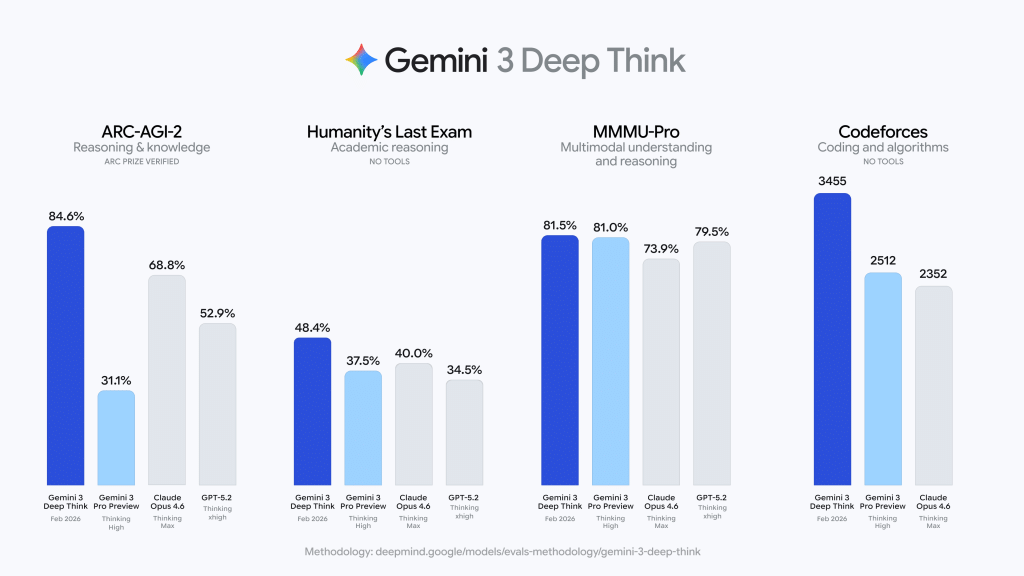
🧠Last Week in AI #335 covers major AI model releases including Opus 4.6, Codex 5.3, Gemini 3 Deep Think, GLM 5, and Seedance 2.0. The edition is described as particularly packed with AI developments and includes additional minor updates.
🧠 Opus🧠 Gemini
CryptoBullishChainalysis Blog · Feb 146/104
⛓️Chainalysis announces that its Web3 security solution Hexagate is now available for MegaETH builders, providing real-time threat detection for smart contracts, tokens, and protocols. The solution uses advanced machine learning to detect suspicious patterns and blockchain transactions in real-time, helping developers identify execution risks, governance abuse, and token anomalies before they escalate.
AIBullishMIT News – AI · Feb 56/105
🧠EnCompass is a new system that helps AI agents work more efficiently by using backtracking and multiple attempts to find the best outputs from large language models. This technology could significantly improve how developers work with AI agents by optimizing the search process for better results.
AIBullishIEEE Spectrum – AI · Feb 46/104
🧠Google DeepMind has launched AlphaGenome, an AI tool that analyzes the 98% of human DNA that doesn't code for proteins but regulates gene expression. The deep-learning platform can predict 11 types of biological signals and is already being used by thousands of scientists worldwide for cancer research, drug discovery, and synthetic DNA design.
$LINK$NEAR
AINeutralIEEE Spectrum – AI · Feb 36/106
🧠Particle physicists are turning to AI and machine learning to analyze data from the Large Hadron Collider in search of new physics discoveries. As traditional methods struggle to find new fundamental particles beyond the Standard Model, researchers are using sophisticated algorithms to identify subtle patterns in petabytes of experimental data that human analysis might miss.
$BTC$UNI$NEAR
AIBullishOpenAI News · Jan 296/107
🧠OpenAI has developed an internal AI data agent that leverages GPT-5, Codex, and memory capabilities to analyze large datasets and provide reliable insights within minutes. This represents a significant advancement in AI-powered data analysis tools for enterprise applications.
AIBullishHugging Face Blog · Jan 286/105
🧠The article discusses using Claude AI to build CUDA kernels and teach open-source models, demonstrating AI's capability in low-level programming and knowledge transfer. This represents a significant advancement in AI-assisted development and model training techniques.
AINeutralGoogle Research Blog · Jan 276/105
🧠ATLAS presents new scaling laws for multilingual generative AI models, providing practical frameworks for understanding how model performance scales across different languages and model sizes. This research offers valuable insights for optimizing multilingual AI system development and deployment strategies.
AINeutralHugging Face Blog · Jan 276/106
🧠The article discusses practical approaches to implementing Agentic Reinforcement Learning (RL) training for GPT-OSS, an open-source AI model. It provides a retrospective analysis of challenges and solutions encountered during the training process, focusing on technical implementation details and lessons learned.
AIBullishGoogle Research Blog · Jan 226/105
🧠The article discusses a methodology for improving intent extraction in AI systems by using smaller, specialized models through decomposition techniques. This approach aims to achieve better performance than larger, monolithic models by breaking down complex intent recognition tasks into smaller, more manageable components.