#open-source News & Analysis
The #open-source tag covers 340 indexed articles, with 39 published in the last 30 days. Recent coverage has maintained a predominantly bullish tone at 69.2%, though sentiment has softened by 5.8 percentage points compared to the prior quarter. ArXiv's computer science and AI sections dominate the source list, alongside specialized tech publishers.
Discussion frequently centers on Claude, Nvidia, and Hugging Face, often in connection with machine learning, large language models, research, and AI agents. The tag also intersects with cryptocurrency discussions, particularly around Bitcoin and Ethereum. Scan the articles below for the latest developments.
sentiment · last 30d (39 articles) · -5.8pp bullish vs prior 90dTop sources:arXiv – CS AI · 176MarkTechPost · 11The Register – AI · 4Decrypt · 4Bitcoin Magazine · 3
Most-discussed entities:Claude · 7Nvidia · 7Hugging Face · 7Gemini · 6Llama · 4
AIBullisharXiv – CS AI · Apr 66/10
🧠Researchers introduce Unified Thinker, a new AI architecture that improves image generation by separating reasoning from visual generation. The modular system addresses the gap between closed-source models like Nano Banana and open-source alternatives by enabling better instruction following through executable reasoning and reinforcement learning.
AIBullishMarkTechPost · Apr 56/10
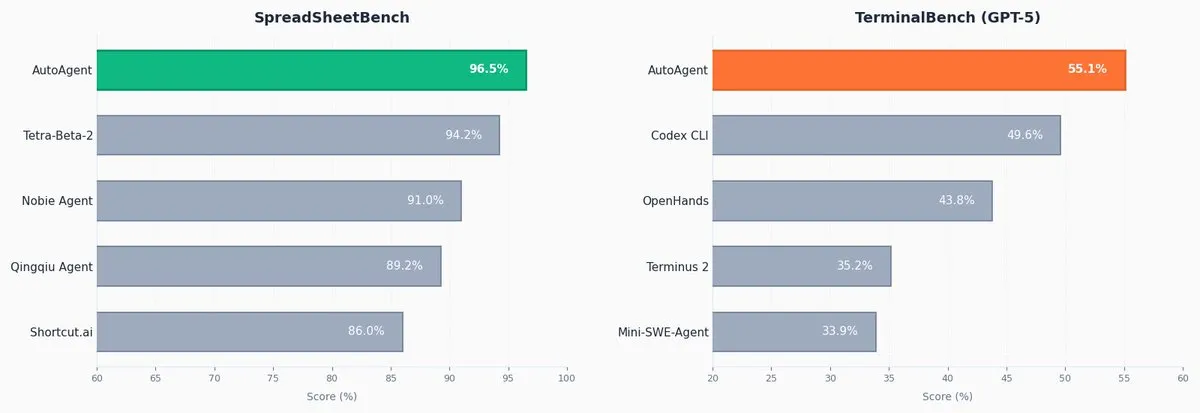
🧠AutoAgent is a new open-source library that automates the tedious process of prompt engineering and agent optimization for AI developers. The tool allows AI systems to engineer and optimize their own agent configurations overnight, potentially eliminating the manual prompt-tuning loop that typically requires dozens of iterations.
AIBullisharXiv – CS AI · Mar 276/10
🧠Researchers have introduced ElephantBroker, an open-source cognitive runtime system that combines knowledge graphs with vector storage to create more trustworthy AI agents with verifiable memory. The system implements comprehensive safety measures, evidence verification, and multi-organizational access controls for enterprise AI deployments.
AIBullisharXiv – CS AI · Mar 276/10
🧠Researchers have developed UniAI-GraphRAG, an enhanced framework that improves upon existing GraphRAG systems for complex reasoning and multi-hop queries. The framework introduces three key innovations including ontology-guided extraction, multi-dimensional clustering, and dual-channel fusion, showing superior performance over mainstream solutions like LightRAG on benchmark tests.
AIBullisharXiv – CS AI · Mar 276/10
🧠Voxtral TTS is a new multilingual text-to-speech AI model that can generate natural speech from just 3 seconds of reference audio. In human evaluations, it achieved a 68.4% win rate over ElevenLabs Flash v2.5 for voice cloning, demonstrating superior naturalness and expressivity.
AIBullisharXiv – CS AI · Mar 276/10
🧠Researchers introduce TimeLens, a family of multimodal large language models optimized for video temporal grounding that outperforms existing open-source models and even surpasses proprietary models like GPT-5 and Gemini-2.5-Flash. The work addresses critical data quality issues in existing benchmarks and introduces improved training datasets and algorithmic design principles.
🧠 GPT-5🧠 Gemini
AIBullishThe Register – AI · Mar 267/10
🧠Linux kernel czar Linus Torvalds reports that AI-generated bug reports have dramatically improved in quality, transforming from mostly useless submissions to legitimate and valuable contributions overnight. This represents a significant milestone in AI's ability to assist with complex software development and code analysis tasks.
AIBullishMarkTechPost · Mar 176/10
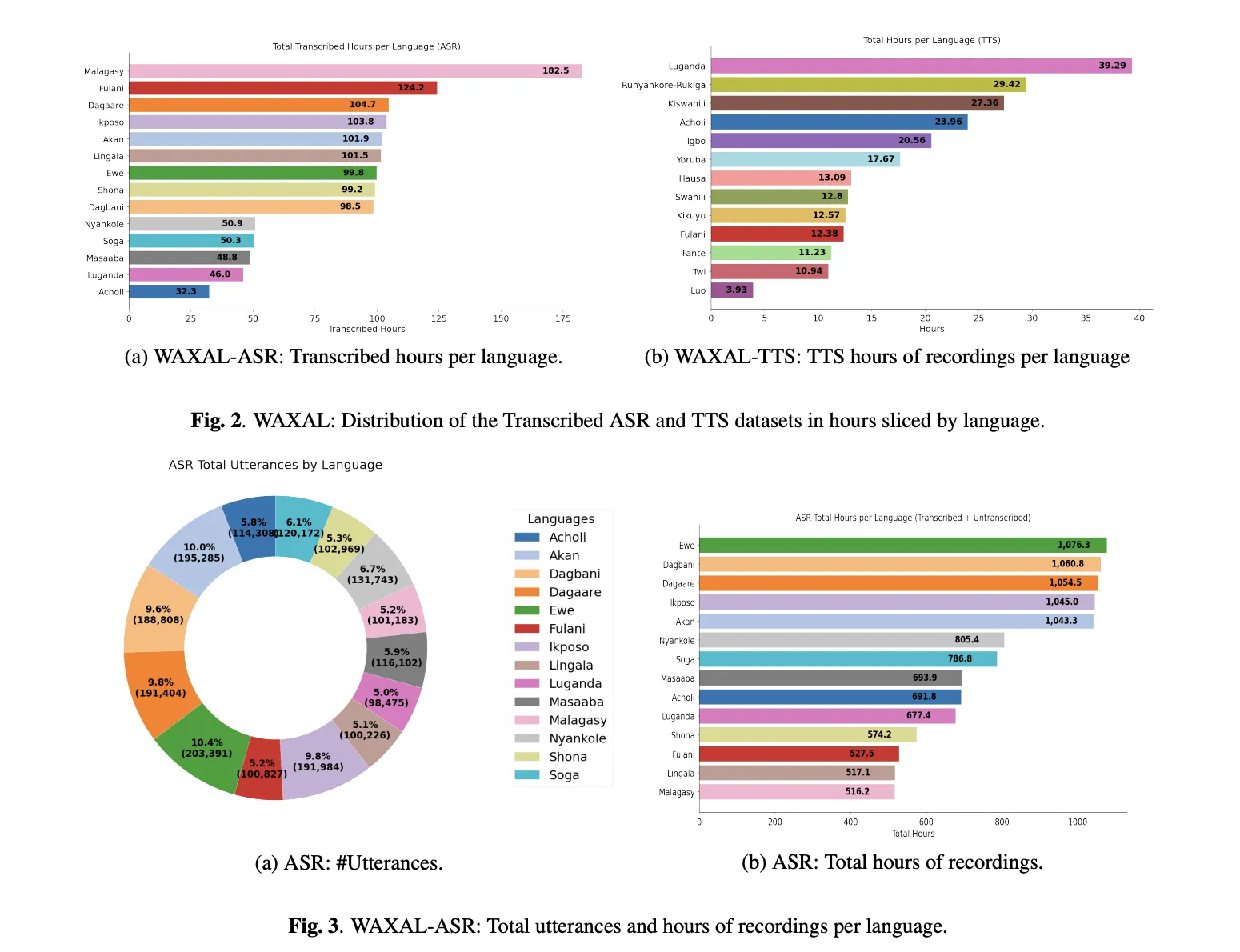
🧠Google AI has released WAXAL, an open multilingual speech dataset covering 24 African languages to improve Automatic Speech Recognition and Text-to-Speech systems. This addresses the significant data distribution problem where African languages remain poorly represented in speech technology training corpora.
🏢 Google
AIBullisharXiv – CS AI · Mar 176/10
🧠Researchers introduce AutoEP, a framework that uses Large Language Models (LLMs) as zero-shot reasoning engines to automatically configure algorithm hyperparameters without requiring training. The system combines real-time landscape analysis with multi-LLM reasoning to outperform existing methods and enables open-source models like Qwen3-30B to match GPT-4's performance in optimization tasks.
🧠 GPT-4
AIBullisharXiv – CS AI · Mar 176/10
🧠Researchers introduce PolyGLU, a new transformer architecture that enables dynamic routing among multiple activation functions, mimicking biological neural diversity. The 597M-parameter PolychromaticLM model shows emergent specialization patterns and achieves strong performance despite training on significantly fewer tokens than comparable models.
🏢 Nvidia
AINeutralarXiv – CS AI · Mar 176/10
🧠Researchers introduce the Infinite Problem Generator (IPG), an AI framework that creates verifiable physics problems using executable Python code instead of probabilistic text generation. The system released ClassicalMechanicsV1, a dataset of 1,335 physics problems that demonstrates how code complexity can precisely measure problem difficulty for training large language models.
AIBullisharXiv – CS AI · Mar 176/10
🧠Researchers introduced AssetOpsBench, a unified framework for benchmarking AI agents in industrial asset operations and maintenance automation. The platform has gained significant adoption with 250+ users and 500+ submitted agents, providing a standardized way to evaluate AI solutions for Industry 4.0 applications.
AIBullishTechCrunch – AI · Mar 166/10
🧠Nvidia announced NemoClaw, an open enterprise AI agent platform built on the viral OpenClaw framework. This platform appears to address security concerns, which Nvidia identifies as one of its biggest challenges in the AI space.
🏢 Nvidia
AINeutralarXiv – CS AI · Mar 166/10
🧠Researchers have launched LLM BiasScope, an open-source web application that enables real-time bias analysis and side-by-side comparison of outputs from major language models including Google Gemini, DeepSeek, and Meta Llama. The platform uses a two-stage bias detection pipeline and provides interactive visualizations to help researchers and practitioners evaluate bias patterns across different AI models.
🏢 Hugging Face🧠 Gemini🧠 Llama
AIBullisharXiv – CS AI · Mar 166/10
🧠Researchers have developed Feynman, an AI agent that generates high-quality diagram-caption pairs at scale for training vision-language models. The system created a dataset of 100k+ well-aligned diagrams and introduced Diagramma, a benchmark for evaluating visual reasoning capabilities.
AIBullishMarkTechPost · Mar 157/10
🧠OpenViking is an open-source context database from Volcengine that revolutionizes how AI agents manage context by organizing it through a filesystem paradigm rather than flat text chunks. The system aims to make memory, resources, and skills manageable through a unified architecture for AI agent systems like OpenClaw.
AIBullishFortune Crypto · Mar 146/10
🧠OpenClaw is emerging as a popular trend in China's AI sector, representing the country's broader embrace of open-source artificial intelligence development. This movement is helping Chinese AI labs build stronger relationships and reputation within the global developer community.
AIBullishMarkTechPost · Mar 146/10
🧠Garry Tan has released gstack, an open-source toolkit that enhances AI-assisted coding by organizing Claude Code into 8 distinct workflow skills for product planning, engineering review, QA, and shipping. The system aims to improve coding reliability by separating different development phases into specialized operating modes with persistent browser runtime support.
🧠 Claude
AIBullishMIT Technology Review · Mar 116/10
🧠A 27-year-old Beijing software engineer named Feng Qingyang is launching his own company by leveraging OpenClaw, a new open-source AI tool that can autonomously control devices and complete tasks. The article highlights how entrepreneurs are capitalizing on China's growing enthusiasm for this AI automation technology.
AIBullisharXiv – CS AI · Mar 116/10
🧠Researchers have introduced Turn, a new compiled programming language specifically designed for building autonomous AI agents that use large language models. The language includes built-in features like cognitive type safety, confidence operators, and actor-based process models to address common challenges in agentic software development.
AIBullisharXiv – CS AI · Mar 116/10
🧠Researchers introduce Test-Driven AI Agent Definition (TDAD), a methodology that compiles AI agent prompts from behavioral specifications using automated testing. The approach addresses production deployment challenges by ensuring measurable behavioral compliance and preventing silent regressions in tool-using LLM agents.
AIBullishMarkTechPost · Mar 96/10
🧠Andrew Ng's team at DeepLearning.AI has launched Context Hub, an open-source tool that provides AI coding agents with up-to-date API documentation. The tool addresses the challenge of AI models working with static training data while APIs rapidly evolve, bridging the gap between outdated information and current API requirements.
AIBullisharXiv – CS AI · Mar 96/10
🧠Researchers developed A-3PO, an optimization technique for training large language models that eliminates computational overhead in reinforcement learning algorithms. The approach achieves 1.8x training speedup while maintaining comparable performance by approximating proximal policy through interpolation rather than explicit computation.
AIBullishMarkTechPost · Mar 96/10
🧠Andrej Karpathy has open-sourced 'Autoresearch', a minimalist 630-line Python tool that enables AI agents to autonomously conduct machine learning experiments on single NVIDIA GPUs. The tool is derived from the nanochat LLM training core and represents a streamlined approach to automated ML research.
🏢 Nvidia
AIBullisharXiv – CS AI · Mar 66/10
🧠Researchers have developed OPENDEV, an open-source command-line AI coding agent that operates directly in terminal environments where developers manage source control and deployments. The system uses a compound AI architecture with dual-agent design, specialized model routing, and adaptive context management to provide autonomous coding assistance while maintaining safety controls.