AIBullisharXiv – CS AI · Apr 77/10
🧠A comprehensive research review examines the current applications of Large Language Models (LLMs) across various healthcare specialties including cancer care, dermatology, dental care, neurodegenerative disorders, and mental health. The study highlights LLMs' transformative impact on medical diagnostics and patient care while acknowledging existing challenges and limitations in healthcare integration.
AIBullisharXiv – CS AI · Mar 117/10
🧠Google's AMIE conversational AI successfully completed a clinical feasibility study with 100 patients at an academic medical center, demonstrating 90% accuracy in including correct diagnoses and achieving high patient satisfaction. The AI showed comparable diagnostic quality to primary care physicians while requiring no safety interventions during real-world clinical interactions.
AIBullishMIT Technology Review · Jun 26/10
🧠Global healthcare systems face mounting pressure from chronic underinvestment, recruitment challenges, and surging demand from aging populations, resulting in fragmented care access and widespread staff burnout. The article explores how agentic AI technologies could help address these systemic inefficiencies and rehumanize healthcare delivery.
AINeutralArs Technica – AI · Apr 146/10
🧠American hospitals are increasingly deploying AI chatbots in patient portals to handle health inquiries, reflecting growing adoption of conversational AI in healthcare. This trend highlights both the potential for AI to improve healthcare accessibility and the significant risks associated with automating medical advice without adequate oversight.
AIBullisharXiv – CS AI · Mar 166/10
🧠Researchers introduce DeCode, a training-free framework that adapts large language models to provide better contextualized medical answers by decoupling content from delivery. The system significantly improves clinical question answering performance, boosting zero-shot results from 28.4% to 49.8% on medical benchmarks.
🏢 OpenAI
AIBullishNVIDIA AI Blog · Jan 146/103
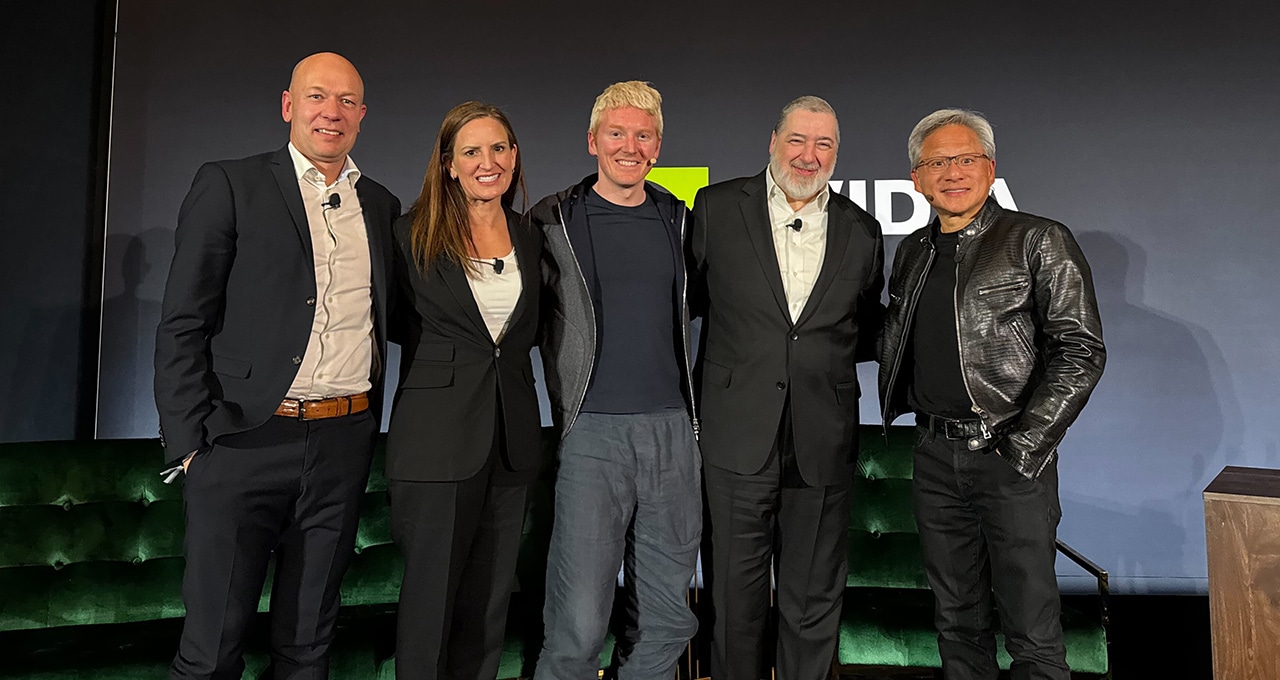
🧠NVIDIA CEO Jensen Huang participated in a fireside chat at the J.P. Morgan Healthcare Conference, discussing AI applications across healthcare sectors including genomic research, drug discovery, clinical trials, and patient care. The discussion highlighted how AI is making significant inroads throughout the entire healthcare industry.
AINeutralarXiv – CS AI · Mar 274/10
🧠Researchers propose a new framework for AI health agents that moves away from siloed, individual-user systems toward collaborative decision mediators that work within multi-stakeholder healthcare relationships. The study demonstrates through a pediatric case study that current AI tools fail to address collaboration gaps between patients, caregivers, and clinicians, proposing instead AI systems that preserve human authority while facilitating shared understanding.
AIBullishOpenAI News · Apr 14/106
🧠Oscar, a health insurance company, is implementing artificial intelligence technology to reduce healthcare costs and enhance patient care quality. The integration of AI in health insurance represents a growing trend of technology adoption in traditional healthcare systems.