#privacy News & Analysis
Recent coverage of #privacy has grown substantially, with 136 articles published in the last 30 days across the indexed collection of 441 total pieces. Discussion sentiment has shifted notably bullish, rising to 86.8% positive—an 18.8 percentage point increase compared to the previous quarter. The conversation centers heavily on artificial intelligence systems, with OpenAI, ChatGPT, and Gemini featuring prominently alongside broader concerns about #security and #machine-learning.
Academic research from arXiv dominates the source landscape, complemented by specialist coverage from crypto-focused outlets. The topic frequently intersects with blockchain discussions, particularly around Bitcoin and Ethereum. Scan the articles below to explore how privacy considerations are shaping current debates across technology and digital assets.
sentiment · last 30d (136 articles) · +18.8pp bullish vs prior 90dTop sources:arXiv – CS AI · 194Blockonomi · 20CoinDesk · 16crypto.news · 15U.Today · 14
Most-discussed entities:OpenAI · 8ChatGPT · 7Gemini · 6Claude · 6Anthropic · 6
AINeutralarXiv – CS AI · Mar 56/10
🧠Researchers propose Trustworthy Federated Learning (TFL) framework that treats trust as a continuously maintained system condition rather than static property, addressing challenges in AI systems with autonomous decision-making. The framework introduces Trust Report 2.0 as a privacy-preserving coordination blueprint for multi-stakeholder governance in federated learning deployments.
CryptoBullisharXiv – CS AI · Mar 57/10
⛓️Researchers propose a new offline CBDC payment system using IoT devices that integrates zero-knowledge proofs and secure elements for privacy-preserving transactions. The system addresses challenges of resource-constrained IoT devices while enabling secure digital payments without internet connectivity, particularly for underserved communities.
AIBullisharXiv – CS AI · Mar 56/10
🧠Researchers have developed PRIVATEEDIT, a privacy-preserving pipeline for face-centric image editing that keeps biometric data on-device rather than uploading to third-party services. The system uses local segmentation and masking to separate identity-sensitive regions from editable content, allowing high-quality editing while maintaining user control over facial data.
AIBearishDecrypt – AI · Mar 57/10
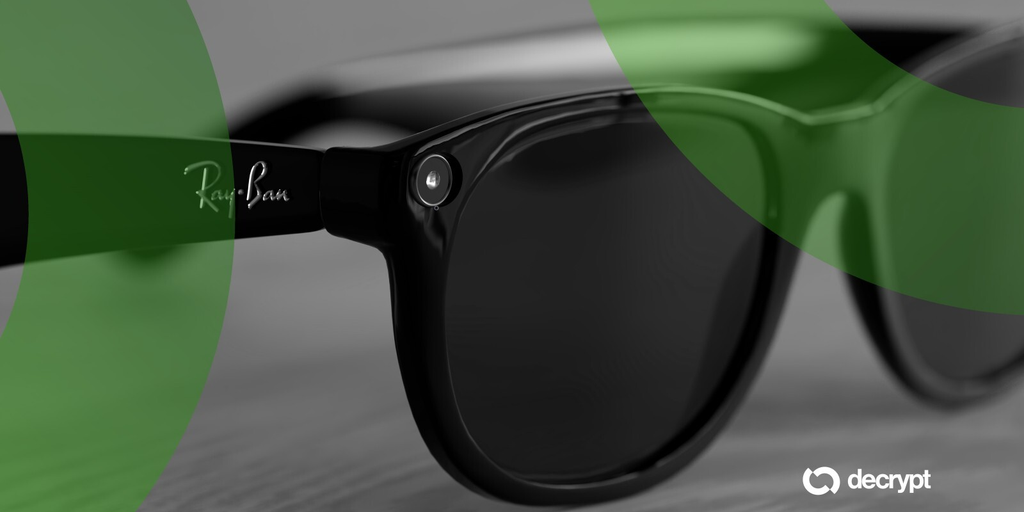
🧠Meta's Ray-Ban smart glasses are under investigation due to privacy concerns regarding the collection and use of sensitive footage. Regulators and privacy advocates are raising significant concerns about the potential misuse of data captured through the wearable technology.
AIBullisharXiv – CS AI · Mar 46/106
🧠SuperLocalMemory is a new privacy-preserving memory system for multi-agent AI that defends against memory poisoning attacks through local-first architecture and Bayesian trust scoring. The open-source system eliminates cloud dependencies while providing personalized retrieval through adaptive learning-to-rank, demonstrating strong performance metrics including 10.6ms search latency and 72% trust degradation for sleeper attacks.
AINeutralarXiv – CS AI · Mar 47/102
🧠Researchers introduce WARP, a new defense mechanism for machine unlearning protocols that protects against privacy attacks where adversaries can exploit differences between pre- and post-unlearning AI models. The technique reduces attack success rates by up to 92% while maintaining model accuracy on retained data.
CryptoBullishDecrypt – AI · Mar 47/103
⛓️Ethereum co-founder Vitalik Buterin is advocating for the blockchain platform to expand its focus beyond financial applications. He is promoting the development of 'sanctuary technologies' that encompass privacy tools, social systems, and broader infrastructure use cases.
$ETH
CryptoNeutralCrypto Briefing · Mar 37/102
⛓️Ethereum co-founder Vitalik Buterin is calling for the blockchain platform to expand its focus beyond financial applications. He advocates for developing 'sanctuary technologies' that protect privacy and enable digital coordination, suggesting a broader vision for Ethereum's utility in safeguarding digital rights.
$ETH
AIBearishArs Technica – AI · Mar 37/102
🧠Research demonstrates that Large Language Models (LLMs) can identify pseudonymous users with surprising accuracy when analyzing their online activity patterns at scale. This development poses significant threats to privacy protections that pseudonymity previously provided across digital platforms.
AINeutralarXiv – CS AI · Mar 37/105
🧠Researchers introduce 'agentic unlearning' through Synchronized Backflow Unlearning (SBU), a framework that removes sensitive information from both AI model parameters and persistent memory systems. The method addresses critical gaps in existing unlearning techniques by preventing cross-pathway recontamination between memory and parameters.
AIBullisharXiv – CS AI · Mar 37/102
🧠Researchers propose Partial Model Collapse (PMC), a novel machine unlearning method for large language models that removes private information without directly training on sensitive data. The approach leverages model collapse - where models degrade when trained on their own outputs - as a feature to deliberately forget targeted information while preserving general utility.
AIBearisharXiv – CS AI · Mar 37/103
🧠Researchers introduce Multi-PA, a comprehensive benchmark for evaluating privacy risks in Large Vision-Language Models (LVLMs), covering 26 personal privacy categories, 15 trade secrets, and 18 state secrets across 31,962 samples. Testing 21 open-source and 2 closed-source LVLMs revealed significant privacy vulnerabilities, with models generally posing high risks of facilitating privacy breaches across different privacy categories.
CryptoBullishCryptoSlate · Feb 277/106
⛓️Google Cloud, MoneyGram, Vodafone's Pairpoint, and eToro will run launch nodes for Midnight, a zero-knowledge privacy network targeting banks and financial institutions. The network focuses on selective disclosure and compliance verification rather than anonymity, with mainnet launch planned for March 2026.
CryptoBearishUnchained · Feb 277/103
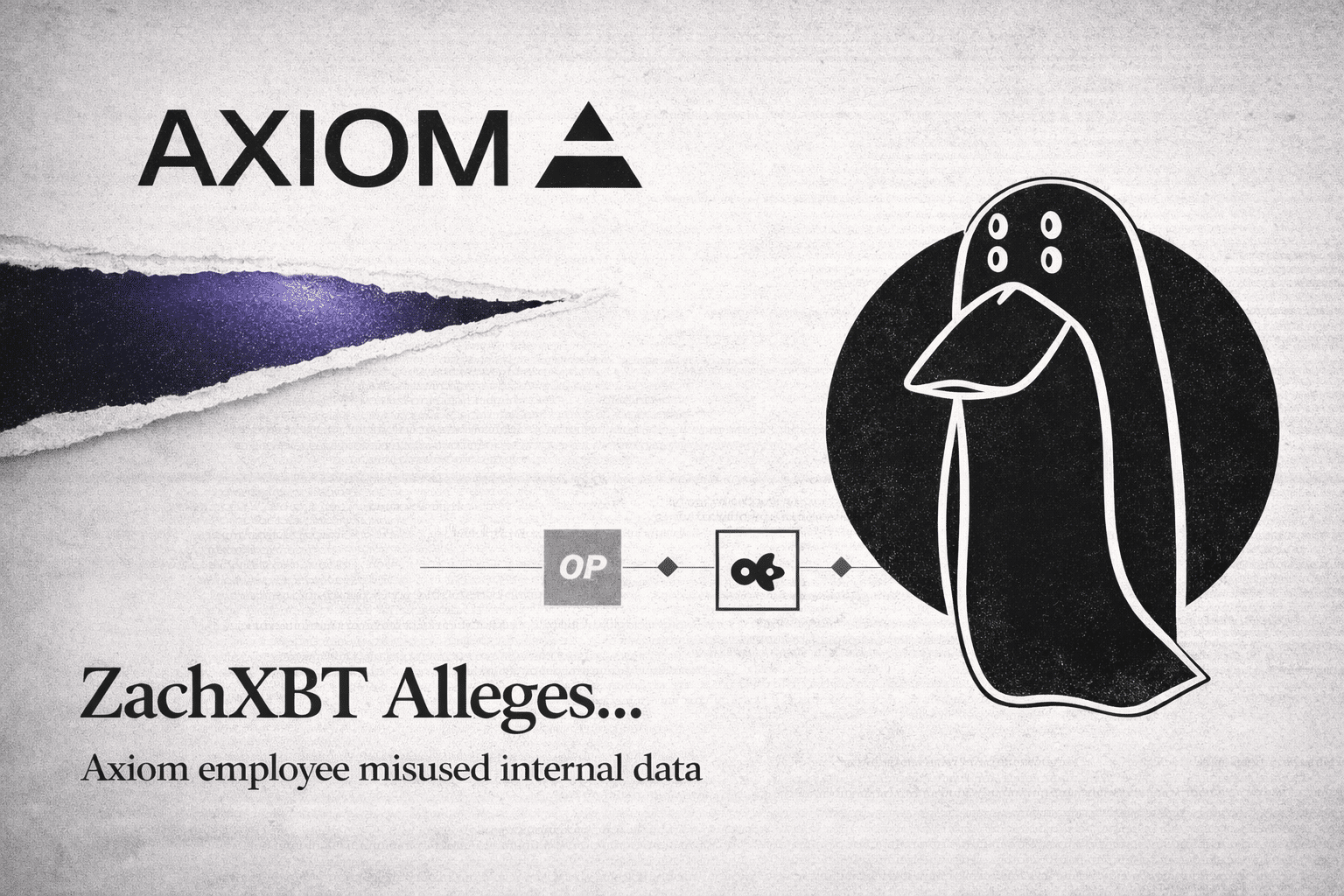
⛓️ZachXBT, a prominent blockchain investigator, has accused an Axiom employee of misusing internal wallet data. This allegation raises concerns about data privacy and potential insider abuse at cryptocurrency infrastructure companies.
AIBullisharXiv – CS AI · Feb 277/108
🧠Researchers introduce RAGdb, a revolutionary architecture that consolidates Retrieval-Augmented Generation into a single SQLite container, eliminating the need for cloud infrastructure and GPUs. The system achieves 100% entity retrieval accuracy while reducing disk footprint by 99.5% compared to traditional Docker-based RAG stacks, enabling truly portable AI applications for edge computing and privacy-sensitive environments.
AIBearisharXiv – CS AI · Feb 277/107
🧠Researchers demonstrate that large language models can successfully deanonymize pseudonymous users across online platforms at scale, achieving up to 68% recall at 90% precision. The study shows LLMs can match users between platforms like Hacker News and LinkedIn, or across Reddit communities, using only unstructured text data.
$NEAR
CryptoBearishDL News · Feb 267/104
⛓️Employees at Axiom, a Solana trading platform, are accused of insider trading by using internal tools to access and track customer wallet data and trading activity. This represents a serious breach of customer trust and privacy in the cryptocurrency trading space.
$SOL
CryptoBullishBankless · Feb 257/105
⛓️The Ethereum Foundation has released an updated 'Strawmap' roadmap outlining development priorities and timeline for Ethereum. The roadmap highlights ambitious goals including shielded ETH transfers for enhanced privacy and scaling to 10,000 transactions per second.
$ETH
DeFiBullishThe Defiant · Feb 247/104
💎The Ethereum Foundation has established a dedicated team to support DeFi developers with a focus on privacy, security, and open-source development principles. This initiative aims to advance decentralized finance while maintaining core values of permissionless access and user privacy.
$ETH
AI × CryptoBearishDL News · Feb 197/107
🤖OpenAI's KYC provider has been accused of sharing users' cryptocurrency addresses with federal agencies, according to an investigation validated by multiple IT specialists and security experts. This represents a significant privacy breach that could affect user trust in AI platforms requiring identity verification.
DeFiBullishCoinTelegraph – DeFi · Feb 177/105
💎StarkWare is integrating EY's Nightfall privacy protocol into Starknet to provide institutions with private payments and DeFi access on Ethereum-aligned infrastructure. This integration aims to combine privacy features with auditability requirements that institutions need.
$ETH
CryptoBullishWu Blockchain · Feb 147/103
⛓️LayerZero has announced the launch of Zero, a new Layer 1 blockchain specifically designed to tackle scalability and privacy issues that have hindered Wall Street's adoption of blockchain technology. This development represents LayerZero's strategic move to bridge traditional finance with blockchain infrastructure.
$AAVE
AI × CryptoNeutralCryptoSlate – AI · Feb 127/105
🤖Vitalik Buterin published a research proposal positioning Ethereum as a privacy-preserving settlement layer for AI and API usage, rather than running AI models directly on-chain. The proposal, co-authored with Davide Crapis, suggests focusing on metered AI services settlement instead of putting LLMs on blockchain.
$ETH
CryptoBearishBankless · Feb 117/106
⛓️Roman Semenov, a developer of the privacy-focused cryptocurrency mixer Tornado Cash, has been added to the FBI's Most Wanted list under the Trump administration. This represents an escalation in law enforcement efforts targeting cryptocurrency privacy tools and their developers.
AI × CryptoBullishCoinTelegraph – AI · Feb 107/106
🤖Ethereum co-founder Vitalik Buterin outlined how Ethereum could integrate with AI systems by providing privacy infrastructure, verification mechanisms, and economic layers. This integration aims to help decentralize AI development and create broader societal benefits through blockchain-based solutions.
$ETH