AI × CryptoBullishCrypto Briefing · Jun 257/10
🤖Bitcoin miners are increasingly recognized as beneficial to electrical grid stability while simultaneously supporting AI infrastructure growth. This development enables miners to diversify revenue streams beyond Bitcoin price fluctuations by providing grid services and computational resources for AI applications.
$BTC
AI × CryptoBullishCrypto Briefing · Jun 257/10
🤖HIVE Digital has signed a 10-year Letter of Intent (LOI) for HPC colocation services at its Boden, Sweden facility, signaling a strategic pivot from cryptocurrency mining toward AI infrastructure. This move reflects the company's repositioning toward more stable, long-term revenue streams rather than relying on volatile crypto mining returns.
AIBullishCrypto Briefing · Jun 257/10
🧠Rystad Energy forecasts the fuel cell market will reach $30 billion by 2030, driven primarily by surging energy demands from AI data centers. The projection underscores how computational infrastructure is reshaping energy markets and highlighting infrastructure gaps that fuel cells could help address.
GeneralBullishCrypto Briefing · Jun 257/10
📰CME is launching wind derivatives across three continents, marking a significant expansion of exchange-traded energy products beyond traditional markets. This move aims to democratize access to wind hedging instruments, increase market transparency, and reduce reliance on over-the-counter derivatives markets in the renewable energy sector.
GeneralBullishCrypto Briefing · Jun 247/10
📰Sunrun's stock surged 31% following an announced partnership with Tesla to supply power from residential solar systems back to the grid. The collaboration aims to enhance grid resilience while creating new revenue opportunities for homeowners with solar installations.
AIBullishCrypto Briefing · Jun 247/10
🧠Microsoft's Project Kilby aims to secure dedicated power delivery by 2028 through partnership with energy providers, reflecting tech giants' critical need for massive energy infrastructure to support AI operations. This trend of securing long-term energy commitments signals growing recognition that reliable power is now a strategic bottleneck for AI development and deployment.
GeneralBullishCrypto Briefing · Jun 237/10
📰Tesla and NatPower have announced a $5 billion battery storage initiative across Italy and the UK, designed to enhance European energy infrastructure through scalable renewable energy solutions. The project underscores Tesla's expanding role in global energy transition while addressing critical grid stability challenges in Europe.
AI × CryptoBullishCrypto Briefing · Jun 227/10
🤖HIVE has successfully completed an AI research collaboration with Columbia University that demonstrates the viability of cost-effective AI model training using older GPU hardware powered by renewable energy in Paraguay. The project showcases how cryptocurrency mining infrastructure can be repurposed for AI workloads while leveraging sustainable energy sources, establishing a model for efficient global AI development.
AIBearishCrypto Briefing · Jun 217/10
🧠AI data-center developers are increasingly building on-site gas plants to secure independent power supplies, bypassing grid infrastructure constraints. This trend threatens renewable energy adoption goals and locks in fossil fuel dependency, while raising environmental and community concerns.
GeneralBearishCrypto Briefing · Jun 107/10
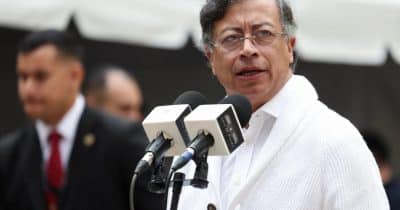
📰Colombia's President Gustavo Petro has been suspended from office until after the country's elections, creating uncertainty around his administration's economic agenda. The suspension threatens renewable energy initiatives and could erode investor confidence in the region, with potential ripple effects on cryptocurrency mining operations and broader blockchain development in Latin America.
$BTC
AI × CryptoBullishCrypto Briefing · Jun 107/10
🤖Ambrosia Energy is planning to deploy solar and battery infrastructure to power AI data centers by 2030, addressing the escalating energy demands of artificial intelligence operations. The initiative aims to provide sustainable energy solutions while capitalizing on the convergence of renewable energy adoption and explosive AI compute growth.
AI × CryptoBullishCrypto Briefing · Jun 67/10
🤖Convalt Energy announced a $6.2 billion investment to develop a hydropower plant and AI data center in Lesotho, a strategic infrastructure project designed to enhance the country's energy independence while positioning the US as a competitive player in Africa's emerging energy market.
GeneralBearishCrypto Briefing · Jun 5🔥 8/10
📰A blockade of the Strait of Hormuz amid Iran conflict has disrupted critical energy infrastructure, exposing vulnerabilities in global fossil fuel supply chains. The incident is accelerating discussions around renewable energy adoption as a more resilient alternative to traditional oil and gas dependency.
AIBearisharXiv – CS AI · Jun 57/10
🧠A comprehensive study of 403 U.S. hyperscale data centers reveals they consumed 68-99 TWh of electricity between May 2024 and April 2025, generating 37-54 million metric tons of CO2 emissions. The findings show HDC carbon intensity is 48% higher than the national grid average, driven by rapid AI infrastructure expansion and heavy reliance on fossil fuels.
GeneralBearishFortune Crypto · Jun 27/10
📰New York is suing the Trump administration for allegedly offering TotalEnergies $1 billion to abandon an offshore wind project and redirect investment toward fossil fuels. The state characterizes the deal as a sham that contradicts clean energy commitments and represents a significant policy reversal on renewable energy development.
AIBullisharXiv – CS AI · Jun 27/10
🧠SPARROW is an open-source hardware-software platform that combines solar power, edge AI, and satellite connectivity to enable autonomous biodiversity monitoring in remote ecosystems. Deployed across four continents, the system collected over 2 million images and recordings in 190 days while operating continuously without human intervention, establishing a foundation for distributed ecological monitoring networks.
AIBearisharXiv – CS AI · Jun 27/10
🧠A research study finds that AI data centers' renewable energy certificate (REC) claims mask significant grid reliability problems caused by timing mismatches between power consumption and generation. The research demonstrates that even 100% REC-covered facilities increase fossil fuel generation, wholesale prices by up to 25%, and outages near grid locations, with on-site storage and colocation emerging as effective mitigation strategies.
GeneralBullishFortune Crypto · Jun 1🔥 8/10
📰Escalating U.S.-Israeli military tensions with Iran have created the largest oil supply disruption on record, prompting Gulf Cooperation Council states to accelerate renewable energy investments worth billions of dollars. This geopolitical shock is redirecting capital flows and reshaping regional energy strategy away from fossil fuel dependency.
AIBullishAI News · May 227/10
🧠China has used artificial intelligence to map its entire renewable energy grid, addressing a critical global challenge as AI consumption strains electricity infrastructure. The development highlights how AI technology can optimize energy systems, with major implications for grid stability and renewable energy integration worldwide as AI demand continues accelerating.
AI × CryptoBullishCrypto Briefing · May 127/10
🤖IREN is raising $2 billion through convertible notes to fund data center expansion and AI infrastructure powered by renewable energy. This financing move positions the company to capitalize on growing demand for sustainable AI computing infrastructure.
AIBullishCrypto Briefing · May 117/10
🧠Cowboy Space has secured $275 million in funding to develop orbital data centers powered by solar energy. The infrastructure aims to address the computational demands of AI workloads while leveraging space-based renewable energy, potentially reshaping how data-intensive applications are deployed and operated.
AIBearishcrypto.news · May 77/10
🧠Microsoft is reconsidering its ambitious '100/100/0' climate commitment as AI infrastructure spending accelerates, potentially delaying or abandoning the pledge to achieve 100% renewable energy, 100% water replenishment, and zero waste by 2030. The conflict between environmental goals and massive capital investments required for AI datacenter expansion highlights a fundamental tension in the tech industry's sustainability ambitions.
GeneralBearishCrypto Briefing · Apr 187/10
📰The Netherlands has activated its energy crisis plan in response to Middle East oil supply disruptions, underscoring Europe's exposure to geopolitical volatility. This development is likely to accelerate continental shifts toward energy diversification, with potential implications for energy markets and cryptocurrency mining operations dependent on stable power supplies.
AIBearisharXiv – CS AI · Apr 107/10
🧠A new study reveals that AI data centers are becoming a critical driver of electricity demand, with projected consumption doubling to 239-295 TWh by 2030. The concentrated geographic clustering of these facilities in North America, Western Europe, and Asia-Pacific creates significant grid vulnerabilities in regions like Oregon, Virginia, and Ireland, requiring urgent infrastructure planning.
AIBullisharXiv – CS AI · Feb 277/107
🧠Researchers developed a system that trains large language models using renewable energy during curtailment periods when excess clean electricity would otherwise be wasted. The distributed training approach across multiple GPU clusters reduced operational emissions to 5-12% of traditional single-site training while maintaining model quality.