AINeutralarXiv – CS AI · Jun 197/10
🧠Researchers introduce a framework for evaluating biological capabilities and risks of AI agent systems capable of autonomous scientific research. The paper synthesizes evidence on AI-enabled biological risks and provides practical guidance for policymakers, funders, and biosecurity practitioners to interpret evaluation results with appropriate caution, highlighting how methodological design choices significantly shape what conclusions can be drawn about risk.
AINeutralarXiv – CS AI · Jun 127/10
🧠Researchers introduce SciAgentArena, a comprehensive benchmark with ~200 tasks designed to evaluate AI agents in real-world scientific research across multiple domains. The study reveals that while current AI agents excel at well-defined data-analysis tasks, they struggle significantly with novel insight generation, open-ended exploration, and autonomous reasoning in complex scientific contexts.
AINeutralarXiv – CS AI · Apr 147/10
🧠Researchers introduce PaperScope, a comprehensive benchmark for evaluating multi-modal AI systems on complex scientific research tasks across multiple documents. The benchmark reveals that even advanced systems like OpenAI Deep Research and Tongyi Deep Research struggle with long-context retrieval and cross-document reasoning, exposing significant gaps in current AI capabilities for scientific workflows.
🏢 OpenAI
AIBullishFortune Crypto · Mar 177/10
🧠Former OpenAI researcher Andrej Karpathy demonstrated an autonomous AI agent called 'autoresearch' that conducted 700 experiments in just 2 days. While the agent didn't improve its own code, it showcases the potential for AI systems to autonomously conduct scientific research and points toward future self-improving AI capabilities.
🏢 OpenAI
AIBullisharXiv – CS AI · Mar 97/10
🧠Google's Gemini-based AI models, particularly Gemini Deep Think, have demonstrated the ability to collaborate with researchers to solve open problems and generate new proofs across theoretical computer science, economics, optimization, and physics. The research identifies effective techniques for human-AI collaboration including iterative refinement, problem decomposition, and deploying AI as adversarial reviewers to detect flaws in existing proofs.
🧠 Gemini
AIBullisharXiv – CS AI · Mar 47/104
🧠Researchers introduced ClawdLab, an open-source platform for autonomous AI scientific research, following analysis of OpenClaw framework and Moltbook social network that revealed security vulnerabilities across 131 agent skills and over 15,200 exposed control panels. The platform addresses identified failure modes through structured governance and multi-model orchestration in fully decentralized AI systems.
AIBullisharXiv – CS AI · Mar 46/102
🧠Researchers have developed APRES, an AI-powered system that uses Large Language Models to automatically revise scientific papers based on evaluation rubrics that predict citation counts. The system improves citation prediction accuracy by 19.6% and produces paper revisions that human experts prefer 79% of the time over original versions.
AINeutralarXiv – CS AI · Mar 37/103
🧠Researchers introduce InnoGym, the first benchmark designed to evaluate AI agents' innovation potential rather than just correctness. The framework measures both performance gains and methodological novelty across 18 real-world engineering and scientific tasks, revealing that while AI agents can generate novel approaches, they lack robustness for significant performance improvements.
AINeutralarXiv – CS AI · Feb 277/107
🧠Researchers introduce SC-ARENA, a new natural language evaluation framework for testing large language models in single-cell biology research. The framework addresses limitations in existing benchmarks by incorporating biological knowledge and real-world task formats to better assess AI models' understanding of cellular biology.
AIBullishOpenAI News · Feb 57/105
🧠An autonomous laboratory system combining OpenAI's GPT-5 with Ginkgo Bioworks' cloud automation platform achieved a 40% reduction in cell-free protein synthesis costs through closed-loop experimentation. This breakthrough demonstrates AI's potential to significantly optimize biotechnology processes and reduce manufacturing expenses.
AIBullishOpenAI News · Dec 187/106
🧠OpenAI and the U.S. Department of Energy signed a memorandum of understanding to enhance collaboration on AI and advanced computing for scientific discovery. The agreement establishes a framework for applying AI to high-impact research across DOE national laboratories.
AIBullishGoogle DeepMind Blog · Nov 257/102
🧠AlphaFold has significantly accelerated scientific research and biological discovery over the past five years. The AI system has enabled breakthroughs in protein structure prediction, fueling innovation across the global scientific community.
AIBullishOpenAI News · Nov 207/106
🧠OpenAI has released the first research cases demonstrating how GPT-5 accelerates scientific discovery across mathematics, physics, biology, and computer science. The AI system is shown collaborating with researchers to generate mathematical proofs, uncover new insights, and significantly increase the pace of scientific progress.
AIBullishOpenAI News · Oct 237/105
🧠Consensus has deployed GPT-5 and OpenAI's Responses API to create a multi-agent research assistant that can rapidly read, analyze, and synthesize scientific evidence. The platform serves over 8 million researchers and aims to accelerate scientific discovery by automating research processes that previously took much longer.
AIBullishOpenAI News · Feb 287/105
🧠OpenAI collaborated with nine national laboratories to host an unprecedented gathering of 1,000 leading scientists in what appears to be a first-of-its-kind AI-focused scientific collaboration event. This large-scale initiative represents a significant step toward bridging AI research with traditional scientific institutions.
AIBullishNVIDIA AI Blog · Jan 247/104
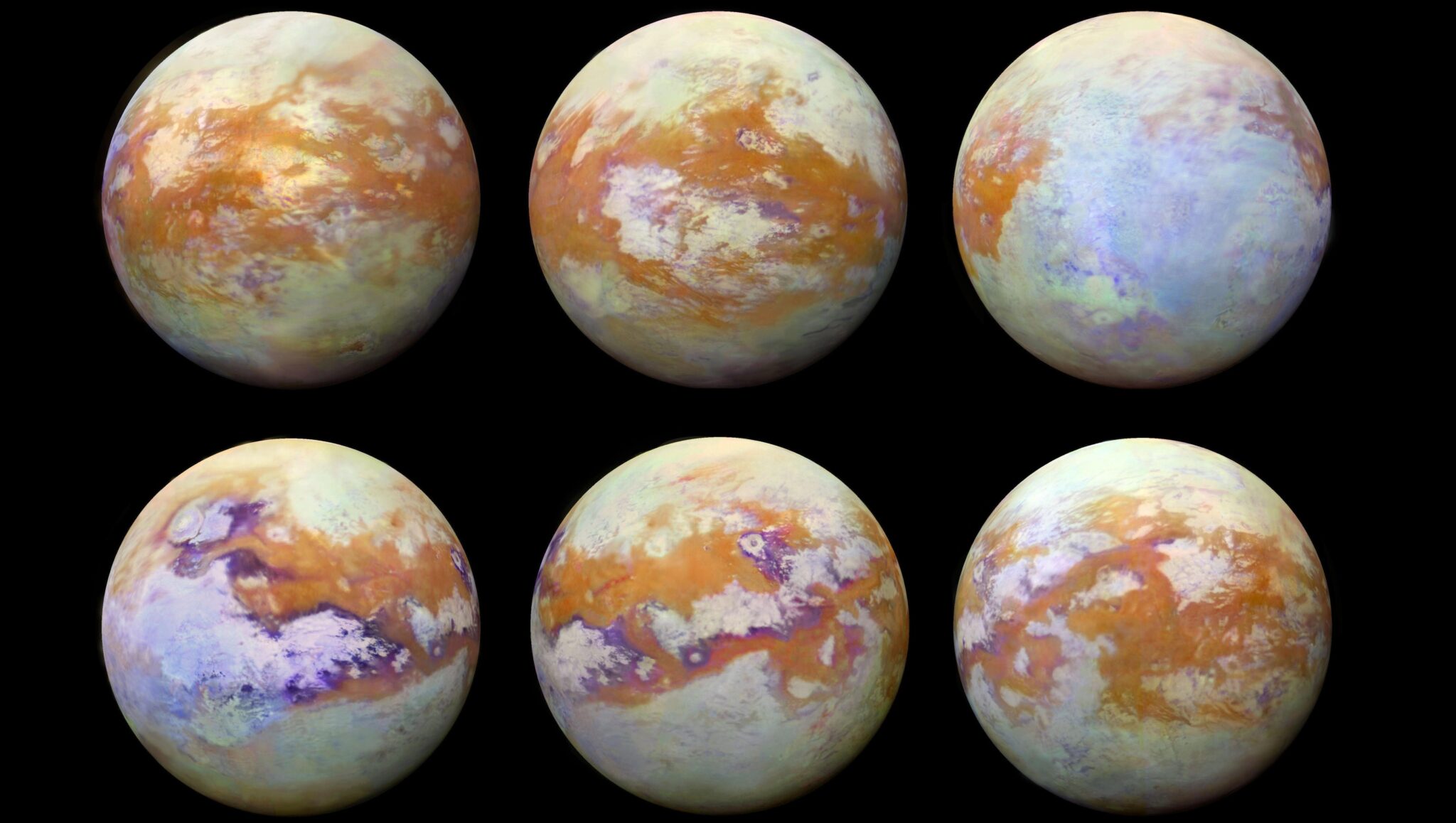
🧠NVIDIA GPUs enabled AI systems to process years of Cassini spacecraft data about Titan's methane clouds in just seconds, representing a major breakthrough in space exploration technology. This advancement demonstrates how AI and high-performance computing can dramatically accelerate scientific discovery and analysis of alien worlds.
GeneralBullishMIT News – AI · Jun 256/10
📰Scientific American features MIT's role in advancing American scientific innovation, highlighting emerging scientists and established researchers who drive technological progress. The article underscores how curiosity-driven research at institutions like MIT forms the foundation of America's competitive advantage in global scientific and technological development.
AINeutralarXiv – CS AI · Jun 256/10
🧠Researchers introduce SciRisk-Bench, a comprehensive safety benchmark for evaluating AI language models in scientific applications across 7 disciplines and 10 risk dimensions. The benchmark addresses growing concerns about LLM safety in high-stakes scientific contexts where errors could have serious consequences.
AINeutralarXiv – CS AI · Jun 256/10
🧠Researchers have developed domain-adapted large language model agents to support the Cherenkov Telescope Array's operations and gamma-ray data analysis. These agents combine specialized knowledge with automated validation and error correction to improve reliability and reduce manual workload in astronomical research workflows.
AINeutralarXiv – CS AI · Jun 26/10
🧠A new survey analyzes the adoption of Reasoning Language Models (RLMs) across 28 scientific disciplines, revealing significant disparities in maturity between hard sciences and social sciences/humanities. The research introduces a framework for assessing RLM development and identifies implementation gaps that could widen research productivity divides across scientific fields.
AINeutralarXiv – CS AI · Jun 26/10
🧠Agentic-J is a containerized AI assistant system designed for ImageJ/Fiji that enables biologists to perform complex microscopy image analysis tasks using natural language commands. The system generates executable, documented scripts with specialized sub-agents handling plugin management, code generation, debugging, and statistical reporting, making advanced image analysis more accessible to researchers without extensive programming expertise.
AIBullisharXiv – CS AI · Apr 156/10
🧠Researchers introduce GoodPoint, an AI system trained to generate constructive scientific feedback by learning from author responses to peer review. The method improves feedback quality by 83.7% over baseline models and outperforms larger LLMs like Gemini-3-flash, demonstrating that specialized training on valid, actionable feedback signals yields better results than general-purpose models.
🧠 Gemini
AINeutralarXiv – CS AI · Apr 146/10
🧠Researchers introduce SciTune, a framework for fine-tuning large language models with human-curated scientific multimodal instructions from academic publications. The resulting LLaMA-SciTune model demonstrates superior performance on scientific benchmarks compared to state-of-the-art alternatives, with results suggesting that high-quality human-generated data outweighs the volume advantage of synthetic training data for specialized scientific tasks.
AIBearisharXiv – CS AI · Mar 266/10
🧠A research paper argues that Large Language Models lack true intelligence and understanding compared to humans, as they rely on written discourse rather than tacit knowledge built through social interaction. The authors demonstrate this through examples like the Monty Hall problem, showing that LLM improvements come from changes in training data rather than enhanced reasoning abilities.
🧠 ChatGPT
AIBearishDecrypt – AI · Mar 166/10
🧠A viral story claiming ChatGPT helped cure a dog's cancer by designing a custom vaccine has been disputed by the actual scientists involved. The researchers say the AI's role was minimal and the credit for the breakthrough belongs to traditional scientific methods and expertise.
🧠 ChatGPT