AIBearisharXiv – CS AI · Apr 77/10
🧠A new study of 1,222 participants found that AI assistance, while improving short-term performance, significantly reduces human persistence and impairs independent performance after only brief 10-minute interactions. The research suggests current AI systems act as short-sighted collaborators that condition users to expect immediate answers, potentially undermining long-term skill acquisition and learning.
AIBullishOpenAI News · Oct 117/104
🧠Researchers demonstrate that AI self-play training enables simulated agents to autonomously develop complex physical skills like tackling, ducking, and ball handling without explicit programming. Combined with successful Dota 2 results, this suggests self-play will be fundamental to future powerful AI systems.
AIBullisharXiv – CS AI · Jun 256/10
🧠Researchers present a reinforcement learning framework for AI coaching that balances skill acceleration with learner independence by strategically withdrawing assistance as competence develops. A user study on drone racing demonstrates the approach significantly outperforms existing AI coaching baselines, addressing the critical problem of skill atrophy caused by over-reliance on AI assistance.
AINeutralCrypto Briefing · Jun 96/10
🧠Sue Khim discusses how AI tutoring tools like Koji can enhance student learning and problem-solving skills while maintaining the essential role of human teachers. The commentary addresses broader concerns about student debt reform, educational curriculum priorities, and the appropriate integration of AI in classrooms.
AINeutralFortune Crypto · Jun 36/10
🧠IBM executive Justina Nixon-Saintil has reached 22 million of her 30 million worker retraining goal with three years remaining, but now recognizes the true challenge lies ahead in ensuring meaningful skill acquisition rather than enrollment numbers. The initiative reflects growing corporate recognition that AI-driven workforce disruption requires proactive reskilling at scale.
AINeutralFortune Crypto · May 76/10
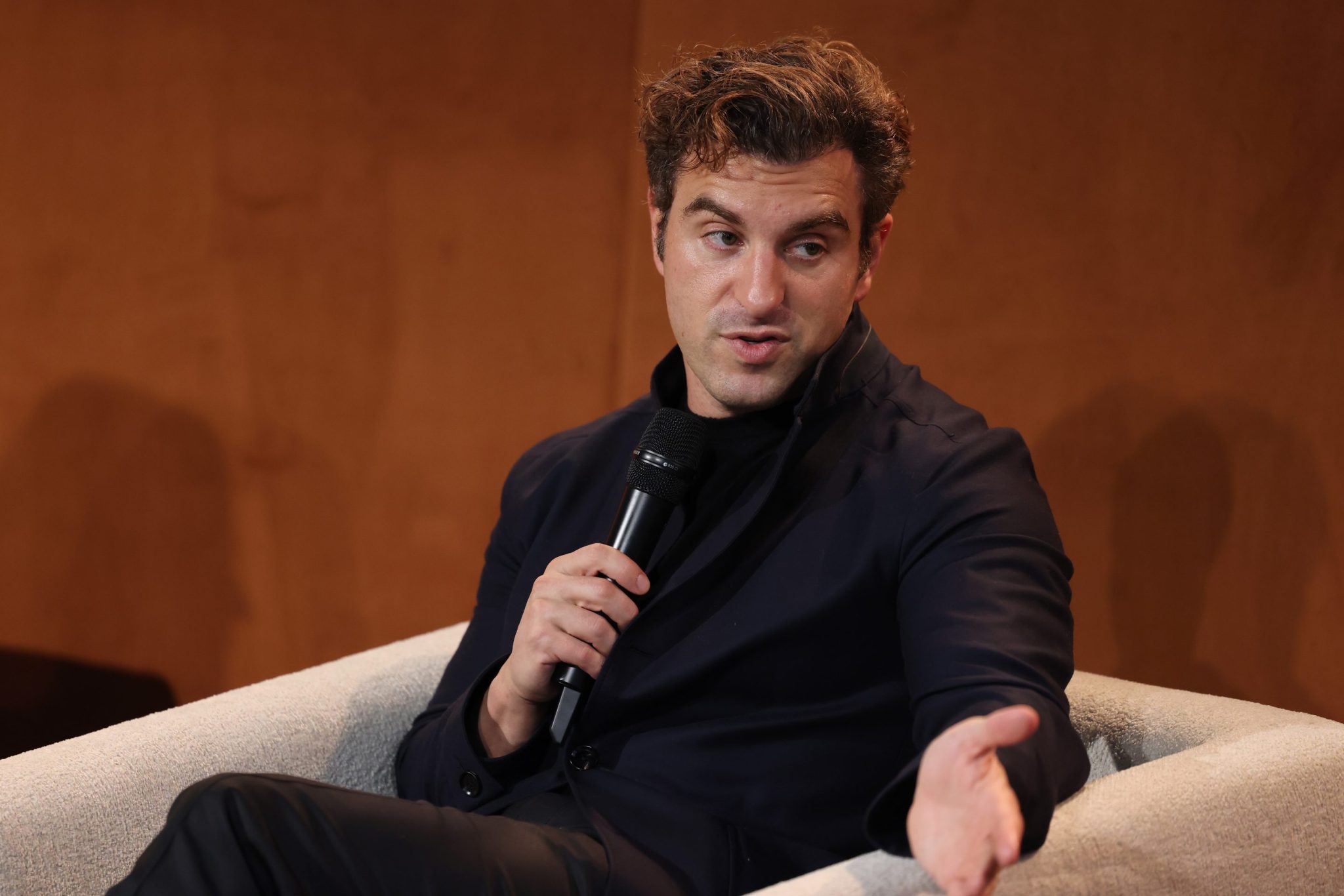
🧠Airbnb CEO Brian Chesky warns that two categories of workers will struggle in an AI-driven economy: pure people managers who rely solely on meetings and those who resist technological change. His comments reflect broader corporate concerns about workforce adaptation as AI automation reshapes job requirements across industries.
AINeutralarXiv – CS AI · May 16/10
🧠A research study examines how freelance knowledge workers use generative AI tools like ChatGPT for upskilling in competitive online labor markets. While freelancers increasingly leverage AI for structured learning and skill exploration, they face significant challenges including AI inconsistency, verification overhead, and a lack of credible mechanisms to signal AI-acquired skills to employers.
🧠 ChatGPT
AIBullishCrypto Briefing · Apr 196/10
🧠Nikhyl Singhal discusses how AI will fundamentally transform product management within two years, making traditional development methods obsolete. Product managers must adapt to new skills and increased stress as the industry experiences a renaissance driven by AI capabilities.
AIBearisharXiv – CS AI · Apr 146/10
🧠A quantitative study of undergraduate computing students reveals concerning perceptions about cognitive skill development in an AI-integrated educational landscape. Students expect all 11 measured cognitive skills to diminish in importance as AI adoption increases, prompting calls for educational interventions to preserve critical thinking and analytical capabilities.