AI × CryptoBullishCrypto Briefing · Jun 107/10
🤖SpaceX is preparing for an initial public offering that would combine space exploration with artificial intelligence ventures under Elon Musk's leadership. The IPO presents significant investment opportunities but raises corporate governance concerns regarding Musk's control and decision-making authority.
GeneralBullishCrypto Briefing · Jun 57/10
📰SpaceX is targeting a $75 billion IPO that could position it as one of the most valuable public companies globally, potentially reshaping capital markets and tech sector valuations. The offering would significantly amplify Elon Musk's portfolio of ventures and their influence on institutional investment flows.
$BTC
GeneralNeutralCrypto Briefing · Jun 47/10
📰SpaceX is pursuing a historic IPO with a $1.8 trillion valuation, marking one of the largest market entries in corporate history. While the offering could reshape capital markets, significant challenges around profitability and high valuation multiples present material risks for potential investors.
GeneralBullishCrypto Briefing · Jun 27/10
📰SpaceX is reportedly preparing to set IPO terms as early as Wednesday, with market predictions suggesting a closing valuation between $1.6 trillion and $2.5 trillion. The timing and valuation range indicate significant investor confidence in the company's space and satellite ventures.
AINeutralarXiv – CS AI · Mar 57/10
🧠Researchers propose an Adaptive Quantized Planetary Crater Detection System (AQ-PCDSys) that uses quantized neural networks and multi-sensor fusion to enable real-time AI-powered crater detection on resource-constrained space exploration hardware. The system addresses the critical bottleneck of deploying sophisticated deep learning models on power-limited, radiation-hardened space computers.
AIBullishIEEE Spectrum – AI · Feb 157/105
🧠NASA's Perseverance rover successfully completed its first AI-planned autonomous drive on Mars, traveling 456 meters using waypoints generated by Anthropic's Claude AI. The AI analyzed orbital imagery and elevation data to identify hazards and plan safe routes, representing a significant step toward fully autonomous planetary exploration.
AIBullishNVIDIA AI Blog · Jan 247/104
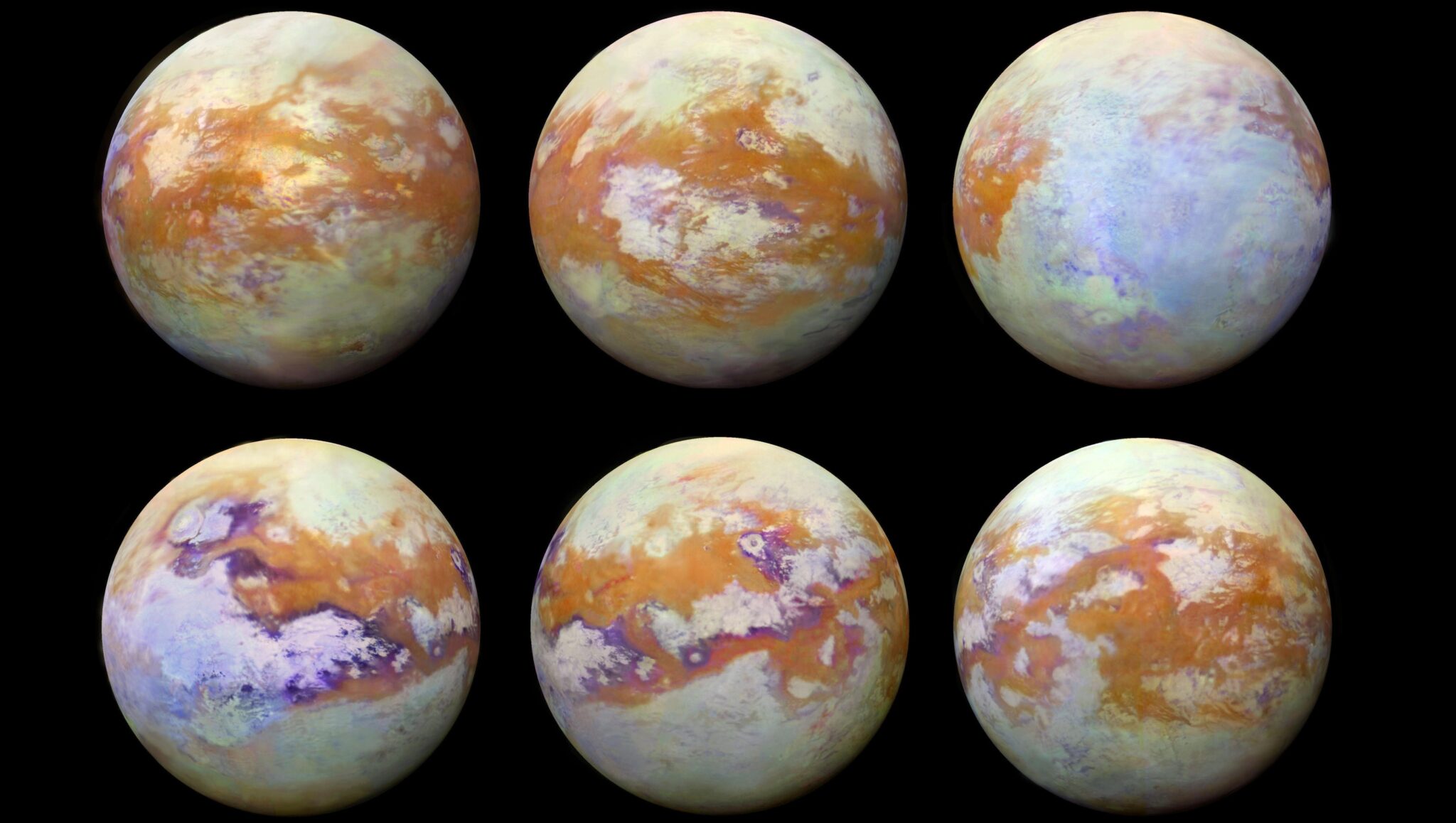
🧠NVIDIA GPUs enabled AI systems to process years of Cassini spacecraft data about Titan's methane clouds in just seconds, representing a major breakthrough in space exploration technology. This advancement demonstrates how AI and high-performance computing can dramatically accelerate scientific discovery and analysis of alien worlds.
GeneralBearishCrypto Briefing · Jun 116/10
📰A potential SpaceX IPO could redirect significant investment capital from cryptocurrencies toward space exploration, fundamentally altering capital allocation dynamics in tech and financial markets. The event would substantially increase Elon Musk's wealth while potentially creating competing investment narratives that fragment venture and institutional funding.
GeneralBullishCrypto Briefing · Jun 56/10
📰SpaceX is proceeding with a $75 billion IPO set for June 12 debut, with the offering reportedly oversubscribed, signaling strong institutional investor demand. The successful public offering could strengthen confidence in the aerospace sector and potentially reshape valuations and investment patterns across related industries.
AINeutralarXiv – CS AI · Jun 46/10
🧠Researchers have developed a framework using large language models to automatically translate natural language mission descriptions into executable trajectory optimization code for spacecraft operations. The approach demonstrates high success rates in formulating complex space mission problems, potentially reducing the domain expertise required for trajectory design in autonomous space exploration.
GeneralBearishFortune Crypto · May 296/10
📰Blue Origin's New Glenn rocket exploded during a pre-launch test at Cape Canaveral, marking the second major setback in months after an April engine failure. The incident creates fresh uncertainty for NASA's Artemis lunar program timeline, which depends on the vehicle for cargo missions.
GeneralNeutralMIT Technology Review · Feb 265/106
📰NASA's Perseverance rover discovered peculiar rocky outcrops with strange spots on Mars in July 2024, as America faces increased competition from China in the search for Martian life. The article also covers ambitious battery technology claims in the broader context of technological advancement.
AIBullishIEEE Spectrum – AI · Jan 16/105
🧠IEEE Spectrum highlights 11 major engineering developments expected in 2026, including Neuralink's Blindsight brain chip for vision restoration, Apple's foldable iPhone launch, and NASA's Artemis II moon mission. The developments span consumer technology, space exploration, and medical device innovations.
$NEAR$ATOM
AIBullishGoogle DeepMind Blog · Oct 245/105
🧠The article discusses the application of artificial intelligence technologies to enhance our understanding and perception of the universe. This represents a significant development in AI's capability to process and analyze complex astronomical and cosmological data.
GeneralNeutralFortune Crypto · Jun 225/10
📰Elon Musk reportedly could receive a billion shares of SpaceX contingent on establishing a human colony of one million people on Mars. However, prediction markets and SpaceX's own assessments suggest this milestone is unlikely to occur, casting doubt on the feasibility of this incentive structure.
GeneralNeutralFortune Crypto · Jun 225/10
📰NASA selected an all-male crew for the Artemis III mission, sparking discussion about gender representation in space exploration. The article examines research on how high-performing women develop leadership skills, suggesting that pathways to leadership begin early and require support from multiple stakeholders.
AIBullishNot Boring · May 225/10
🧠Weekly Dose of Optimism #194 highlights developments across biotech (Reta Phase 3), emerging technologies (Colossal, SpaceX), AI research (OpenAI x Erdős), and manufacturing (SendCutSend). The roundup captures momentum in deep tech and AI sectors, signaling continued innovation despite broader economic uncertainty.
$OP🏢 OpenAI
AINeutralarXiv – CS AI · Mar 44/102
🧠Researchers developed an AI diffusion model to reconstruct missing terrain data from Martian satellite imagery for Virtual Reality space exploration applications. The method trained on 12,000 NASA HiRISE heightmaps outperformed traditional interpolation techniques by 4-15% in accuracy and 29-81% in perceptual similarity.
GeneralNeutralMIT Technology Review · Feb 264/106
📰NASA has been leading Mars exploration through rovers searching for signs of life in Martian rocks, but China has recently entered the competition. The article appears to discuss the geopolitical implications of space exploration and the search for extraterrestrial life.