Real-time AI-curated news from 99,678+ articles across 50+ sources. Sentiment analysis, importance scoring, and key takeaways — updated every 15 minutes.
GeneralNeutralCrypto Briefing · May 97/10
📰The UAE has withdrawn from OPEC after 59 years of membership, marking a significant geopolitical shift that escalates tensions with Saudi Arabia over oil production policy. This exit could reshape global oil markets by potentially lowering prices and signaling the UAE's strategic pivot toward economic diversification beyond hydrocarbon dependence.
CryptoBullishBlockonomi · May 97/10
⛓️Bitcoin has surpassed $81,000 for the first time since January, driven by $2.44 billion in April ETF inflows—the strongest monthly institutional buying since October 2025. The article suggests this price recovery reflects genuine demand and highlights presale opportunities as potential alternatives to traditional altcoin investments.
$BTC
AI × CryptoBullishCrypto Briefing · May 97/10
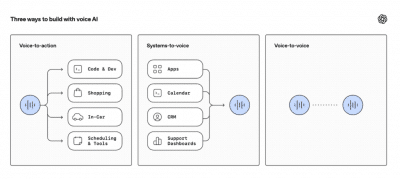
🤖OpenAI has released GPT-5-class voice models designed for real-time orchestration, which could significantly impact cryptocurrency markets and decentralized computing infrastructure. The modular voice AI tools are positioned to drive innovation and investment in AI infrastructure sectors, with potential implications for how decentralized systems handle computational tasks.
🏢 OpenAI🧠 GPT-5
GeneralBearishCrypto Briefing · May 9🔥 8/10
📰The US Treasury has issued a warning to foreign financial institutions regarding sanctions risks associated with Iran and China, potentially intensifying financial isolation of Iran and disrupting international trade relationships. This move signals heightened enforcement of existing sanctions regimes and may discourage global banks from conducting business with Iranian entities.
CryptoNeutralCrypto Briefing · May 97/10
⛓️BlackRock is expanding its tokenization initiatives by launching stablecoin reserve funds, a move that consolidates stablecoin backing under a major institutional player. While this reflects growing mainstream adoption of blockchain technology, critics warn it could centralize reserve management and amplify systemic risks if operational failures occur.
CryptoBearishBitcoinist · May 97/10
⛓️Chaos Labs disclosed a sophisticated wallet attack attempt over the weekend, believed to be carried out by a nation-state actor. In response, multiple crypto firms are switching oracle providers, with borrowing platform Tydro moving to Chainlink, highlighting growing security concerns across the industry.
$LINK
AI × CryptoBullishNewsBTC · May 97/10
🤖Binance founder CZ outlined four major crypto trends poised to reshape the industry: AI agent adoption and blockchain transactions, stablecoin evolution as core market infrastructure, tokenized real-world assets like gold and oil, and improved regulatory clarity in the US. He emphasized that institutional adoption has accelerated faster than expected and predicted exchanges will compete to become multi-asset 'everything exchanges.'
$BTC
CryptoBearishBitcoinist · May 97/10
⛓️Institutional investors are displaying divergent behavior between Bitcoin and Ethereum, with buying pressure on Bitcoin coinciding with selling activity in Ethereum, according to CryptoQuant analysis. This structural difference reveals deeper market dynamics beyond price momentum and suggests institutional positioning is a key driver of the current market split between the two largest cryptocurrencies.
$BTC$ETH
CryptoBearishCrypto Briefing · May 97/10
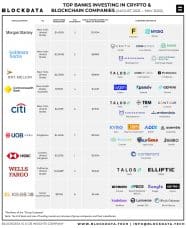
⛓️Bitwise has released a ranking of major banks with the most significant cryptocurrency exposure, identifying BNY Mellon and JPMorgan as leading institutions. The analysis highlights how traditional finance integration with crypto could introduce systemic risks that threaten global financial stability.
DeFiNeutralCoinDesk · May 96/10
💎A federal judge authorized Aave to move $71 million in ETH previously frozen on Arbitrum, assets linked to a North Korea-attributed hack. However, a legal freeze remains attached to the funds as terrorism-related plaintiffs continue pursuing their claims against the assets.
$ETH$AAVE$ARB
CryptoBullishNewsBTC · May 97/10
⛓️SEC Chair Paul Atkins outlined four key regulatory guidance areas for on-chain markets, including exchange definitions, broker-dealer frameworks, clearing agency standards, and crypto vault disclosures. The Hyperliquid Policy Center praised his approach for mapping on-chain systems to existing legal frameworks rather than forcing them into legacy categories.
$BTC
AIBullisharXiv – CS AI · May 97/10
🧠Researchers introduce BeliefMem, a novel memory architecture for LLM agents that retains multiple candidate conclusions with associated probabilities instead of committing to single deterministic interpretations. This probabilistic approach preserves uncertainty, allows agents to update confidence as new evidence arrives, and demonstrates superior performance on LoCoMo and ALFWorld benchmarks compared to existing memory methods.
AIBullisharXiv – CS AI · May 97/10
🧠Researchers propose Lorem Perturbation for Exploration (LoPE), a training technique that addresses the zero-advantage problem in reinforcement learning for large language models by prepending random Latin-based text to prompts, enabling broader reasoning exploration across 1.7B to 7B parameter models.
🏢 Perplexity
AIBullisharXiv – CS AI · May 97/10
🧠Researchers introduce BEACON, a milestone-guided policy learning framework that significantly improves training efficiency for long-horizon language agents by solving credit misattribution and sample inefficiency problems. The approach achieves 92.9% success rates on complex tasks—nearly double previous benchmarks—while improving sample utilization from 23.7% to 82.0%.
AIBullisharXiv – CS AI · May 97/10
🧠Researchers introduce LANTERN, a framework that uses large language models to automatically generate task descriptions and intelligently aggregate knowledge from multiple source tasks for reinforcement learning. The system achieves 40-60% improvements in sample efficiency by adaptively weighting source policies based on task similarity and managing teacher-student knowledge transfer through uncertainty-aware gating.
AINeutralarXiv – CS AI · May 97/10
🧠A new research paper identifies authorization propagation as a critical but underexplored security problem in multi-agent AI systems, distinct from prompt injection vulnerabilities. The paper argues that identity governance must become foundational infrastructure in AI orchestration, with seven structural requirements for maintaining authorization invariants across distributed agent interactions.
AINeutralarXiv – CS AI · May 97/10
🧠Researchers developed a causal analysis framework to audit bias in Large Language Models across seven global models, revealing that Western AI systems exhibit higher refusal rates for specific demographics while Eastern models show low intervention rates with regional sensitivities. The study demonstrates that traditional fairness metrics significantly overestimate demographic bias by conflating cultural context with model behavior, challenging current approaches to AI safety evaluation.
🧠 Llama
AINeutralarXiv – CS AI · May 97/10
🧠Researchers propose a new framework for understanding sycophancy in large language models, defining it as a failure where models prioritize social alignment with users over epistemic integrity and accurate reasoning. The three-condition framework identifies sycophancy when user cues trigger alignment behavior that compromises independent judgment, with implications for how AI safety researchers should evaluate and mitigate this failure mode.
AIBullisharXiv – CS AI · May 97/10
🧠Researchers introduce FinAgent-RAG, an advanced AI framework designed to answer complex financial questions by combining iterative retrieval, reasoning, and self-verification. The system achieves 76-78% accuracy on financial benchmarks while reducing computational costs by 41%, demonstrating practical viability for institutional financial analysis.
AIBullisharXiv – CS AI · May 97/10
🧠Researchers propose constant-context skill learning, a framework enabling LLM agents to learn reusable task procedures as lightweight modules rather than storing long prompts in memory. The approach reduces token usage per inference by 2-7x while maintaining or improving performance across multiple benchmark environments, addressing the privacy-capability tradeoff in agent deployment.
🧠 Llama
AIBullisharXiv – CS AI · May 97/10
🧠Zyphra has unveiled ZAYA1-8B, a compact reasoning-focused AI model with only 700M active parameters that matches larger competitors like DeepSeek-R1 on mathematics and coding tasks. The model introduces Markovian RSA, a novel test-time compute method that achieves 91.9% on AIME'25 benchmarks while maintaining computational efficiency, suggesting small models can compete with much larger reasoning systems through architectural innovation.
🧠 GPT-5🧠 Gemini
AIBullisharXiv – CS AI · May 97/10
🧠ReFlect introduces a training-free harness system that wraps around LLMs to detect and recover from reasoning failures in complex, multi-step tasks. Testing across six models shows significant improvements in task success rates, with gains inversely correlated to baseline performance, though the approach reveals limitations in how smaller models handle structured reasoning.
🧠 GPT-4🧠 Claude🧠 Sonnet
AINeutralarXiv – CS AI · May 97/10
🧠Researchers demonstrate that large reasoning models (LRMs) expose safety vulnerabilities in their intermediate reasoning traces that don't appear in final answers, creating a blind spot in current safety evaluation practices. Using adaptive multi-principle steering, they achieve up to 40.8% reduction in unsafe outputs while maintaining task accuracy, suggesting safety must be evaluated across the full reasoning-answer trajectory rather than just final responses.
AIBearisharXiv – CS AI · May 97/10
🧠Researchers have identified a critical architectural flaw in large vision-language models: attention mechanisms are largely redundant and misallocate computational resources, with random attention weights performing comparably to learned ones. This finding challenges fundamental assumptions about Transformer design and suggests current LVLMs inefficiently process visual information despite their scale.
AINeutralarXiv – CS AI · May 97/10
🧠Researchers introduce SkillRet, a large-scale benchmark dataset containing 17,810 public agent skills designed to evaluate how language model agents retrieve appropriate tools from massive skill libraries. The benchmark demonstrates that current retrieval methods struggle significantly with realistic large-scale deployments, though task-specific fine-tuning improves performance by up to 16.9 points on key metrics.