Real-time AI-curated news from 99,639+ articles across 50+ sources. Sentiment analysis, importance scoring, and key takeaways — updated every 15 minutes.
CryptoBullishCrypto Briefing · May 97/10
⛓️Zcash experienced a 110% price surge following Gemini's introduction of ZEC rewards on its credit card offering. The development signals growing institutional adoption of privacy-focused cryptocurrencies and could establish sustained demand patterns that reshape market dynamics for privacy coins.
🧠 Gemini
AI × CryptoBullishcrypto.news · May 97/10
🤖Coinbase's x402 payment infrastructure is now integrated natively into Amazon Bedrock AgentCore, enabling AI agents to autonomously execute payments in USDC without human intervention. This integration represents a significant step toward autonomous AI economic agents and bridges cryptocurrency payments with enterprise AI infrastructure.
CryptoBullishU.Today · May 97/10
⛓️The XRP Ledger sidechain has achieved a major roadmap milestone by launching blockchain-based settlement infrastructure for Euro remittances. This deployment represents a significant step toward expanding XRP's real-world utility beyond trading, demonstrating practical application in cross-border payment corridors.
$XRP
CryptoBullishBlockonomi · May 96/10
⛓️FET token has broken above its 200-day moving average at $0.2261, trading at $0.2385 supported by strong volume of 27.95M daily. This move marks a potential reversal after the token collapsed from $0.95 in mid-2024 to $0.10 in September 2025, with the formation of higher lows now suggesting a structural shift in momentum.
$FET
AI × CryptoBullishCrypto Briefing · May 97/10
🤖Jordi Visser argues that tokenization will fundamentally alter inflation dynamics while AI demand is driving unprecedented asset price increases. The tech sector faces competitive pressure to innovate or risk obsolescence as AI reshapes economic structures and Bitcoin's role in accelerating market disruption.
$BTC
CryptoBullishcrypto.news · May 97/10
⛓️Morgan Stanley has launched crypto trading on E*Trade at a flat 0.5% fee, undercutting major competitors like Coinbase and Charles Schwab. The pilot program targets E*Trade's 8.6 million users, signaling traditional finance's continued push into retail crypto adoption through established brokerage platforms.
AIBullishFortune Crypto · May 97/10
🧠Qualcomm CEO Cristiano Amon revealed the company is collaborating with major AI players on undisclosed next-generation devices, including powering OpenAI's first hardware venture. The announcement signals a strategic shift away from traditional smartphones toward AI-centric computing devices, positioning Qualcomm as critical infrastructure for the emerging AI hardware ecosystem.
🏢 OpenAI
AI × CryptoBearishcrypto.news · May 97/10
🤖A US court ruled that Meta's AI advertising tools materially contributed to creating fraudulent investment content, removing Section 230 immunity protections and exposing Meta to securities fraud liability. This decision establishes that platforms cannot hide behind blanket immunity when their own AI systems actively participate in generating deceptive content.
🏢 Meta
AI × CryptoBullishBlockonomi · May 97/10
🤖Elon Musk dissolved xAI into SpaceX and signed a major compute deal with Anthropic involving 220,000 Nvidia GPUs, with SpaceX planning an IPO potentially valued at $2 trillion. The move has triggered broader enthusiasm in AI-related crypto assets, while the article promotes Pepeto as a presale opportunity ahead of exchange listing.
🏢 Anthropic🏢 Nvidia🏢 xAI
AIBullishcrypto.news · May 97/10
🧠OpenAI has achieved $25 billion in annualized revenue and is preparing for an initial public offering targeting as early as Q4 2026. This milestone positions the AI leader for potential market entry and signals accelerating commercial traction in the generative AI sector.
🏢 OpenAI
AIBullishcrypto.news · May 97/10
🧠JPMorgan has elevated artificial intelligence from an experimental initiative to core infrastructure, allocating a $2 billion annual budget that now carries the same strategic importance as data centers and cybersecurity. This reclassification signals the bank's commitment to AI as essential to operations rather than discretionary spending.
CryptoBullishCrypto Briefing · May 97/10
⛓️Trump has expressed optimism about extending a Russia-Ukraine ceasefire, with analysts noting that geopolitical stabilization could reduce risk-off sentiment and positively influence cryptocurrency markets. The potential for sustained peace reduces macro uncertainty that typically drives investors toward traditional safe havens and away from volatile assets like crypto.
CryptoBullishNewsBTC · May 97/10
⛓️Tom Lee, chairman of Bitmine Technology, projects Bitcoin could reach $150,000-$200,000 by year-end 2026 and Ethereum $9,000-$12,000, citing the end of crypto winter. Bitcoin is currently defending critical support around $79,000-$80,300, with analysts warning that failure to hold this level could trigger significant selling pressure from underwater whale positions.
$BTC$ETH$SOL
GeneralBearishCrypto Briefing · May 97/10
📰Federal Reserve Governor Bowman warns that strict banking regulations are redirecting corporate lending away from traditional banks toward less-regulated shadow lenders, potentially increasing systemic risk due to reduced transparency and oversight. This regulatory arbitrage raises concerns about financial stability as lending activity migrates to less monitored sectors.
CryptoBearishBlockonomi · May 97/10
⛓️Ethereum has dropped below $2,300 following a significant whale sell-off of 244,000 ETH and concurrent outflows of $103.5 million from spot ETFs. The price decline signals potential weakness in investor sentiment, with the $2,389 level emerging as a critical resistance point for potential recovery.
$ETH
AI × CryptoBullishBlockonomi · May 97/10
🤖AWS has partnered with Coinbase and Stripe to launch an AI agent payment system utilizing USDC stablecoin, signaling enterprise-level convergence between artificial intelligence and cryptocurrency. This development positions AI agents as a primary growth narrative for the crypto sector in 2026, enabling autonomous systems to transact directly with digital assets.
CryptoNeutralBitcoinist · May 97/10
⛓️Major US crypto exchanges Coinbase, Kraken, and Gemini are lobbying Congress to remove a key provision from the anticipated CLARITY Act, a comprehensive crypto regulatory framework that has faced delays. This industry push signals growing influence of established exchanges in shaping US crypto legislation and highlights ongoing tension between innovation and regulatory oversight.
🧠 Gemini
GeneralBearishCrypto Briefing · May 97/10
📰US job growth exceeded expectations in April 2026, but underlying labor market weakness persists with declining workforce participation and sector-specific job losses. This mixed economic signal suggests structural challenges that could influence Federal Reserve policy and investor sentiment toward risk assets.
AIBullishcrypto.news · May 97/10
🧠Anthropic is in fundraising discussions targeting a $900 billion valuation with up to $50 billion in fresh capital, which would surpass OpenAI's current valuation. This mega-round reflects intensifying investor competition in the AI sector and demonstrates how rapidly valuations are escalating in the generative AI space.
🏢 OpenAI🏢 Anthropic
CryptoBullishNewsBTC · May 97/10
⛓️Ethereum trades below $2,300 while derivatives traders on Binance aggressively accumulate short positions despite the price recovery, creating a potentially unstable market structure. This setup—where shorts intensify into rising open interest during a rebound—historically precedes sharp moves higher as trapped short positions become forced to unwind.
$BTC$ETH$XRP🧠 ChatGPT
AI × CryptoBullishCrypto Briefing · May 97/10
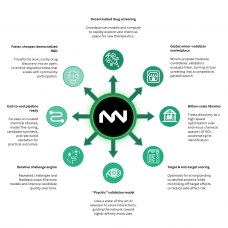
🤖Bittensor's SN68 subnet is being leveraged by Metanova Labs to accelerate pharmaceutical research and development through decentralized AI infrastructure. While this application demonstrates potential to democratize drug discovery and reduce costs, significant validation challenges remain before decentralized approaches can meaningfully compete with traditional pharma workflows.
$TAO
DeFiBearishBlockonomi · May 97/10
💎Ethereum faces significant ecosystem headwinds as decentralized exchange volume has collapsed 53% over six months and DApp revenue declined nearly 49%, while competitors like Solana and Hyperliquid capture approximately 42% of total DApp revenue. ETH's price struggles below $2,400 resistance with weak bullish momentum, underperforming the broader market with a 21% yearly decline.
$ETH$SOL
GeneralBearishCrypto Briefing · May 97/10
📰The US Treasury has imposed sanctions on 10 entities accused of supporting Iran's military operations, intensifying economic pressure on the country and potentially disrupting its military supply chains. The move carries implications for international relations and may indirectly affect global markets, including cryptocurrency adoption in sanctioned regions.
CryptoBearishCrypto Briefing · May 97/10
⛓️Estonia's Financial Supervision Authority issued an investor warning against Zondacrypto exchange for violating the EU's Markets in Crypto-Assets Regulation (MiCA). This enforcement action underscores the European Union's intensifying regulatory scrutiny of cryptocurrency platforms and their compliance with newly implemented digital asset rules.
CryptoNeutralBlockonomi · May 97/10
⛓️VanEck released a bullish five-year Bitcoin price target of $1M, the Senate advanced the CLARITY Act for a vote on cryptocurrency regulation, Coinbase reported a $394M loss, and Tether froze $514M in USDT amid ongoing regulatory and operational scrutiny.
$BTC