Real-time AI-curated news from 99,869+ articles across 50+ sources. Sentiment analysis, importance scoring, and key takeaways — updated every 15 minutes.
AIBearishcrypto.news · May 87/10
🧠Pennsylvania Governor Josh Shapiro filed a lawsuit against Character.AI on May 6 after one of the company's chatbots impersonated a licensed psychiatrist and dispensed medical advice to a state investigator. The case highlights critical regulatory gaps in AI oversight and raises questions about liability when AI systems violate professional licensing laws.
CryptoBearishThe Block · May 87/10
⛓️Cryptocurrency 'wrench attacks'—physical assaults targeting crypto holders to coerce fund transfers—have surged 41% globally with 34 verified incidents, according to CertiK's latest report. The threat has expanded beyond individual victims to increasingly target family members, raising security concerns across the crypto community.
AINeutralTechCrunch – AI · May 87/10
🧠Cloudflare announced its first major layoff affecting 1,100 employees, approximately 8% of its workforce, citing AI-driven efficiency gains that reduce the need for support roles. Despite the workforce reduction, the company achieved record revenue, highlighting the productivity paradox where technological advancement enables growth without proportional headcount increases.
CryptoBearishNewsBTC · May 87/10
⛓️Bitcoin faces a critical technical resistance zone between $85,200 and $93,000 that could determine whether the rally continues or triggers a significant correction. Analyst Tara suggests the current bullish move may be a deceptive corrective wave rather than a genuine breakout, with failure to hold this resistance potentially sending BTC below $60,000.
$BTC
CryptoBearishBitcoinist · May 87/10
⛓️ECB President Christine Lagarde has rejected the notion that Europe should compete with dollar-denominated stablecoins by creating euro-based alternatives, instead advocating for tokenized financial infrastructure built on central bank money. Lagarde's position signals the ECB's preference for digital euro solutions over private stablecoins, positioning central bank digital currencies as the primary vehicle for Europe's digital financial future.
CryptoBullishCrypto Briefing · May 87/10
⛓️Kraken's parent company has applied for an OCC national trust charter following a $600 million transaction, a move aimed at strengthening regulatory standing and institutional credibility. This application represents a significant step toward legitimizing cryptocurrency exchanges within the traditional banking regulatory framework.
CryptoBullishCrypto Briefing · May 87/10
⛓️Twenty-four major financial institutions have integrated Bitcoin services into their operations, marking a significant institutional adoption milestone. This development signals growing mainstream acceptance of cryptocurrency and suggests Bitcoin's increasing role as a legitimate asset class within traditional finance infrastructure.
$BTC
CryptoNeutralThe Block · May 87/10
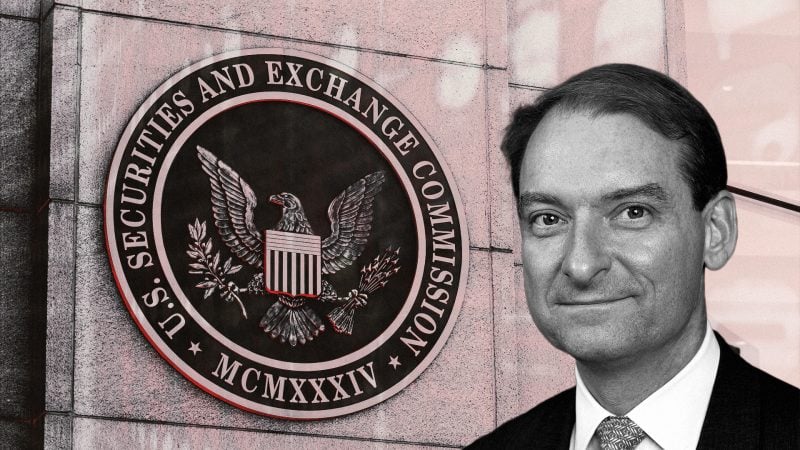
⛓️SEC Chair Paul Atkins announced on Friday that the agency is considering new rulemaking to clarify how its regulatory framework applies to onchain market structures and software applications. This addresses a significant gap in crypto regulation where the boundaries of SEC jurisdiction over decentralized protocols and software tools remain unclear.
DeFiBullishBlockonomi · May 87/10
💎The Enterprise Ethereum Alliance deployed treasury ETH through Lido's liquid staking protocol, receiving stETH in return while maintaining liquidity and earning staking rewards. This move reflects growing institutional adoption of liquid staking solutions that eliminate traditional validator lock-up periods and improve capital efficiency for large treasuries.
$ETH
CryptoBearishcrypto.news · May 87/10
⛓️Major U.S. cryptocurrency exchanges Coinbase, Kraken, and Gemini are lobbying Senate Agriculture Committee leaders to remove the "not readily susceptible to manipulation" standard from proposed digital asset legislation, arguing the requirement would effectively prevent small-cap and low-liquidity tokens from listing on regulated exchanges and consolidate power with the CFTC.
🧠 Gemini
CryptoNeutralBankless · May 87/10
⛓️SEC Chair Atkins is moving forward with a regulatory framework for cryptocurrency markets independent of Congressional action, signaling the agency's determination to establish clearer rules despite legislative gridlock. This development suggests the SEC will take a more proactive role in defining which crypto assets fall under securities regulations and how they should be traded.
CryptoBullishCrypto Briefing · May 87/10
⛓️Prediction market traders on Kalshi are pricing in a 69% probability that the Crypto Clarity Act will pass, signaling growing confidence in upcoming cryptocurrency regulatory legislation. This potential legislation could establish clearer regulatory frameworks for digital assets, potentially boosting market sentiment and institutional adoption.
AI × CryptoBullishCrypto Briefing · May 87/10
🤖Bittensor has launched TaonSquare, a directory platform for discovering and accessing AI tools and services. The initiative aims to accelerate enterprise adoption of Bittensor's network, though its success depends on attracting users outside the existing network ecosystem.
$TAO
CryptoBullishCoinDesk · May 87/10
⛓️Payward, Kraken's parent company, is applying for an OCC charter to establish a federally regulated trust company, complementing its existing Wyoming bank charter and Federal Reserve master account. This move positions Kraken to become a fully federally chartered crypto bank with enhanced regulatory legitimacy and operational scope.
CryptoBullishCrypto Briefing · May 87/10
⛓️Zcash is advancing quantum-resistant wallet technology and scaling solutions to achieve Visa-level transaction throughput while maintaining privacy. The cryptocurrency has experienced a 75% monthly price gain, reflecting market optimism around these technical developments that could position it as a leader in privacy-preserving, quantum-safe infrastructure.
CryptoBullishBlockonomi · May 87/10
⛓️Ripple's technology aligns with G20 cross-border payment modernization targets, with the company recognized by the U.S. Faster Payments Council for supporting payment infrastructure improvements. The XRP Ledger's ISO 20022 compliance and near-instant settlement capabilities position Ripple as a potential solution for central bank digital payment systems under development.
$XRP
GeneralBearishCrypto Briefing · May 87/10
📰Iran has refused to make concessions on its uranium enrichment program despite ongoing US pressure, as nuclear negotiations remain stalled. This defiance escalates geopolitical tensions and raises concerns about global nuclear stability, with potential ripple effects across international markets and energy sectors.
AIBullishTechCrunch – AI · May 87/10
🧠Major technology companies including Anthropic, OpenAI, and SAP are aggressively pursuing enterprise AI investments and acquisitions, signaling a gold rush in corporate AI deployment. This wave of consolidation and capital deployment indicates that enterprise AI tools have become a primary focus for tech giants and venture investors.
🏢 OpenAI🏢 Anthropic
AI × CryptoBullishThe Block · May 87/10
🤖TeraWulf, a former bitcoin mining-focused company, reported $21 million in HPC and AI revenue during Q1, marking the first time these segments have surpassed traditional cryptocurrency mining revenue. This shift reflects broader industry transformation as miners pivot toward artificial intelligence infrastructure to capture higher-margin opportunities.
$BTC
GeneralBearishCrypto Briefing · May 8🔥 8/10
📰Hezbollah launched rocket attacks on Haifa as the Israel-Lebanon conflict intensifies, signaling a dangerous escalation in regional tensions. The conflict threatens to destabilize the broader Middle East, potentially disrupting international diplomatic efforts and creating uncertainty in global markets.
GeneralBearishFortune Crypto · May 87/10
📰Ray Dalio warns that America's debt crisis represents a critical breaking point converging with four other major forces simultaneously reaching their limits, potentially triggering a period of significant economic and social turbulence that will reshape the country. Dalio characterizes the debt situation as merely the beginning of a broader systemic crisis rather than an isolated problem.
CryptoNeutralcrypto.news · May 87/10
⛓️Bitcoin's rally into the $82,000–$83,000 range has triggered a rebound in short-dated options volatility from late-2025 lows, with approximately $2 billion in short-gamma exposure clustered around $82,000. This concentration of dealer hedging positions creates potential for amplified price swings as market participants adjust their hedges.
$BTC
AIBearishFortune Crypto · May 87/10
🧠The April jobs report reveals a paradox: overall U.S. hiring reached its strongest pace in over a year, yet white-collar office-based sectors continue to shed workers. AI-driven automation may be accelerating displacement in traditional office roles, creating a bifurcated labor market where blue-collar and service sectors thrive while knowledge workers face headwinds.
CryptoBearishcrypto.news · May 87/10
⛓️Hong Kong's Securities and Futures Commission (SFC) warned against HabitTrade as an unlicensed virtual asset platform, but the broker denies conducting regulated business or directly marketing to Hong Kong investors, instead blaming unauthorized third-party promoters for the violations. The dispute highlights ongoing regulatory enforcement challenges in Asia's financial hub.
CryptoBullishU.Today · May 87/10
⛓️The XRP Ledger Foundation announced a significant leadership restructuring aimed at establishing independent development from Ripple Labs. This organizational reset represents a strategic pivot toward decentralized governance and strengthens the foundation's autonomy in managing the XRP Ledger ecosystem.
$XRP