Real-time AI-curated news from 99,878+ articles across 50+ sources. Sentiment analysis, importance scoring, and key takeaways — updated every 15 minutes.
AIBullishBlockonomi · May 87/10
🧠Datadog (DDOG) stock surged 30% following exceptional Q1 earnings, with the company achieving its first billion-dollar quarter and reporting 32% revenue growth. The strong results, driven by increased AI adoption, prompted management to raise forward guidance, signaling continued momentum in the monitoring and observability software market.
CryptoNeutralcrypto.news · May 87/10
⛓️UK FX and cryptocurrency markets are converging under shared macroeconomic pressures including interest rates, inflation, and regulatory frameworks in 2026. This convergence reflects how traditional currency markets and digital assets increasingly respond to identical macro forces, creating interdependent market dynamics that reshape trading strategies and risk management approaches.
CryptoBullishU.Today · May 87/10
⛓️Institutional investors have accumulated over 92,000 BTC in three months, signaling growing institutional demand for Bitcoin. Simultaneously, Ethereum is experiencing significant withdrawals from major institutions, indicating a potential shift in institutional capital allocation preferences between the two leading cryptocurrencies.
$BTC$ETH
GeneralBearishCrypto Briefing · May 87/10
📰The UAE has withdrawn from OPEC, a move that threatens to destabilize global oil markets and amplify geopolitical tensions in the Persian Gulf. The exit raises concerns about regional security, particularly regarding freedom of navigation through the Strait of Hormuz, a critical chokepoint for international energy supplies.
CryptoNeutralCrypto Briefing · May 87/10
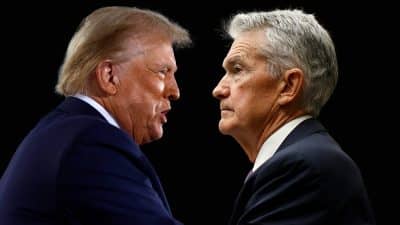
⛓️Jerome Powell is expected to remain as Federal Reserve Chair through the end of his term in 2026, providing policy continuity despite potential transitions involving Kevin Warsh. This stability may reduce market volatility by maintaining consistent monetary policy direction amid executive pressures.
CryptoBullishU.Today · May 87/10
⛓️Boston Consulting Group projects the tokenized real-world assets market will reach $55 trillion by 2055, reflecting the maturation of blockchain technology beyond niche adoption. This forecast suggests tokenization is becoming mainstream infrastructure that could democratize access to traditional financial markets and assets.
CryptoBullishNewsBTC · May 87/10
⛓️Nearly 100,000 BTC have flowed out of major exchanges (Binance, OKX, Gemini) since February, pushing reserves to two-and-a-half-year lows while buyer demand on Binance surged from -$1B to +$2.6B in net taker volume. Simultaneously, long-term holders accumulated 264,000 BTC by May 6—a 60% increase in two weeks—suggesting institutional conviction is strengthening despite tightening on-chain supply.
$BTC$XRP🧠 Gemini
CryptoBearishcrypto.news · May 86/10
⛓️Bitcoin fell below $80,000 as spot Bitcoin ETFs recorded their first outflows in May, with $277.5M leaving the products after five consecutive days of inflows. Despite the broader outflow, MSBT (iShares Metaverse and Web3 ETF) continued attracting capital, suggesting selective investor interest.
$BTC
CryptoBearishcrypto.news · May 87/10
⛓️ECB President Christine Lagarde has escalated warnings against euro-denominated stablecoins, arguing that financial stability and monetary control risks outweigh potential benefits to the euro's international standing. Her comments reflect growing regulatory skepticism toward private digital currencies that could undermine central bank authority.
DeFiBullishBitcoinist · May 87/10
💎Hyperliquid, a decentralized exchange, generated $215 million in gross revenue during Q1 2026 while outperforming Bitcoin by 71.5 percentage points during crypto's worst quarter since 2018. The platform also briefly functioned as a global price discovery mechanism for crude oil when traditional commodity exchanges were closed, demonstrating the growing influence of decentralized trading infrastructure.
$BTC
CryptoNeutralDecrypt – AI · May 87/10
⛓️Australia's financial regulator AUSTRAC has launched supervision campaigns targeting over-the-counter operators and local cryptocurrency exchanges as new regulatory reforms expand oversight to custody and brokerage services. The campaigns signal the implementation of Australia's updated crypto regulatory framework, establishing stricter compliance requirements for digital asset service providers.
CryptoBullishCoinDesk · May 87/10
⛓️Stablecoin card spending is growing at 100% year-over-year rates, with settlement capabilities enabling weekend and holiday transactions that reduce trapped capital by over 40%, according to Rain executives. This improvement in capital efficiency directly enhances card economics and financial flexibility for payment issuers.
CryptoBearishThe Block · May 87/10
⛓️ECB President Christine Lagarde has expressed concerns that euro-denominated stablecoins pose risks to financial stability and monetary policy effectiveness, advocating for a central bank digital currency (CBDC) instead. This position contrasts with the Bundesbank's more moderate stance on stablecoins, revealing internal disagreement within eurozone monetary authorities on digital currency regulation.
CryptoBearishcrypto.news · May 87/10
⛓️Taiwanese prosecutors have indicted a television news anchor for allegedly receiving USDT payments from a Chinese operative to produce politically influenced content and obtain classified military information from serving and former Taiwanese officers. The case highlights how cryptocurrency enables covert funding of foreign influence operations targeting democratic institutions.
GeneralNeutralCrypto Briefing · May 87/10
📰Geopolitical tensions involving Iran are driving increased profitability for energy, banking, and defense sector firms, reflecting how regional conflicts create winners and losers across different industries. This dynamic underscores the relationship between geopolitical instability and market behavior, with broader implications for global economic stability and peace prospects.
CryptoBullishcrypto.news · May 87/10
⛓️A HarrisX poll reveals that 52% of U.S. voters support the CLARITY Act, demonstrating bipartisan backing for crypto regulation ahead of a potential Senate Banking Committee markup. The survey indicates that cryptocurrency regulation has become a meaningful factor influencing voter electoral decisions.
AIBearishBlockonomi · May 87/10
🧠Larry Fink warns that compute capacity is becoming a structural bottleneck as AI infrastructure demand grows 80% annually while DRAM supply only expands 16% yearly. Data centers are expected to consume 70% of global memory chip production in 2026, positioning compute futures as an emerging tradable asset class analogous to commodities like oil and grain.
CryptoBearishU.Today · May 87/10
⛓️ECB President Christine Lagarde has criticized US stablecoin strategies and announced the European Central Bank's commitment to developing 'Fortress Europe'—a defensive regulatory and technological framework designed to establish the euro-based Appia system by 2028, effectively countering dominance of US-denominated stablecoins in digital payments.
GeneralBullishCoinDesk · May 86/10
📰Call options volume on the S&P 500 has reached a record $2.6 trillion as institutional investors aggressively position for stock market upside. The surge signals bullish sentiment on Wall Street with potential positive implications for bitcoin, though analysts warn of important caveats regarding the sustainability and risk profile of this positioning.
$BTC
CryptoBullishBitcoinist · May 87/10
⛓️BNY, the world's largest custodian bank managing $59.4 trillion in assets, has partnered with Finstreet Limited and ADI Foundation to establish institutional-grade digital asset custody infrastructure in Abu Dhabi Global Market (ADGM). This marks the first time a US systemically important bank has brought regulated crypto custody services to the UAE.
AIBullishBlockonomi · May 86/10
🧠RBC Capital Markets raised its S&P 500 price target to 7,900, driven by expectations of AI-powered earnings growth despite economic divergence. The firm simultaneously downgraded its healthcare sector rating, signaling a selective approach to market positioning.
DeFiNeutralCoinDesk · May 87/10
💎Arbitrum's DAO governance voted to approve the release of $71 million in ETH that was previously frozen due to an exploit, directing it toward an Aave-led recovery effort. However, Arbitrum's governance mechanics impose an eight-day minimum delay before any transfer can occur, and the decision faces potential complications from ongoing U.S. government seizure efforts.
$ETH$AAVE$ARB
AI × CryptoBullishcrypto.news · May 87/10
🤖AI skills have become integral to Web3 employment, appearing in 53.1% of job postings according to CryptoJobsList data. Workers with AI expertise command a $20,000 salary premium, signaling a structural shift in how the crypto industry values technical talent and plans for future development.
CryptoBearishThe Block · May 87/10
⛓️A Taiwan news anchor has been indicted for allegedly receiving cryptocurrency payments from a foreign hostile force to produce propaganda content and bribe military personnel. The case highlights how state actors are exploiting cryptocurrencies' pseudonymous nature to fund disinformation campaigns and corruption operations.
AIBullishBlockonomi · May 87/10
🧠Rackspace stock surged over 80% following the announcement of a strategic partnership with AMD to deliver managed AI cloud infrastructure for regulated enterprises. The deal positions Rackspace as a key player in the enterprise AI infrastructure market, combining AMD's computing capabilities with Rackspace's managed services expertise.