
Family farm uses Bitcoin mining heat to warm greenhouses on Madeira
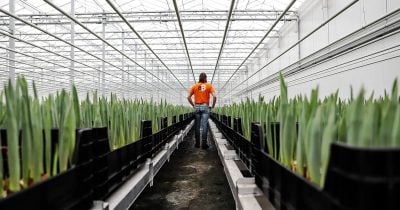
A family farm on Madeira Island has implemented an innovative sustainability model by using waste heat from Bitcoin mining operations to warm agricultural greenhouses, reducing energy costs. While this demonstrates practical applications for mining heat byproducts and environmental efficiency, the venture carries inherent financial risks tied to cryptocurrency volatility and mining profitability.
This development represents a tangible example of circular economy principles applied to cryptocurrency infrastructure. Bitcoin mining generates substantial thermal energy as a byproduct of computational processes, and redirecting this heat toward agricultural operations addresses two simultaneous challenges: reducing operational costs for farming while improving the energy efficiency profile of mining activities. The Madeira farm's approach transforms what is typically considered waste into a valuable resource, creating synergies between two traditionally separate economic sectors.
The broader context reflects growing scrutiny of Bitcoin mining's environmental impact and industry efforts to demonstrate sustainability credentials. As regulatory pressure increases globally regarding energy consumption, mining operations seek practical methods to justify their existence and offset carbon footprints. Agricultural heating represents a scalable application, particularly in temperate regions where greenhouse warming requires significant energy investment. This integration aligns with the narrative that renewable energy sources and waste heat utilization can coexist with proof-of-work cryptocurrency networks.
For the cryptocurrency and agricultural sectors, this model presents potential investment opportunities in dual-use infrastructure projects. However, the venture's viability depends critically on mining profitability margins and Bitcoin's price stability. Mining equipment operational costs rise during bear markets, potentially rendering heat-recovery economics unviable if mining becomes unprofitable. Agricultural operations also face commodity price volatility and climate variability.
Looking forward, success metrics will determine whether similar projects proliferate across different geographies and sectors. Monitoring farm operational performance and profitability data will indicate whether heat-recovery farming genuinely achieves sustainable economics or remains a niche experiment. Regulatory acceptance of such operations will also influence broader adoption potential.
- →Bitcoin mining waste heat redirected to agricultural greenhouses demonstrates practical sustainability innovation combining two sectors
- →Model reduces energy costs for farming while improving mining operations' environmental credentials amid regulatory scrutiny
- →Project viability depends on Bitcoin price stability and mining profitability margins, creating financial risk exposure
- →Success could establish template for similar dual-use infrastructure projects in other regions and industries
- →Long-term adoption depends on demonstrated profitability and regulatory acceptance of integrated mining-agriculture operations