
China defends export controls on critical minerals after G7 statement
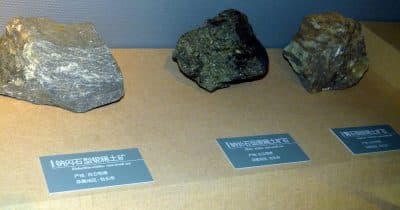
China has defended its export controls on critical minerals following criticism from the G7, exposing significant vulnerabilities in global supply chains. The situation underscores the geopolitical risks embedded in semiconductor, battery, and renewable energy production, prompting international calls for supply chain diversification.
China's defense of its critical mineral export restrictions marks an escalation in resource nationalism and highlights the weaponization of supply chains in great power competition. The G7's collective response signals alarm over Beijing's ability to restrict materials essential to advanced technologies—from semiconductors to battery production—creating leverage in geopolitical disputes. This confrontation reflects decades of Western dependence on Chinese rare earth elements and mineral processing, a vulnerability that developed nations are only now attempting to address systematically.
Historically, China consolidated control over critical mineral refining and processing through decades of strategic investment and operational efficiency. Western nations largely accepted this arrangement during periods of cooperation, but the deteriorating U.S.-China relationship has exposed the strategic risk of such concentration. Recent Chinese restrictions on gallium, germanium, and rare earth exports have accelerated concerns about supply resilience, particularly as the energy transition and artificial intelligence demand surge.
For cryptocurrency and blockchain sectors, this dynamic carries material implications. Mining operations depend on semiconductors and energy infrastructure reliant on these materials, while battery technology critical to renewable energy adoption faces supply pressure. Markets typically react to geopolitical supply disruptions with volatility, particularly in tech-adjacent assets and energy commodities.
Looking forward, expect accelerated Western investment in alternative supply sources, including domestic mineral extraction, recycling technologies, and strategic partnerships with non-Chinese producers. The long-term outcome will likely reshape industrial policy across developed economies, potentially increasing costs for technology production but reducing geopolitical vulnerability.
- →China's mineral export controls expose critical vulnerabilities in global technology supply chains that affect semiconductor and battery production.
- →G7 nations are confronting the strategic risk of dependence on Chinese rare earth processing and mineral refining capabilities.
- →Supply chain diversification efforts will accelerate, potentially increasing production costs but reducing geopolitical concentration risk.
- →Cryptocurrency and blockchain sectors face indirect impacts through semiconductor availability and renewable energy infrastructure constraints.
- →Long-term industrial policy shifts toward domestic production and alternative suppliers will reshape technology manufacturing economics.