
ECB vice president flags energy shock risks as euro area financial vulnerabilities deepen
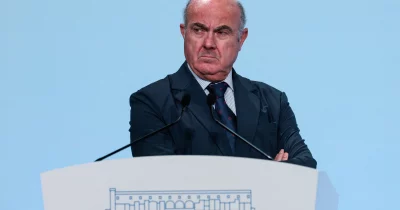
ECB Vice President warns that energy shocks pose escalating risks to euro area financial stability, with potential to amplify vulnerabilities that could constrain economic growth and distort inflation dynamics. The central bank's struggle to manage these external supply-side pressures threatens broader market confidence and policy effectiveness.
The ECB's public acknowledgment of energy shock risks signals deepening concerns about the eurozone's macroeconomic resilience. Energy price volatility, particularly from geopolitical disruptions, creates asymmetric inflation pressures that complicate monetary policy transmission. When energy costs surge independently of demand conditions, central banks face a dilemma: raising rates to combat inflation risks crushing growth, while accommodating inflation undermines credibility. This tension is especially acute in the eurozone, where member states have heterogeneous energy dependencies and fiscal capacity to absorb shocks.
The backdrop involves Europe's structural energy vulnerability following supply disruptions and the transition away from Russian energy sources. This ongoing transition creates persistent price uncertainty that financial markets struggle to price efficiently. Banks and institutional investors holding eurozone assets face compounding risks: inflation erodes bond valuations, energy-intensive sectors face margin compression, and cross-border capital flows may destabilize smaller member economies.
For cryptocurrency and digital asset markets, this signals important macroeconomic headwinds. Rising real rates to combat energy-driven inflation typically strengthen the dollar and reduce risk appetite, pressuring speculative assets. However, it also validates cryptocurrency narratives around currency debasement and the need for inflation hedges, potentially supporting long-term adoption despite near-term volatility.
Investors should monitor ECB policy divergence relative to other major central banks and track eurozone credit spreads as vulnerability indicators. Energy price stability becomes critical to watch, as renewed spikes could force policy recalibration that impacts global markets.
- →ECB vice president warns energy shocks deepen financial vulnerabilities in the euro area economy
- →Supply-side inflation from energy creates policy dilemmas between fighting inflation and supporting growth
- →Eurozone banks and investors face margin compression and portfolio revaluation risks from persistent energy price volatility
- →Energy transition uncertainties and geopolitical disruptions continue destabilizing eurozone financial conditions
- →Cryptocurrency markets may face headwinds from inflation-fighting rate hikes but could benefit from currency debasement narratives