
Federal Reserve accepts $1.8B in reverse repurchase operation, a fraction of its former peak
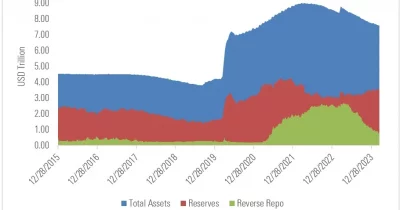
The Federal Reserve's reverse repurchase operations have declined sharply to $1.8 billion, a dramatic drop from historical peaks, indicating reduced excess liquidity in the financial system. This contraction raises concerns about potential interest rate volatility and market instability as the Fed's balance sheet adjusts.
Reverse repurchase agreements are critical tools the Federal Reserve uses to manage short-term liquidity in financial markets. When the Fed accepts reverse repos, it provides banks and financial institutions with cash while temporarily absorbing securities, helping stabilize overnight lending rates and prevent liquidity crunches. The dramatic decline to $1.8 billion from substantially higher levels represents a significant shift in the Fed's operational framework and market conditions.
This trend reflects the broader monetary policy transition occurring since 2022. As the Fed raised interest rates aggressively to combat inflation, the attractiveness of reverse repos diminished relative to other investment opportunities offering better returns. The system's excess liquidity—accumulated during years of quantitative easing and pandemic-era stimulus—has been gradually absorbed through runoff of the Fed's balance sheet and elevated interest rates that incentivize alternative assets.
For cryptocurrency and digital asset markets, declining reverse repo usage matters because it signals tightening financial conditions. Lower Fed liquidity support can amplify volatility across all asset classes, including crypto. When traditional finance experiences stress, capital often rotates between markets unpredictably, affecting digital asset valuations and trader positioning. The reduced safety net for banks could theoretically increase risk appetite or risk aversion depending on market sentiment.
Investors should monitor whether reverse repo usage stabilizes at current levels or continues declining. If the Fed loses effective control over overnight lending rates due to insufficient liquidity management tools, market disruptions could follow. The current environment suggests a transition toward a more normalized, less accommodative financial system—a structural shift that could reshape how alternative assets perform relative to traditional markets over the coming months.
- →Federal Reserve reverse repo operations have fallen to $1.8 billion, far below historical peaks, indicating systemic liquidity contraction.
- →Declining reverse repo usage reflects tighter monetary conditions following rate hikes and Fed balance sheet reduction since 2022.
- →Reduced Fed liquidity support may increase volatility across all asset classes, including cryptocurrency markets.
- →The trend signals a transition from highly accommodative monetary policy toward more normalized financial conditions.
- →Market participants should watch whether reverse repo stabilizes or continues declining, as instability could trigger cross-asset capital rotations.