
GM installs robots at flagship EV factory after laying off 1,300 workers
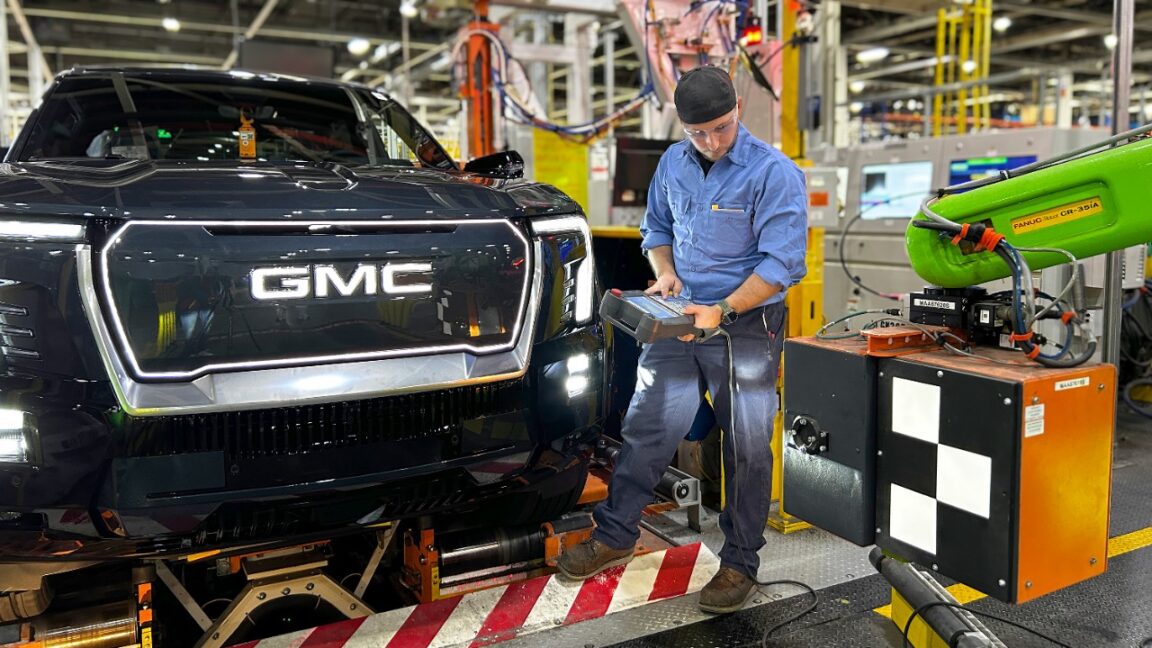
General Motors is installing robots at its flagship EV factory following the layoff of 1,300 workers, prompting warnings from the US autoworkers union about accelerating automation in manufacturing. The move reflects the broader industry shift toward robotics-driven production as automakers navigate EV transition costs and competitive pressures.
General Motors' deployment of robotics at a major EV facility alongside significant workforce reductions signals an inflection point in automotive manufacturing. The company faces mounting pressure to reduce labor costs while scaling EV production, creating an incentive structure that favors automation over human workers. This decision directly contradicts union efforts to secure job protections during the industry's transition to electric vehicles, establishing a contentious precedent that other automakers may follow.
The context extends beyond GM's operational challenges. The EV transition requires substantial capital investment in new production lines, battery technology, and supply chains. Labor costs represent a controllable variable, making automation an attractive lever for improving margins during a period when EV profitability remains elusive for many manufacturers. The UAW's warnings about a "dark factory future" reflect legitimate concerns that automation could eliminate hundreds of thousands of manufacturing jobs without corresponding workforce retraining initiatives.
For investors and market participants, this trend has multifaceted implications. Companies supplying industrial robotics and automation technology may see accelerated demand, creating opportunities in the automation sector. Conversely, traditional labor-intensive automotive suppliers face margin pressure as OEMs reduce headcount. The broader labor market absorbs displaced workers, potentially influencing wage dynamics and social policy debates that could affect corporate tax policy or regulatory frameworks.
Monitoring points include whether this automation trend spreads across GM's other facilities, union responses in upcoming contract negotiations, and whether governments implement protections or retraining programs. The trajectory of EV profitability and battery costs will determine whether aggressive automation becomes an industry standard or a temporary response to current market conditions.
- →GM installs robots at flagship EV factory while laying off 1,300 workers, signaling accelerated automation in automotive manufacturing.
- →The move reflects industry-wide pressure to reduce labor costs during unprofitable EV production ramp-up phases.
- →UAW warnings about automation suggest potential labor market disruption across automotive supply chains.
- →Automation equipment suppliers may benefit while traditional labor-intensive suppliers face margin compression.
- →Future union negotiations and government policy responses will determine whether workforce protections emerge as an industry standard.