
Spot gold holds losses, down 1.5% at $4,392.57/oz after US data rattles rate expectations
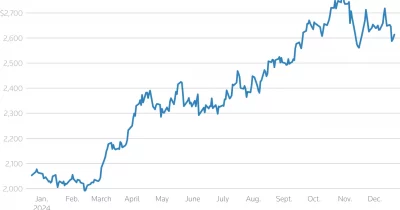
Spot gold declined 1.5% to $4,392.57/oz following stronger-than-expected US economic data that shifted interest rate expectations lower. The price movement underscores how macroeconomic indicators directly influence precious metals valuations and broader market sentiment.
Gold's recent decline reflects the complex relationship between economic strength and monetary policy expectations. When US economic data exceeds forecasts, markets reassess the likelihood and magnitude of future rate cuts, making current gold holdings less attractive since the opportunity cost of holding non-yielding assets increases. This dynamic has become increasingly important as central banks globally navigate the tension between supporting growth and controlling inflation.
The broader context reveals gold's sensitivity to real interest rates rather than nominal rates alone. Strong US employment reports, retail sales data, or inflation readings trigger immediate repricing across commodities markets. Gold has historically served as a hedge against currency debasement and geopolitical uncertainty, but its performance depends heavily on whether investors anticipate accommodative monetary policy ahead. Recent months have seen significant volatility as markets digest mixed signals about economic resilience and inflation persistence.
For investors, this price action carries direct implications for portfolio allocation and hedging strategies. Those holding gold for inflation protection face pressure if growth data suggests the Fed can maintain higher rates for longer. Conversely, traders monitoring rate futures can use these correlations to anticipate further precious metals moves. The 1.5% decline may trigger stop-loss orders and prompt rebalancing among asset allocators.
Market participants should monitor upcoming employment reports, PCE inflation data, and Fed communications closely. The relationship between gold prices and rate expectations will likely remain volatile as economic data flows in unpredictably. Crypto investors often view gold movements as indicators of broader risk sentiment, making this development relevant across asset classes.
- →Strong US economic data prompted rate expectation shifts that drove gold down 1.5% to $4,392.57/oz
- →Gold valuations remain highly sensitive to real interest rate expectations and monetary policy signals
- →Investors reassessing hedging strategies should monitor upcoming economic releases and Fed communications
- →Price volatility in precious metals reflects broader market uncertainty about inflation and growth trajectories
- →Gold's performance diverges from equities and crypto when rate expectations strengthen