
The next chapter in flood resilience: Open sourcing Google’s hydrology framework
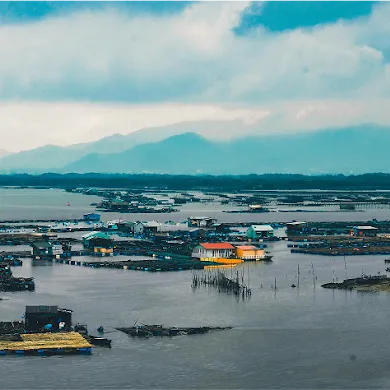
Google has open-sourced its hydrology framework to advance flood resilience and disaster preparedness globally. The move democratizes access to sophisticated water modeling tools, enabling researchers, governments, and organizations to better predict and respond to flooding events across diverse geographies.
Google's decision to open-source its hydrology framework represents a significant shift toward collaborative climate adaptation infrastructure. By releasing proprietary tools built on decades of research and real-world deployment, Google removes technical barriers that previously limited flood modeling capabilities to well-resourced institutions. This democratization is particularly impactful for developing nations and underserved regions where flooding poses existential risks but computational resources remain scarce.
The framework's release builds on growing recognition that climate resilience requires distributed, accessible technology rather than siloed proprietary solutions. Google's hydrology work integrates machine learning, satellite imagery, and hydrological modeling—capabilities that have proven effective in pilot programs across multiple continents. Open-sourcing creates pathways for local governments and NGOs to adapt these tools to regional water systems, flood patterns, and infrastructure constraints without prohibitive licensing costs.
For the broader climate-tech ecosystem, this signals institutional commitment to addressing adaptation challenges through open-source models. Developers and researchers gain immediate access to production-grade tools, accelerating innovation in predictive modeling and early-warning systems. Organizations can now integrate Google's framework into existing disaster-management pipelines, reducing redundant development efforts across the sector.
Looking forward, the real-world impact depends on adoption rates and technical support sustainability. Success hinges on whether regional institutions develop sufficient capacity to deploy and maintain these tools independently, and whether Google provides adequate documentation and community support. Long-term, this approach could establish open-source hydrology as an industry standard, influencing how other tech companies approach climate adaptation.
- →Google open-sourced its hydrology framework to enable global flood prediction and disaster preparedness at scale
- →The move democratizes access to sophisticated water modeling tools previously limited to well-resourced institutions
- →Developing nations and underserved regions gain capability to model local flood risks without prohibitive licensing costs
- →Open-source release accelerates climate-tech innovation by reducing redundant development across organizations
- →Long-term impact depends on adoption rates, technical documentation quality, and community support infrastructure