
Accelerating Gemini Nano models on Pixel with frozen Multi-Token Prediction
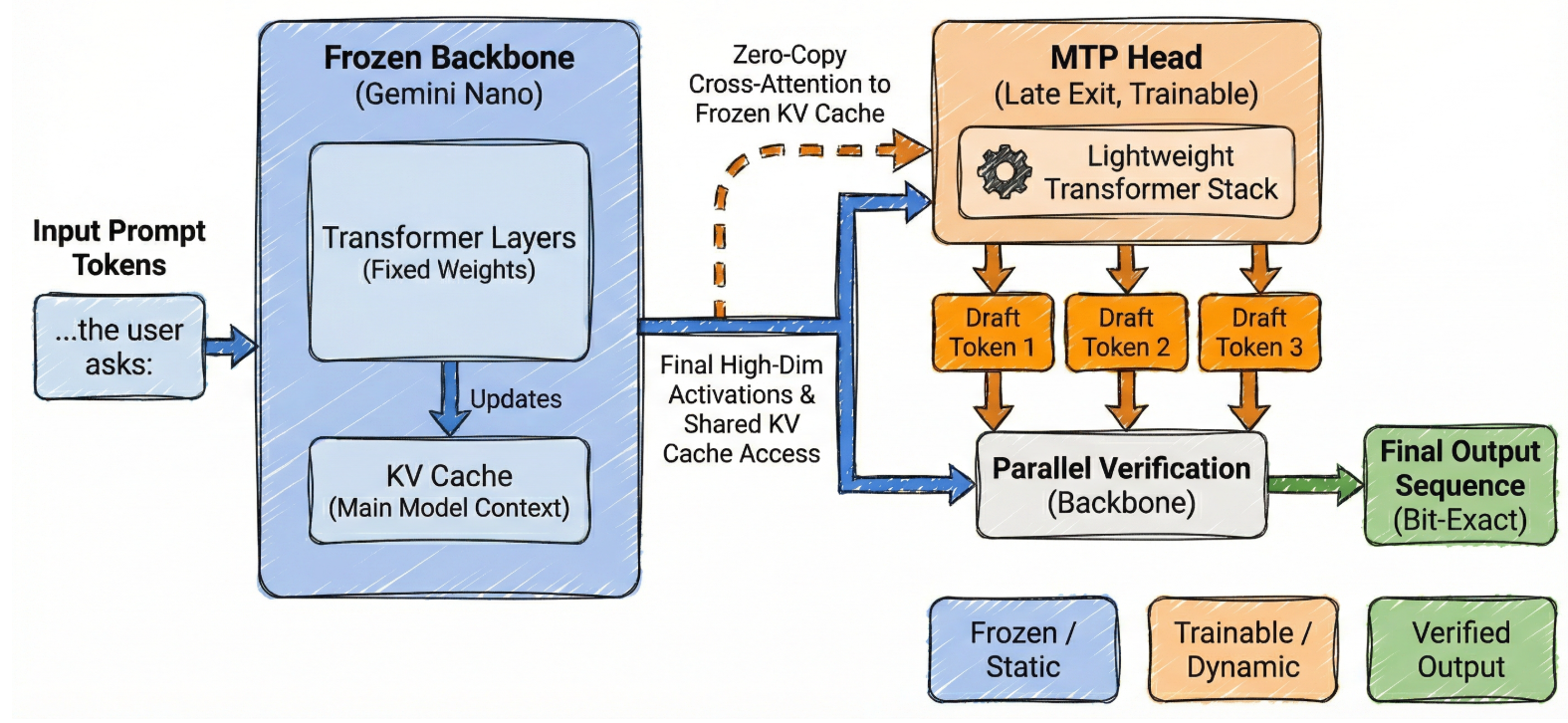
Google has announced frozen Multi-Token Prediction (MTP) optimization for Gemini Nano models running on Pixel devices, improving inference speed and efficiency. This advancement enables faster on-device AI processing while maintaining model performance, representing progress in deploying capable language models directly on consumer hardware.
Google's optimization of Gemini Nano models through frozen Multi-Token Prediction addresses a critical challenge in edge AI deployment: balancing computational efficiency with model capability. The technique allows the model to predict multiple tokens simultaneously during inference while keeping certain parameters frozen, reducing memory bandwidth and computational overhead. This development matters because it enables more sophisticated AI experiences to run locally on Pixel phones without relying on cloud infrastructure, improving latency and privacy for end users.
The broader context reflects an industry-wide shift toward on-device AI processing. As language models become more prevalent, companies face pressure to deploy them efficiently on consumer devices with limited computational resources. Freezing specific model parameters during multi-token prediction is a pragmatic engineering solution that maintains output quality while reducing the computational cost per token generated. This approach aligns with Google's strategy to democratize AI access through Pixel's hardware ecosystem.
For developers and manufacturers, this optimization opens possibilities for richer AI-assisted features—from writing assistance to real-time translation—without constant server communication. Users benefit from faster response times and reduced data transmission, enhancing both user experience and privacy. The technique also reduces infrastructure costs for Google, as fewer inference requests need cloud processing.
Looking ahead, expect similar optimization techniques to become standard across mobile AI deployment. The success of frozen MTP on Gemini Nano could influence how competitors implement language models on their devices, potentially accelerating the adoption of capable edge AI. Watch for announcements regarding expanded availability across device tiers and potential performance benchmarks that demonstrate real-world improvements.
- →Frozen Multi-Token Prediction enables Gemini Nano to generate multiple tokens per inference pass while reducing computational requirements
- →On-device processing improves latency and privacy by eliminating dependence on cloud infrastructure for AI tasks
- →The optimization technique demonstrates practical progress toward deploying capable language models on consumer hardware with limited resources
- →Developers gain access to faster, more efficient AI capabilities for local processing on Pixel devices
- →This advancement reflects industry momentum toward edge AI deployment as a standard feature in consumer electronics