
MIT researchers made a wristband to teach robots how to do housework and surgery
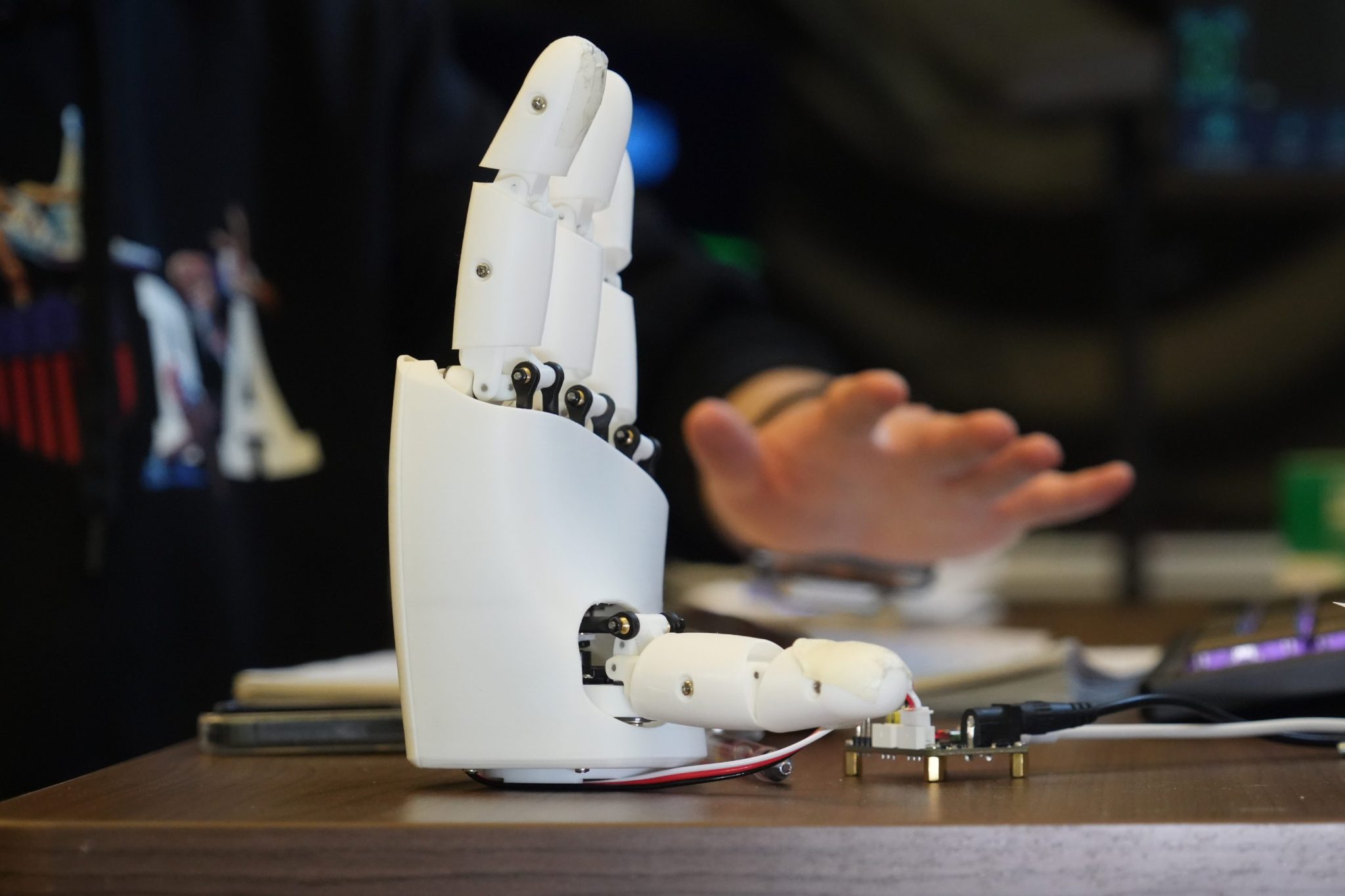
MIT researchers, led by professor Xuanhe Zhao, have developed a wristband technology that enables robots to learn physical tasks through human demonstration, with applications spanning household chores and surgical procedures. This advancement represents a shift in AI development toward solving real-world physical challenges rather than purely digital applications.
MIT's wristband technology addresses a fundamental limitation in robotics: the difficulty of teaching machines to perform complex physical tasks with precision and adaptability. Rather than relying on pre-programmed instructions or manual coding, the system allows robots to learn directly from human movement patterns, accelerating the deployment timeline for autonomous systems in unstructured environments. This approach leverages human expertise as training data, making it more practical than traditional machine learning methods that require millions of labeled examples.
The development reflects a broader industry pivot away from narrow AI applications toward embodied artificial intelligence that operates meaningfully in physical space. Companies and research institutions increasingly recognize that real-world economic value lies in automating labor-intensive tasks like healthcare and domestic work, where human oversight remains expensive and labor shortages persist. Zhao's focus on physical-world AI fills a critical gap between advances in large language models and practical robotics deployment.
For the robotics and healthcare sectors, this innovation could accelerate adoption timelines and reduce training costs significantly. Hospitals facing surgical staff shortages could deploy semi-autonomous surgical assistants more quickly, while consumer robotics companies could democratize home automation beyond simple vacuuming tasks. The technology also creates potential competitive advantages for early adopters in high-margin sectors like surgical assistance.
Market observers should monitor whether this wristband approach scales to complex multi-step tasks and whether regulatory pathways emerge for surgical robot applications. Success here could unlock substantial capital investment in embodied AI, potentially rivaling current AI infrastructure spending.
- →MIT's wristband enables robots to learn physical tasks from human demonstration rather than explicit programming.
- →The technology targets labor-intensive sectors like healthcare and household services where human labor remains expensive.
- →Physical-world AI applications may represent the next major economic value driver after language models.
- →Surgical and medical robotics could see accelerated deployment timelines through faster robot training.
- →Regulatory frameworks for autonomous surgical assistants will become critical next-stage challenges.