
Nvidia Vera BlueField-4 STX delivers autonomous AI storage processing with in-silicon security
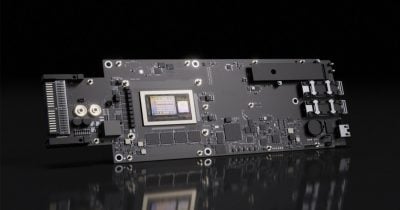
Nvidia has unveiled the BlueField-4 STX, a specialized processor designed to handle AI storage operations autonomously with integrated security features. The technology aims to improve data center efficiency, scalability, and energy consumption for AI workloads by processing data at the storage layer rather than routing everything through central processors.
Nvidia's BlueField-4 STX represents a strategic advancement in data center infrastructure optimization, targeting a critical bottleneck in modern AI deployments. As large language models and AI applications demand exponentially more computational resources, the ability to process data closer to its source reduces latency, bandwidth congestion, and overall energy consumption. This approach reflects an industry-wide shift toward disaggregated computing architectures that distribute workloads more efficiently across specialized hardware.
The timing of this release aligns with mounting pressure on data centers to reduce operational costs amid rising electricity prices and growing environmental scrutiny. Major cloud providers and enterprises operating large-scale AI systems face significant challenges managing the power and cooling requirements of centralized processing. Nvidia's in-silicon security features address another pressing concern: as AI workloads process increasingly sensitive data, embedded security mechanisms reduce vulnerability windows and eliminate reliance on software-based protections that can introduce performance overhead.
This innovation likely strengthens Nvidia's competitive moat in the AI infrastructure space, particularly as customers seeking to optimize their AI deployments evaluate storage and data processing solutions. The BlueField-4 STX could drive adoption among hyperscalers and enterprise data centers looking to maximize return on their AI infrastructure investments while controlling operational expenses. Organizations currently using legacy storage systems may face pressure to upgrade, creating new revenue opportunities.
The market should monitor enterprise adoption rates and competitive responses from AMD and other infrastructure providers. Integration challenges and pricing will ultimately determine whether the BlueField-4 STX becomes standard in AI-optimized data centers or remains a specialized offering for specific use cases.
- →BlueField-4 STX enables autonomous AI processing at the storage layer, reducing data center latency and energy consumption
- →In-silicon security features protect sensitive AI data without imposing software-based performance overhead
- →The technology addresses critical efficiency bottlenecks as enterprises scale AI workloads and manage rising operational costs
- →Nvidia strengthens its infrastructure advantage as hyperscalers and enterprises optimize AI deployment architectures
- →Adoption rates will depend on integration complexity and pricing competitiveness against alternative solutions