
Polymarket prices 79% chance of confirmed hantavirus case by May 15
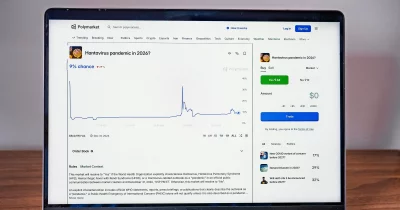
Polymarket, a blockchain-based prediction market platform, is pricing a 79% probability of a confirmed hantavirus case occurring by May 15. This reflects growing market attention to zoonotic disease risks and demonstrates how cryptocurrency prediction markets aggregate public expectations around public health events.
Polymarket's high probability assignment for a hantavirus confirmation reflects market participants' assessments of disease transmission risk in the near term. Prediction markets operate by aggregating dispersed information from traders with financial stakes in accurate outcomes, creating real-time probability estimates that often outperform traditional forecasting methods. The 79% pricing suggests market participants view hantavirus emergence as a meaningful near-term risk, though this reflects speculative positioning rather than epidemiological certainty.
Zoonotic disease emergence represents a persistent global health concern, with transmission events occurring sporadically across different regions. Hantavirus, transmitted primarily through contact with infected rodent populations, has historically caused sporadic human infections. Market focus on such diseases has intensified following COVID-19's demonstration of pandemic potential and economic impact. Crypto prediction markets have become platforms for pricing various outcomes, from political events to public health scenarios, attracting both information-seeking participants and speculators.
For cryptocurrency traders and market participants, prediction markets like Polymarket serve dual purposes: they function as betting platforms while simultaneously generating probabilistic data on real-world outcomes. The liquidity and pricing on such markets can influence broader risk perception within the crypto ecosystem and beyond. The 79% probability carries implications for public health communication, as high-profile market pricing may amplify awareness or concern among broader audiences.
Observers should monitor whether actual hantavirus confirmations match the market's probability assessment, as systematic divergence between prediction market prices and real outcomes could indicate inefficiencies or biases in how market participants process epidemiological information. Regulatory scrutiny of prediction markets on controversial outcomes continues evolving.
- →Polymarket prices 79% probability of confirmed hantavirus case by May 15, reflecting market expectations of zoonotic disease transmission
- →Prediction markets aggregate participant information through financial incentives, creating real-time probability estimates for public health events
- →Zoonotic disease focus has intensified post-COVID, with crypto platforms now pricing public health scenarios alongside traditional market outcomes
- →Market probability pricing can influence broader risk perception within and beyond cryptocurrency communities
- →Tracking prediction market accuracy against actual outcomes reveals market efficiency in processing epidemiological information