
Samsung Electronics ships next-gen AI memory chip samples, shares surge 6%
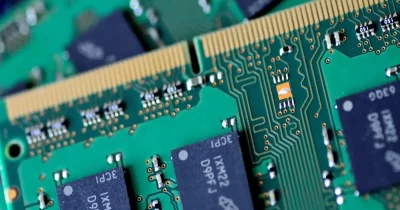
Samsung Electronics has begun shipping samples of its HBM4 (High Bandwidth Memory) AI chips and strengthened its partnership with AMD, driving a 6% surge in company shares. This development addresses critical supply chain constraints in AI infrastructure and positions Samsung as a major competitor to NVIDIA in the memory segment.
Samsung's HBM4 sample shipments represent a meaningful shift in AI hardware competition. The company transitions from a NVIDIA-dominated memory supply chain toward a more distributed ecosystem, reducing concentration risk for cloud providers and AI infrastructure operators. The AMD partnership amplifies this significance, as AMD controls substantial market share in data center processors and can accelerate HBM4 integration into production systems. This vertical alignment between processor and memory manufacturers historically drives faster adoption cycles and improved system optimization.
The broader context reflects accelerating AI infrastructure buildout driven by LLM deployment demands. NVIDIA's H100 and H200 GPUs have bottlenecked AI development partly due to memory supply constraints rather than pure GPU limitations. Samsung's entry with HBM4 technology directly targets this vulnerability. HBM provides superior bandwidth and power efficiency compared to traditional GDDR memory, making it essential for large-scale language model training and inference.
Market implications extend across multiple stakeholders. Cloud providers gain negotiating leverage against single-supplier dependency, potentially moderating memory costs that currently inflate infrastructure spending. AI developers benefit from faster hardware iteration and improved memory accessibility. The 6% share surge reflects investor confidence that Samsung captures meaningful margin expansion in high-value AI memory markets, estimated at billions annually.
Monitoring points include HBM4 volume ramp trajectory, competitive responses from SK Hynix and Micron, and whether this accelerates AMD's GPU market share gains. Samsung's success hinges on achieving cost parity with competing solutions while maintaining production discipline through the critical 2024-2025 infrastructure expansion window.
- →Samsung HBM4 sample shipments reduce NVIDIA memory supply chain concentration and improve hardware availability for AI infrastructure
- →AMD partnership integration could accelerate production adoption timelines and strengthen both companies' competitive positioning
- →Memory pricing pressures may moderate as Samsung introduces supply alternatives to existing oligopoly structures
- →The 6% share surge indicates investor confidence in Samsung's AI hardware revenue expansion opportunities
- →Supply chain diversification supports broader AI infrastructure scaling beyond current NVIDIA-centric architectures