
SpaceX IPO underwriters ban Hong Kong and China investors due to US export restrictions
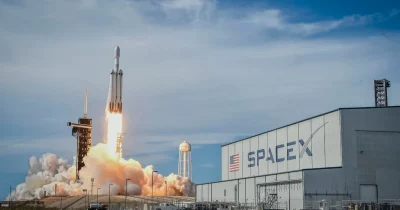
SpaceX's IPO underwriters have prohibited investors from Hong Kong and mainland China from participating in the offering due to US export control restrictions on sensitive aerospace technology. This decision underscores how geopolitical tensions between the US and China are increasingly fragmenting global capital markets and limiting investment opportunities across jurisdictions.
SpaceX's exclusion of Chinese and Hong Kong investors from its upcoming IPO represents a significant intersection of national security policy and capital markets accessibility. The restriction stems from US export control laws that classify aerospace and space technology as sensitive defense-related assets, preventing foreign entities—particularly those with Chinese ties—from gaining stakes in companies handling such technologies. This decision by underwriters reflects heightened regulatory scrutiny rather than corporate choice, as compliance with export restrictions is legally mandatory.
The broader context involves escalating US-China technological competition and efforts to maintain dominance in critical sectors including space exploration and advanced manufacturing. Washington has progressively tightened foreign investment rules affecting Chinese capital, particularly through CFIUS (Committee on Foreign Investment in the United States) reviews and expanded Export Administration Regulations. These measures aim to prevent technology transfer that could enhance China's aerospace capabilities, but they simultaneously create market fragmentation that historically characterized Cold War-era capital flows.
For global investors, this precedent signals that major US technology IPOs—especially those involving defense, space, semiconductors, or AI—may face similar restrictions. This narrows the investor base for US companies seeking public capital, potentially affecting valuation multiples and pricing mechanisms. Institutional investors in Asia, particularly sovereign wealth funds, must now navigate investment exclusions based on domicile rather than individual merits.
Looking forward, expect similar restrictions to extend across emerging AI companies, quantum computing firms, and advanced manufacturing ventures. The fragmentation of capital markets along geopolitical lines could drive alternative financing mechanisms, including regional stock exchanges and cryptocurrency-based funding platforms seeking to circumvent traditional restrictions.
- →SpaceX's IPO underwriters have barred Chinese and Hong Kong investors to comply with US export control regulations on aerospace technology.
- →The restriction reflects escalating US-China competition over critical technologies and represents a shift toward geopolitically-fragmented capital markets.
- →Major US technology IPOs in defense, space, and AI sectors may face similar investor exclusions going forward.
- →Chinese institutional investors and sovereign wealth funds now face structural barriers to participating in high-value US technology offerings.
- →Market fragmentation along geopolitical lines could accelerate alternative financing mechanisms and drive capital toward regional exchanges.