
SpaceX pushes orbital AI computing tests to late 2027, files for 1 million satellite constellation
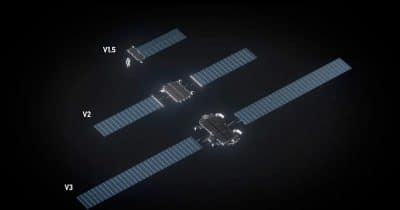
SpaceX has delayed orbital AI computing tests to late 2027 and filed for regulatory approval to deploy a 1 million satellite constellation. The expanded network aims to enable distributed AI processing in space but faces substantial technical, regulatory, and logistical hurdles before operationalization.
SpaceX's announcement represents a significant expansion of its satellite ambitions beyond global internet connectivity into computational infrastructure. The delay to late 2027 suggests the company is taking a measured approach to integrating AI workloads with orbital systems, acknowledging that space-based computing requires more rigorous testing than traditional Starlink operations. The filing for 1 million satellites, compared to current constellation plans, indicates SpaceX envisions a dramatically larger network optimized for distributed computing tasks rather than connectivity alone.
This development reflects the broader convergence of space technology and AI, where low-latency, globally distributed compute power could unlock new applications in finance, scientific research, and real-time data processing. Starlink's existing infrastructure provides SpaceX with a foundation, but orbital AI computing introduces distinct challenges including thermal management in vacuum, radiation-resistant hardware, and satellite-to-ground data synchronization at scale.
For the cryptocurrency and blockchain sectors, space-based computing could theoretically support decentralized validation networks, reduce latency for high-frequency trading, and create new infrastructure for Web3 applications. However, regulatory uncertainty surrounding spectrum allocation, space debris concerns, and international coordination remains substantial. The FCC and international bodies must approve such massive constellation deployments, creating timeline risks beyond SpaceX's technical roadmap.
Investors should monitor regulatory approvals and test results carefully. Success could validate space as a computing frontier, attracting venture capital and spurring competition. Failure or delays could signal fundamental constraints in orbital hardware reliability, affecting satellite-dependent projects across industries.
- →SpaceX delays orbital AI computing tests to late 2027, indicating complex technical validation requirements beyond current capabilities
- →Filing for 1 million satellite constellation represents potential doubling of current Starlink deployment scope with AI-optimized architecture
- →Space-based computing could enable ultra-low-latency applications for crypto trading, DeFi infrastructure, and blockchain validation networks
- →Regulatory approval from FCC and international bodies remains critical bottleneck and timeline risk for full constellation deployment
- →Success requires solving thermal management, radiation shielding, and large-scale satellite coordination challenges unprecedented in scale