
Trump directs $500M in Defense Production Act funds to revive US coal industry
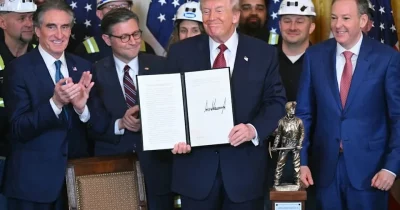
The Trump administration has allocated $500 million in Defense Production Act funds toward reviving the US coal industry. While potentially supporting short-term energy stability, the move presents long-term risks including environmental concerns and economic challenges as global energy markets shift toward renewables and alternative sources.
The Trump administration's deployment of $500 million in Defense Production Act (DPA) funds represents a significant policy shift aimed at revitalizing domestic coal production. The DPA, traditionally reserved for critical national security priorities, signals the administration's classification of coal as essential infrastructure. This reallocation reflects broader political objectives to support coal-dependent regions and workers while challenging the renewable energy transition momentum built over the previous decade.
Historically, US coal production has faced structural headwinds from natural gas competition, renewable cost declines, and environmental regulations. This intervention attempts to reverse decades of coal industry contraction through emergency economic mechanisms. The move aligns with populist energy policies emphasizing domestic resource independence and addresses concerns in coal-reliant states, though it contradicts global decarbonization commitments and investor ESG trends.
For markets and investors, this creates conflicting signals. Short-term coal equity valuations may receive support, yet institutional capital continues flowing toward renewable infrastructure and carbon-neutral energy sources. Energy companies face regulatory uncertainty as federal policy swings, complicating long-term capital allocation decisions. Cryptocurrency and blockchain investors tracking energy-intensive operations should monitor coal price volatility and grid composition changes, as these affect operational costs for mining operations and proof-of-work networks.
The sustainability of this initiative depends on global energy demand trajectories and technological advancement speeds. While DPA funding may stabilize regional economies temporarily, structural market forces—including renewable cost competitiveness, grid modernization requirements, and international climate commitments—will ultimately determine coal's long-term viability.
- →Trump administration allocates $500M in Defense Production Act funds to support domestic coal industry revival
- →Policy aims to provide short-term energy stability but carries long-term environmental and economic risks
- →Move reflects political priorities in coal-dependent regions amid broader global energy transition
- →Creates market uncertainty for energy investors balancing traditional fossil fuels against renewable growth
- →Long-term viability depends on global energy demand trends and renewable technology cost trajectories