
US existing home sales rise to 4.02M in April, missing expectations as housing market limps along
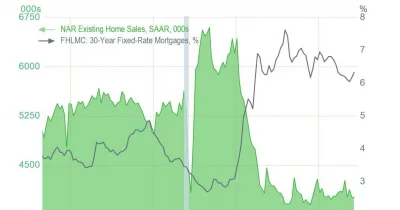
US existing home sales reached 4.02M in April, falling short of market expectations and underscoring the housing market's continued weakness. High mortgage rates and the 'lock-in effect'—where homeowners with low fixed-rate mortgages resist selling—are constraining transaction volumes and slowing recovery momentum.
The April existing home sales miss represents a significant headwind for the US housing market at a critical juncture. While the absolute figure of 4.02M units may appear modest, the underperformance against expectations signals weakening demand dynamics despite earlier optimism about spring seasonality. This shortfall directly reflects the structural challenges plaguing residential real estate: elevated borrowing costs that price out potential buyers and the lock-in effect that keeps motivated sellers off the market, creating artificial scarcity that paradoxically suppresses activity rather than sustaining prices.
The broader economic context reveals how monetary policy ripple effects extend far beyond cryptocurrency markets. The Federal Reserve's higher-for-longer interest rate stance has transformed housing affordability, with mortgage rates remaining elevated relative to pre-pandemic norms. This creates a bifurcated market where existing homeowners with sub-3% mortgages hoard inventory while prospective buyers face monthly payments 40-50% higher than historical averages. The lock-in effect represents a modern market friction that traditional economic models often underestimate.
For investors and developers, this sluggish recovery signals reduced construction activity, lower transaction volumes, and compressed margins in real estate services. The implications cascade across affiliated sectors: materials suppliers, mortgage servicers, and technology platforms dependent on transaction velocity all face headwinds. Asset prices in real estate-sensitive equities may face downward pressure as earnings visibility deteriorates.
The path forward depends critically on whether mortgage rates decline meaningfully—a scenario tied to inflation expectations and Federal Reserve policy shifts. Any sustained rate relief could unlock pent-up supply and reaccelerate transaction volumes, but until then, the market remains structurally constrained by these competing forces.
- →April existing home sales of 4.02M missed expectations, reflecting persistent market weakness and reduced buyer activity.
- →The lock-in effect prevents homeowners with low-rate mortgages from selling, artificially constraining inventory supply.
- →Elevated mortgage rates continue to suppress demand as buyer affordability remains significantly impaired versus historical norms.
- →Housing market sluggishness may cascade into reduced activity across construction, real estate services, and ancillary industries.
- →Future recovery depends primarily on mortgage rate relief driven by declining inflation expectations.