22,940 AI articles curated from 50+ sources with AI-powered sentiment analysis, importance scoring, and key takeaways.
AIBearishCrypto Briefing · Jun 97/10
🧠EU regulators have rejected Apple's request for an exemption from Digital Markets Act (DMA) interoperability requirements for its Siri AI assistant. The decision reinforces the EU's commitment to enforcing strict compliance standards across large tech platforms, potentially forcing Apple and other tech giants to redesign their strategies around mandatory third-party integration rather than proprietary closed systems.
AIBullishCrypto Briefing · Jun 97/10
🧠Cohere has released North Mini Code, a 30-billion parameter open-source coding model designed for enterprise developers. The model aims to democratize AI-powered coding tools by reducing computational costs and hardware requirements, potentially transforming how enterprises approach AI development and deployment.
🏢 Cohere
AIBullishCrypto Briefing · Jun 97/10
🧠OpenAI has filed confidentially for an initial public offering, signaling the company's transition toward public markets. This development coincides with a broader surge in technology IPOs expected to accelerate toward 2026, with potential significant implications for AI market valuations and investor portfolio strategies.
🏢 OpenAI
AINeutralCrypto Briefing · Jun 97/10
🧠The European Union has ordered Meta to grant competing AI chatbots access to WhatsApp within five days, a regulatory mandate aimed at reducing Meta's market dominance in messaging services. This decision could significantly reshape the competitive landscape by enabling smaller AI firms to operate on one of the world's largest messaging platforms.
AINeutralFortune Crypto · Jun 97/10
🧠The AI industry is shifting its focus from building increasingly larger models to prioritizing efficiency and cost reduction, driven by the rising expenses of inference operations. This represents a significant strategic pivot that could reshape how AI systems are developed and deployed across the sector.
AINeutralCrypto Briefing · Jun 97/10
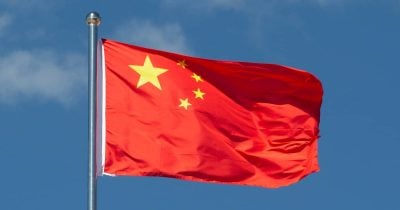
🧠China announced a $295 billion funding initiative to accelerate nationwide AI infrastructure development, signaling a major strategic commitment to competing in global artificial intelligence markets. The investment could strengthen domestic tech suppliers and reshape competitive dynamics between Chinese and Western AI companies.
AIBearishDecrypt – AI · Jun 97/10
🧠Cybersecurity researchers have demonstrated an AI-powered worm capable of adapting attack strategies in real time and spreading across networks autonomously without relying on cloud infrastructure. This advancement represents a significant escalation in malware sophistication, combining machine learning capabilities with self-propagating mechanisms that could pose unprecedented challenges to network defense systems.
AIBullishTechCrunch – AI · Jun 97/10
🧠The article explores whether technology companies can adopt cheaper, smaller AI models without sacrificing performance quality. This shift would fundamentally reshape AI economics by reducing operational costs and infrastructure requirements, potentially democratizing access to advanced AI capabilities.
AIBullishCrypto Briefing · Jun 97/10
🧠Databricks is in advanced fundraising discussions that could value the data and AI platform at over $175 billion, reflecting strong investor appetite for enterprise AI infrastructure. The potential funding round underscores growing confidence in AI-driven platforms and signals momentum toward the company's eventual public offering.
AIBullishCrypto Briefing · Jun 97/10
🧠Broadcom has launched its AI XPV Platform and announced a $35 billion financing tranche to expand compute capacity for Anthropic, signaling a major shift in how AI infrastructure is funded through private credit rather than traditional venture capital. This strategic move could reshape technology investment dynamics and establish new patterns in AI supply chain financing.
🏢 Anthropic
AIBullishCrypto Briefing · Jun 97/10
🧠Alphabet has raised $85 billion in equity, reflecting Wall Street's confidence in AI infrastructure as a critical investment priority. The massive capital deployment signals that major technology companies are accelerating spending on artificial intelligence capabilities, reshaping institutional investment priorities toward computational infrastructure.
AIBearishFortune Crypto · Jun 97/10
🧠European AI leaders like Mistral are pushing for sovereign control over AI infrastructure, but Europe faces a critical dependency on U.S.-manufactured chips. The tension between building independent AI capabilities and relying on American semiconductor supply chains highlights Europe's strategic vulnerability in the AI race.
AIBullishThe Verge – AI · Jun 97/10
🧠Anthropic has released Claude Fable 5, its first publicly available model from the Mythos class of AI systems, featuring advanced capabilities in software engineering, knowledge work, and vision tasks. The release was made possible through new safety mechanisms that restrict responses in high-risk areas, addressing previous concerns that the Mythos class posed cybersecurity risks.
🏢 Anthropic🧠 Claude
AIBullishCrypto Briefing · Jun 97/10
🧠Truist Securities has forecast that Meta could generate a new $20 billion business from its AI and enterprise product initiatives, with analyst projections suggesting the company's stock could gain over 40% as these segments mature. This assessment reflects growing confidence in Meta's strategic pivot away from traditional social media toward artificial intelligence and B2B enterprise solutions.
AIBearishThe Verge – AI · Jun 97/10
🧠Apple has announced new AI-powered photo editing tools at WWDC 2026 that enable extensive image manipulation, reversing the company's previous stance that photos should accurately represent reality. The tools, building on features like Clean Up, raise significant concerns about authenticity, misinformation, and the blurring of lines between genuine photography and AI-generated content.
AIBearishcrypto.news · Jun 97/10
🧠The European Commission has ordered Meta to grant rival AI chatbots free access to WhatsApp while investigating the company's competitive practices toward AI assistants. This interim measure represents a significant antitrust intervention requiring Meta to maintain interoperability during the active probe into whether the tech giant unfairly restricts competitors' access to its platforms.
AIBullishBlockonomi · Jun 97/10
🧠Taiwan Semiconductor Manufacturing Company (TSMC) stock rose 2.5% following Taiwan's consideration of criminal penalties for AI chip exports to China. The policy shift, combined with CEO stock purchases and analyst upgrades, strengthened investor confidence in the semiconductor manufacturer's market position.
AIBullishGoogle DeepMind Blog · Jun 97/10
🧠Google has launched Gemini 3.5 Live Translate, a near real-time speech translation feature integrated into Google AI Studio, Google Translate, and Google Meet. The technology enables fluid, natural voice translation across multiple platforms, reducing language barriers in communication.
🏢 Google🧠 Gemini
AIBullishCrypto Briefing · Jun 97/10
🧠Amazon has secured a multibillion-dollar agreement with Corning to supply fiber optic infrastructure for AI data centers, reflecting the tech industry's massive capital deployment in AI computing resources. The deal underscores intensifying competition among major technology companies to build out the physical infrastructure necessary to support artificial intelligence workloads and model training.
AIBullishcrypto.news · Jun 97/10
🧠JPMorgan Chase is planning to deploy longer-running AI agents for corporate workflows later this year, according to Chief Analytics Officer Derek Waldron. This advancement reflects the banking industry's push to extend AI agent capabilities beyond short-duration tasks, aligning with broader enterprise adoption trends.
AIBullishFortune Crypto · Jun 97/10
🧠MIT researchers, led by professor Xuanhe Zhao, have developed a wristband technology that enables robots to learn physical tasks through human demonstration, with applications spanning household chores and surgical procedures. This advancement represents a shift in AI development toward solving real-world physical challenges rather than purely digital applications.
AIBullishBlockonomi · Jun 97/10
🧠Arista Networks announced a new 1.6 trillion parameter AI platform while exceeding Q1 earnings expectations, prompting multiple analyst Buy ratings with price targets reaching $200. The development signals strong momentum in enterprise AI infrastructure as demand for specialized networking solutions accelerates.
AIBullishBlockonomi · Jun 97/10
🧠Nebius (NBIS) stock gained 5% following multiple positive developments including a new NVIDIA AI lab partnership, a £1.7 billion UK expansion, and a Kao Data acquisition deal, complemented by Bank of America raising its price target to $280. The convergence of strategic partnerships and institutional analyst upgrades signals growing confidence in the company's AI infrastructure positioning.
🏢 Nvidia
AIBullishCrypto Briefing · Jun 97/10
🧠Nvidia has partnered with LG to develop humanoid robots and next-generation data centers, positioning the companies to capture emerging opportunities in robotics and AI infrastructure. The collaboration aims to expand Nvidia's ecosystem dominance while leveraging LG's manufacturing and hardware capabilities to bring AI applications into physical-world deployment.
🏢 Nvidia
AIBullishTechCrunch – AI · Jun 97/10
🧠Lovable, an AI-powered software development platform, has announced $500 million in annualized run-rate revenue with users building 1 million new projects weekly. The milestone reflects growing adoption of AI tools for business automation and internal software replacement, signaling substantial market demand for AI-assisted development solutions.