22,940 AI articles curated from 50+ sources with AI-powered sentiment analysis, importance scoring, and key takeaways.
AIBullisharXiv – CS AI · Jun 87/10
🧠A study of Perplexity's autonomous AI agents reveals they perform 26 minutes of productive work per session versus 33 seconds for traditional search, reducing task completion time by 87% while improving quality and expanding the scope of work users attempt. This research demonstrates how AI agents are transitioning from conversational tools to end-to-end task executors that fundamentally reshape knowledge work.
🏢 Perplexity
AIBullisharXiv – CS AI · Jun 87/10
🧠Researchers introduce Zero-Shot Embedding Drift Detection (ZEDD), a lightweight defense mechanism that detects prompt injection attacks on large language models by measuring semantic shifts in embedding space. The method achieves over 93% accuracy with less than 3% false positives across multiple LLM architectures without requiring model access or task-specific training.
🧠 Llama
AIBullisharXiv – CS AI · Jun 87/10
🧠Researchers introduce CatDT, a self-evolving multi-agent AI system that autonomously discovers heterogeneous catalysts by building digital twins of working catalytic systems. The system achieves predictions within 0.5-2x of experimental results across diverse catalyst types and independently identifies non-precious catalyst candidates for propane dehydrogenation that rival industrial platinum-based benchmarks.
AIBullisharXiv – CS AI · Jun 87/10
🧠A research paper challenges the long-held belief that native FP64 (double-precision) hardware is essential for scientific computing, arguing that FP8 tensor operations combined with advanced mathematical schemes can achieve equivalent accuracy at dramatically higher speeds on modern GPUs like NVIDIA's Blackwell B300.
🏢 Nvidia
AIBullishCrypto Briefing · Jun 87/10
🧠MIT researchers have developed self-evolving AI systems capable of autonomous scientific discovery that can adapt and innovate beyond their initial programming constraints. This advancement represents a significant leap in AI capabilities, potentially accelerating research across multiple scientific disciplines by enabling machines to independently formulate and test hypotheses.
AIBearishCrypto Briefing · Jun 87/10
🧠Nvidia experienced a severe single-day market decline that wiped out $320 billion in market capitalization, dropping the chipmaker below the $5 trillion valuation threshold. The sell-off underscores the fragility of AI-sector valuations and the semiconductor industry's sensitivity to shifting investor sentiment.
🏢 Nvidia
AINeutralCrypto Briefing · Jun 87/10
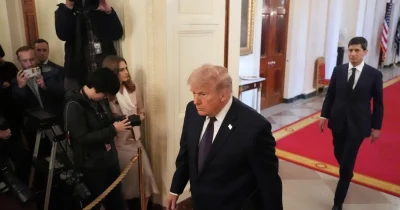
🧠The Trump administration is considering direct government equity stakes in US artificial intelligence companies as a novel approach to tech oversight and regulation. This proposal raises significant questions about conflict of interest, the appropriate role of government in private markets, and the institutional mechanisms needed to manage such arrangements.
AIBearishCrypto Briefing · Jun 77/10
🧠Trump is considering having the US government acquire equity stakes in artificial intelligence companies and plans to convene an executive summit on the topic. This potential policy shift could fundamentally alter how AI firms are regulated and valued, potentially creating conflicts of interest and distorting competitive dynamics in the tech sector.
AIBullishCrypto Briefing · Jun 77/10
🧠Tesla demonstrated autonomous driving capabilities with a San Francisco to Palo Alto round trip, signaling progress toward commercial robotaxi services. The company's shift from vehicle sales to recurring subscription-based autonomous transportation could fundamentally reshape its revenue model and the transportation industry.
AINeutralCrypto Briefing · Jun 77/10
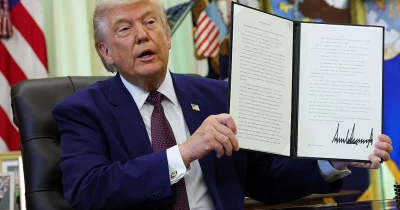
🧠The White House is accelerating AI development for national security purposes through executive action, aiming to enhance defense capabilities. While this move could strengthen U.S. security infrastructure, it raises significant concerns about ethical AI deployment and intensifies international competition in AI advancement.
AIBullishCrypto Briefing · Jun 77/10
🧠Marvell Technology has qualified for inclusion in the S&P 500 index after meeting profitability requirements. The admission enhances the semiconductor company's market visibility and investor accessibility, while positioning it strategically within the growing AI infrastructure sector.
AIBullishCrypto Briefing · Jun 77/10
🧠Coatue Management partner Thomas Laffont predicts an incoming wave of AI company IPOs, forecasting trillion-dollar valuations for OpenAI, Anthropic, and SpaceX. This market shift could reshape investment landscapes and accelerate valuations across the technology sector.
🏢 OpenAI🏢 Anthropic
AIBullishTechCrunch – AI · Jun 77/10
🧠OpenAI is developing a 'super app' that extends beyond chat-based interactions, with a senior employee declaring 'chat is dead.' This signals the company's strategic pivot toward a more comprehensive platform that integrates multiple AI capabilities and use cases.
🏢 OpenAI
AIBullishFortune Crypto · Jun 77/10
🧠OpenAI is planning a strategic pivot toward a 'superapp' model ahead of its anticipated IPO, betting that the future of AI lies in autonomous agents capable of handling complex, multi-step tasks. This shift reflects a broader industry conviction that AI systems will move beyond single-purpose tools toward integrated platforms that can independently execute sophisticated operations.
🏢 OpenAI
AINeutralCrypto Briefing · Jun 77/10
🧠Nvidia CEO Jensen Huang publicly expressed support for President Trump during a Beijing summit, signaling the semiconductor giant's political alignment at a critical moment for US-China tech relations. This declaration carries significant implications for AI policy, semiconductor trade dynamics, and how major tech companies navigate geopolitical tensions.
🏢 Nvidia
AIBearishFortune Crypto · Jun 77/10
🧠Major AI companies are executing unprecedented equity issuances in a compressed timeframe, creating a significant supply event that could outpace demand from traditional buyers. This massive wave of share offerings raises concerns about market absorption capacity and potential pressure on valuations in the AI sector.
AIBearishFortune Crypto · Jun 77/10
🧠Banks are simultaneously reducing junior analyst positions by up to two-thirds while recruiting approximately 62% of their AI talent from these same junior cohorts. This paradox reveals banks' strategic pivot toward AI-driven operations, where automation replaces traditional entry-level roles while the industry competes intensely for specialized AI expertise.
AIBullishBlockonomi · Jun 77/10
🧠SK Hynix has seen its stock surge following confirmation from Nvidia CEO Jensen Huang that the South Korean chipmaker will supply DRAM for Nvidia's Vera CPU. Huang simultaneously warned that memory shortages will persist for several years, reinforcing long-term demand for suppliers like SK Hynix.
🏢 Nvidia
AINeutralCrypto Briefing · Jun 77/10
🧠The Trump administration is considering acquiring government stakes in leading AI companies, with a White House meeting planned to discuss the proposal. This potential move could fundamentally reshape technology industry dynamics, influence AI innovation direction, and create conflicts of interest regarding regulatory oversight.
AIBullishCrypto Briefing · Jun 77/10
🧠The University of Cambridge is conducting the first clinical trial of an AI-designed vaccine targeting coronaviruses, representing a breakthrough in computational drug development. This advancement could accelerate pandemic preparedness by enabling rapid vaccine design against future coronavirus variants and zoonotic spillover events.
AIBullishCrypto Briefing · Jun 77/10
🧠The Trump administration has issued a directive requiring US national security agencies to work with multiple AI providers rather than relying on a single vendor. This policy aims to foster competition, reduce concentration risk, and strengthen the nation's cybersecurity posture through technological diversity.
AIBearishThe Verge – AI · Jun 77/10
🧠AI-generated content creators are becoming increasingly difficult to distinguish from human influencers, moving beyond the obviously artificial early virtual influencers like Lil Miquela. This evolution raises significant concerns about authenticity, transparency, and the need for clearer identification standards in social media as the technology becomes more sophisticated.
AINeutralCrypto Briefing · Jun 77/10
🧠Trump has indicated the U.S. government may acquire equity stakes in artificial intelligence companies, a potential shift in public investment strategy that could democratize access to AI industry profits. This proposal represents an unconventional approach to capturing value from the rapidly growing AI sector while potentially reshaping government-industry relationships.
AIBearishArs Technica – AI · Jun 77/10
🧠A school shooting survivor is suing an AI gun detection company after the system failed to identify a weapon during an incident, raising critical questions about the reliability standards required for safety-critical AI systems. The lawsuit highlights the gap between AI deployment in high-stakes scenarios and the technology's actual performance capabilities.
AIBullishCrypto Briefing · Jun 77/10
🧠Anthropic's Claude Opus 4.7 AI model has demonstrated performance comparable to dedicated NMR (nuclear magnetic resonance) software in chemistry analysis tasks. This development could streamline chemical research workflows by reducing dependency on specialized, expensive software tools and proprietary datasets.
🏢 Anthropic🧠 Claude🧠 Opus