22,940 AI articles curated from 50+ sources with AI-powered sentiment analysis, importance scoring, and key takeaways.
AINeutralCrypto Briefing · Jun 77/10
🧠Lionsgate's vice chair Michael Burns announced that artificial intelligence could reduce studio production costs by tens of millions of dollars annually, highlighting AI's transformative potential for mid-budget filmmaking. While the cost-saving applications are compelling, the announcement raises concerns about scaling implementation challenges and significant impacts on creative industry workforce employment.
AINeutralCrypto Briefing · Jun 77/10
🧠Meta Platforms is planning a substantial stock sale to fund a $145 billion artificial intelligence investment initiative. This capital-intensive strategy signals Meta's commitment to AI infrastructure and could reshape how major tech companies finance large-scale R&D projects, with potential implications for shareholder returns and market competition dynamics.
AINeutralCrypto Briefing · Jun 77/10
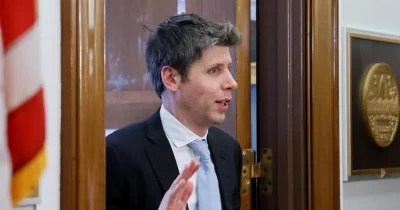
🧠The US government and OpenAI are exploring a potential equity stake in the AI company, framed as a sovereign wealth fund model to democratize AI benefits and influence economic distribution. This discussion represents a significant shift in how governments may participate in AI governance and value capture.
🏢 OpenAI
AINeutralCrypto Briefing · Jun 77/10
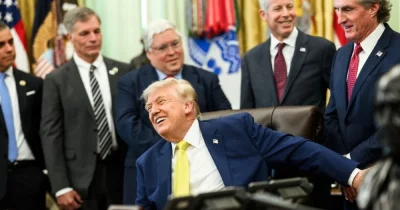
🧠President Trump has signed a directive to accelerate AI development for national security purposes, prioritizing rapid technological integration. While this could drive innovation, the policy raises significant questions about regulatory oversight and ethical considerations in AI deployment.
AINeutralCrypto Briefing · Jun 77/10
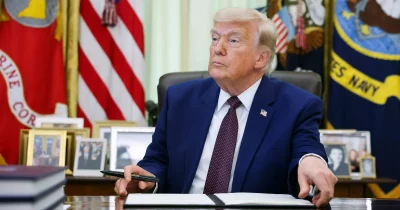
🧠The US government is considering taking equity stakes in artificial intelligence firms as part of a broader strategy to maintain technological competitiveness and influence AI development. This potential shift represents a significant departure from traditional public-private relationships and could reshape how government engages with the tech sector on innovation and national security matters.
AIBearishCrypto Briefing · Jun 77/10
🧠Meta is considering a massive stock offering worth tens of billions of dollars to fund its aggressive artificial intelligence infrastructure investments, following competitive moves by rivals like Google. The capital raise underscores the enormous financial burden AI development places on tech giants and creates shareholder dilution concerns as companies prioritize long-term AI bets over near-term profitability.
AIBullishCrypto Briefing · Jun 77/10
🧠Elon Musk plans to present SpaceX's Terafab chip manufacturing project to ASML employees, targeting a potential partnership that could address global AI chip shortages. The initiative aims to revolutionize chip production efficiency, benefiting both companies and potentially strengthening ASML's market position.
AIBullishCrypto Briefing · Jun 67/10
🧠Anthropic and the White House have resolved previous tensions, potentially clearing regulatory hurdles for the AI company's anticipated IPO valuation around $1 trillion. This diplomatic reset signals improved government-industry relations in AI governance and could reshape how policymakers and AI developers collaborate on safety and oversight frameworks.
🏢 Anthropic
AIBullishCrypto Briefing · Jun 67/10
🧠Anthropic has secured a $35 billion investment from Apollo Global Management and Blackstone to accelerate AI development and research capabilities. The funding round significantly strengthens Anthropic's competitive position in the rapidly consolidating AI industry, where capital requirements for model development and infrastructure continue to escalate.
🏢 Anthropic
AIBearishCrypto Briefing · Jun 67/10
🧠A bipartisan effort to establish unified AI regulation in the House is encountering diminishing support, threatening to fragment the regulatory landscape across states. Without federal coordination, compliance becomes increasingly complex for innovators and businesses operating across jurisdictions.
AINeutralCrypto Briefing · Jun 67/10
🧠SoftBank's Masayoshi Son claims OpenAI's next AI model is being designed by AI itself rather than humans, suggesting accelerated development toward superintelligence. This development could fundamentally reshape industries and societal structures within years if the claim proves accurate.
🏢 OpenAI
AIBearishDecrypt · Jun 67/10
🧠Microsoft researchers have identified a critical vulnerability in Claude Code where prompt injection attacks could manipulate AI coding agents into exfiltrating sensitive credentials stored in GitHub and development pipelines. This security flaw highlights systemic risks in deploying AI agents with access to production environments and sensitive infrastructure.
🧠 Claude
AINeutralTechCrunch – AI · Jun 67/10
🧠President Trump has indicated the U.S. government is exploring an equity stake in OpenAI as part of broader efforts to ensure American benefits from AI advancement. The potential deal reflects growing government interest in securing strategic positions within critical AI infrastructure companies.
🏢 OpenAI
AIBearishCrypto Briefing · Jun 67/10
🧠Nvidia's market capitalization has dropped below $5 trillion, reflecting shifting investor sentiment in the AI sector. This valuation decline suggests potential changes in the company's competitive positioning and raises questions about the sustainability of AI-driven growth narratives that have dominated tech markets.
🏢 Nvidia
AIBullishBlockonomi · Jun 67/10
🧠Goldman Sachs projects $7.6 trillion in cumulative AI infrastructure capital expenditure between 2026 and 2031, with Nvidia expected to capture 75% of the $5.1 trillion compute layer. Power emerges as the critical bottleneck despite representing only $358 billion of total spending, with companies like Vistra securing long-term nuclear partnerships to support AI deployment.
🏢 Nvidia
AIBearishFortune Crypto · Jun 67/10
🧠OpenAI and Anthropic pursue billion-dollar valuations amid a funding boom, but the article invokes foundational business theory warning that growth-obsessed capital can undermine long-term value creation. The piece raises questions about whether investors adequately scrutinize the sustainability of these valuations and business models.
🏢 OpenAI🏢 Anthropic
AIBullishCrypto Briefing · Jun 67/10
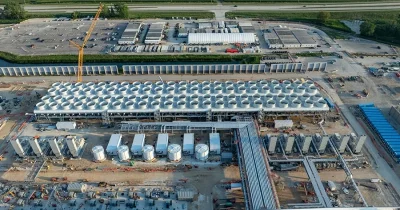
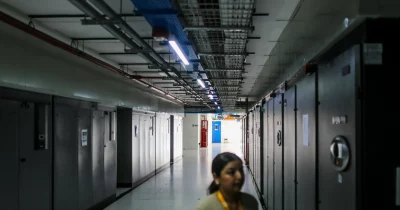
🧠AirTrunk announced a $30 billion investment plan to develop data centers across India, targeting AI and cloud computing infrastructure growth. This major capital commitment positions India as a potential global data hub while supporting the country's digital transformation and economic expansion.
AIBullishCrypto Briefing · Jun 67/10
🧠Apple announced significant AI advancements and a complete Siri overhaul at WWDC 2026, alongside the iOS 27 release. The company is emphasizing privacy-first AI implementation, which could strengthen investor confidence in Apple's ability to compete in the AI space while maintaining its privacy-focused brand positioning.
AIBullishCrypto Briefing · Jun 67/10
🧠Nvidia announces a $150 billion investment in Taiwan, reinforcing the island's critical role in global AI chip manufacturing and intensifying geopolitical competition over semiconductor supply chains. The investment highlights Taiwan's strategic importance as tensions between the US and China over advanced chip technology continue to escalate.
🏢 Nvidia
AIBullishCrypto Briefing · Jun 67/10
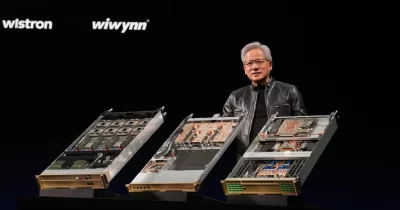
🧠Hon Hai Precision Industry (Foxconn) reported a 34% revenue increase driven by surging demand for Nvidia AI servers. This growth underscores the critical role of hardware manufacturers in the AI infrastructure boom and highlights how concentrated supply chain dependencies have become around Nvidia's dominance.
🏢 Nvidia
AIBullishCrypto Briefing · Jun 67/10
🧠The University of Cambridge has developed the first AI-designed vaccine to successfully pass human trials, demonstrating the potential for artificial intelligence to accelerate vaccine development. This breakthrough could enable faster responses to emerging viral threats and expand vaccine accessibility globally.
AINeutralCrypto Briefing · Jun 67/10
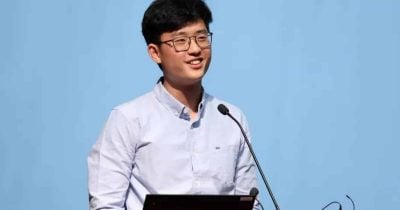
🧠Tencent has appointed Yao Shunyu as its new AI chief with a mandate to build artificial general intelligence (AGI), adopting strategic approaches similar to OpenAI's methodology. This move signals Tencent's commitment to competing in the global AI race and could reshape competitive dynamics in the technology sector.
🏢 OpenAI
AINeutralCrypto Briefing · Jun 67/10
🧠US government officials are exploring potential equity stakes in major AI companies like OpenAI and Anthropic as a means to democratize profits from AI development. This approach could align government interests with AI firm success but raises concerns about balancing shareholder value with public policy objectives.
🏢 OpenAI🏢 Anthropic
AIBullishCrypto Briefing · Jun 67/10
🧠Comfy UI has emerged as an industry-standard tool for AI image generation, offering node-based precision and reproducibility. The platform's integration with the Ideogram model, which features bounding box controls and granular prompting capabilities, enables users to achieve unprecedented control over AI-generated outputs.
AIBullishCrypto Briefing · Jun 67/10
🧠Mira Murati, former OpenAI CTO, has publicly unveiled her new venture, Thinking Machines Lab, at Bloomberg Tech, positioning it as a disruptive force in AI that prioritizes human-AI collaboration over the current dominance of major tech players. Her vision challenges the existing AI landscape by emphasizing partnership models rather than AI-centric approaches.