1,799 DeFi articles curated from 50+ sources with AI-powered sentiment analysis, importance scoring, and key takeaways.
DeFiBullishCoinDesk · Jun 97/10
💎Janus Henderson, a major traditional asset manager, has invested in Ethena (ENA) and plans to distribute USDe stablecoin, marking another significant institutional entry into DeFi infrastructure alongside similar moves by BlackRock and Apollo.
$UNI
DeFiBullishcrypto.news · Jun 97/10
💎Bitget Wallet has upgraded its DEX Aggregator API to enable direct market-order trading of tokenized real-world assets (RWAs), tapping into a $31 billion onchain market that includes $1.6 billion in tokenized equities. This expansion bridges traditional finance and DeFi by allowing seamless token-to-stock trading through a single interface.
DeFiBullishCrypto Briefing · Jun 97/10
💎Nansen has integrated Hyperliquid perpetual futures into its analytics platform, coinciding with onchain derivatives volume reaching $625B. This integration reflects a growing convergence between decentralized derivatives trading and traditional financial analytics infrastructure.
DeFiBullishBlockonomi · Jun 97/10
💎Morpho has secured $175M in funding led by prominent venture capital firms Paradigm, a16z, and Ribbit Capital to expand its blockchain-based credit infrastructure platform. The investment underscores growing institutional interest in decentralized finance solutions targeting banks and institutional clients seeking alternative credit mechanisms on-chain.
DeFiBullishCoinDesk · Jun 97/10
💎Morpho, a lending protocol, raised $175 million in funding led by Paradigm and a16z crypto to accelerate the development of onchain credit markets infrastructure. The investment signals significant institutional confidence in bringing traditional credit mechanisms to blockchain networks.
DeFiBullishBlockonomi · Jun 97/10
💎Sei's stablecoin ecosystem reached a major milestone with market cap hitting $330.5M on May 15, while filtered stablecoin transaction volume surged to $4.9B in May 2026—the highest on record. The momentum extended into June, with Feather's lending vaults accumulating $59.8M in deposits and $24.3M in borrowed assets, signaling strengthening DeFi activity on the blockchain.
DeFiBullishcrypto.news · Jun 97/10
💎Starknet has introduced STRK20, a privacy-enhanced standard for ERC-20 tokens that enables private balance and transfer functionality while maintaining selective disclosure through viewing keys. This development addresses privacy demands in DeFi by allowing users to keep transaction details confidential while complying with regulatory and audit requirements when necessary.
DeFiBullishThe Block · Jun 97/10
💎Janus Henderson, a major asset manager, has acquired a position in ENA (Ethena's native token) and plans to launch regulated investment products tied to the Ethena ecosystem. This move represents significant institutional adoption of a synthetic stablecoin protocol and validates the market for regulated crypto-linked financial instruments.
DeFiBullishBlockonomi · Jun 97/10
💎Starknet has introduced STRK20, a new privacy standard for ERC20 tokens that enables shielded balances, confidential transfers, and regulatory-compliant viewing keys. This development addresses growing demand for privacy features in decentralized finance while maintaining compliance with regulatory requirements.
DeFiBullishNewsBTC · Jun 97/10
💎Morpho, a decentralized lending protocol with $6.6 billion in total value locked, raised $175 million from Paradigm, a16z crypto, and other institutional investors at a $2 billion valuation. The funding represents a watershed moment for DeFi's integration with traditional finance, as major Wall Street institutions and crypto exchanges increasingly adopt decentralized lending infrastructure.
$ETH$XRP$AAVE🧠 ChatGPT
DeFiBullishThe Block · Jun 97/10
💎Morpho has secured $175M in Series B funding co-led by Paradigm, a16z crypto, and Ribbit Capital to develop an open blockchain-based credit network. The platform aims to bridge decentralized finance, traditional finance, and global markets through infrastructure that enables permissionless lending and borrowing.
DeFiBullishcrypto.news · Jun 97/10
💎Morpho, a decentralized finance platform, secured $175M in Series B funding at a $2B valuation from prominent investors including Paradigm, a16z Crypto, and Ribbit Capital. The funding accelerates Morpho's institutional expansion into open credit networks targeting banks and asset managers.
DeFiBullishCrypto Briefing · Jun 97/10
💎DeFi lending protocol Morpho has raised $175M in funding led by prominent venture firms Paradigm and a16z, pushing its valuation toward $2B. This significant capital infusion reflects growing institutional confidence in decentralized finance and signals accelerating mainstream adoption of blockchain-based financial infrastructure.
DeFiBearishWu Blockchain · Jun 97/10
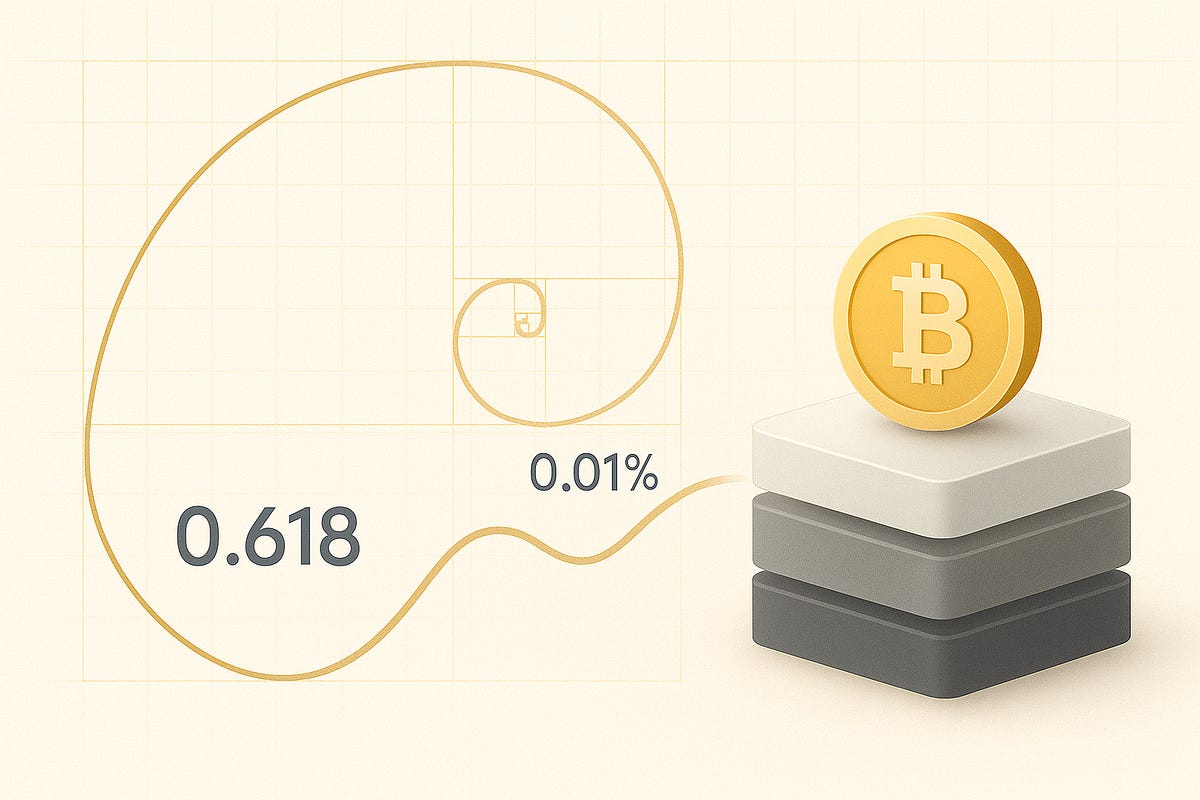
💎The article examines how perpetual futures funding rates function as a mechanism that can trigger liquidations through algorithmic equilibrium rather than direct market manipulation. By analyzing the 0.01% funding-rate dynamics, the piece explains why traders experience liquidations that appear mysterious but are actually predictable outcomes of the perps mechanism design.
DeFiBullishThe Block · Jun 97/10
💎Starknet has launched STRK20, a zero-knowledge privacy layer enabling confidential ERC20 token transfers and balance visibility while incorporating regulatory disclosure mechanisms. The development addresses growing demand for privacy in DeFi without sacrificing compliance, positioning Starknet as a leader in privacy-preserving blockchain infrastructure.
DeFiBullishFortune Crypto · Jun 97/10
💎Morpho, a DeFi protocol focused on bringing decentralized finance to institutional investors, raised $175 million in Series B funding led by a16z crypto, Paradigm, and Ribbit Capital. The funding reflects growing institutional interest in DeFi infrastructure that bridges traditional finance and blockchain markets.
DeFiBullishCrypto Briefing · Jun 97/10
💎Regulatory approval for US onshore perpetual futures markets represents a significant growth opportunity for the crypto derivatives sector. Lighter, a trading platform, is pioneering a zero-fee model that challenges traditional exchange economics, while attracting engineering talent comparable to top AI startups.
DeFiBullishBlockonomi · Jun 97/10
💎RippleX is conducting formal verification testing on XRPL lending code before validators vote on mainnet activation. The XLS-66 proposal would introduce fixed-term loans funded by Single Asset Vault liquidity, with formal verification methods helping identify accounting and state errors that standard testing might miss.
$XRP
DeFiBearishcrypto.news · Jun 97/10
💎Humanity Protocol suffered a $36 million exploit after attackers compromised administrative keys and gained control of bridge infrastructure across Ethereum and BNB Smart Chain. The breach highlights critical vulnerabilities in bridge security and centralized key management practices within DeFi protocols.
$ETH$BNB
DeFiBullishCoinDesk · Jun 97/10
💎Circle has launched cirBTC, a 1:1 bitcoin-backed token on Ethereum, enabling bitcoin holders to access DeFi protocols without selling their BTC. The move positions Circle as a competitor to Coinbase's wrapped bitcoin offerings in the growing market for tokenized bitcoin on Layer 1 blockchains.
$BTC$ETH
DeFiBullishBlockonomi · Jun 97/10
💎Bitrue Research Institute's June 2026 report documents a significant shift in institutional capital allocation away from token emission-based yield farming toward sustainable real yield strategies backed by real-world asset (RWA) yields and borrower interest spreads. This transition reflects growing institutional preference for economically sound models over inflationary mechanisms, signaling maturation in the crypto market's approach to yield generation.
DeFiBullishcrypto.news · Jun 97/10
💎Ripple is conducting formal verification testing of XRP Ledger's native lending protocol in collaboration with Common Prefix to identify potential Layer-1 vulnerabilities before mainnet activation. This proactive security approach reflects growing industry emphasis on rigorous code auditing before deploying new financial infrastructure.
$XRP
DeFiBullishBlockonomi · Jun 97/10
💎Hyperliquid (HYPE) token surged 10% to $64 following Coinbase's appointment as USDC deployer with $32 million staked, signaling institutional confidence in the platform. Kraken's addition of HYPE staking and analyst Citrini's positive assessment further bolstered market sentiment.
DeFiBullishBitcoinist · Jun 97/10
💎RippleX Developers announced that formal verification efforts on the XRP Ledger are expanding beyond the Payment Engine to cover newer DeFi protocols, including Single Asset Vault and an upcoming Lending Protocol. This shift represents a strategic commitment to mathematically proving protocol correctness before deploying complex financial features, enhancing security in high-risk environments.
$XRP
DeFiBearishcrypto.news · Jun 97/10
💎THORChain, a cross-chain liquidity protocol, has initiated an 11-step recovery plan following a $10.7M security breach. The network is requesting validator approval for version 3.19.0, which implements enhanced security measures including vault quarantine systems and transaction signature (TSS) verification checks before resuming liquidity and trading operations.