#ai-ethics News & Analysis
Recent coverage of #ai-ethics spans 166 indexed articles, with 25 pieces published in the last month. Discussion remains predominantly neutral, with 64% of recent articles taking a balanced tone and 36% expressing concern. Sentiment has held stable over the past 90 days, showing no significant shift in how the issue is being framed.
Leading sources include arXiv's computer science and AI sections, alongside coverage from TechCrump and The Verge. The most-discussed companies in this context are Anthropic and OpenAI, with ChatGPT appearing frequently in related discussions. Scan the articles below for ongoing developments in this space.
sentiment · last 30d (25 articles)Top sources:arXiv – CS AI · 68TechCrunch – AI · 12The Verge – AI · 11Fortune Crypto · 10Crypto Briefing · 9
Most-discussed entities:Anthropic · 14OpenAI · 13ChatGPT · 11Claude · 8Llama · 6
AINeutralarXiv – CS AI · Jun 16/10
🧠Researchers developed a culturally grounded, AI-augmented User Experience Research (UXR) framework for TeleDeCa, a telemedicine dementia care system serving family caregivers in Nigeria. The study demonstrates how generative AI can support UXR methodology in low-resource, culturally sensitive contexts while maintaining human oversight and ethical accountability, producing reusable design patterns for future AI-powered research applications.
AINeutralarXiv – CS AI · Jun 16/10
🧠Researchers propose a framework using signaling theory to evaluate whether AI empathy is contextually appropriate, rather than simply measuring its presence or absence. The study introduces Signal Cost Proxies mapping emotional, cognitive, and associative dimensions to user needs, addressing concerns that AI empathy can range from manipulative excess to dismissive insufficiency.
AINeutralarXiv – CS AI · May 296/10
🧠Researchers propose an ethical benchmark for facial age estimation that excludes children's data during training, addressing privacy and legal concerns in AI development. Testing nine state-of-the-art methods reveals severe performance degradation (46.4% average) when models encounter unseen age groups, exposing a critical gap between current practices and responsible data governance.
AINeutralarXiv – CS AI · May 296/10
🧠Researchers introduce FairMindSim, a simulation benchmark and BREM framework to evaluate how well large language models align with human ethical values through social economic games. Testing 1,017 humans against ten LLMs reveals that frontier models exhibit more human-like restraint and balanced decision-making compared to mid-tier models, which show rigid, overly punitive behavior.
🧠 GPT-5🧠 Gemini
AINeutralarXiv – CS AI · May 286/10
🧠Researchers present a modular LLM-based architecture for detecting and quantifying human values in text, addressing the need for ethical decision-making in autonomous AI systems. The approach separates value conceptualization from detection, enabling scalable application across different ethical frameworks and demonstrating strong performance on the ValueEval dataset.
AIBearishDecrypt – AI · May 276/10
🧠Researchers have raised concerns that prolonged interactions with AI chatbots may distort users' perception of reality and authentic social connection. The warning highlights potential psychological risks as chatbot adoption accelerates, particularly regarding dependency and detachment from genuine human relationships.
AINeutralCrypto Briefing · May 276/10
🧠OpenAI has implemented a policy prohibiting political advertisements during election cycles as the company begins monetizing ChatGPT. The move reflects broader industry efforts to reduce misinformation and establish ethical advertising standards around AI-generated content.
🏢 OpenAI🧠 ChatGPT
AINeutralDecrypt – AI · May 276/10
🧠OpenAI's philanthropic foundation announced a $250 million commitment to fund research, worker support programs, and new economic models designed to mitigate the disruptive effects of AI-driven automation on labor markets. The initiative addresses growing concerns about job displacement and wealth concentration as AI capabilities accelerate.
$MKR🏢 OpenAI🧠 ChatGPT
AINeutralThe Verge – AI · May 276/10
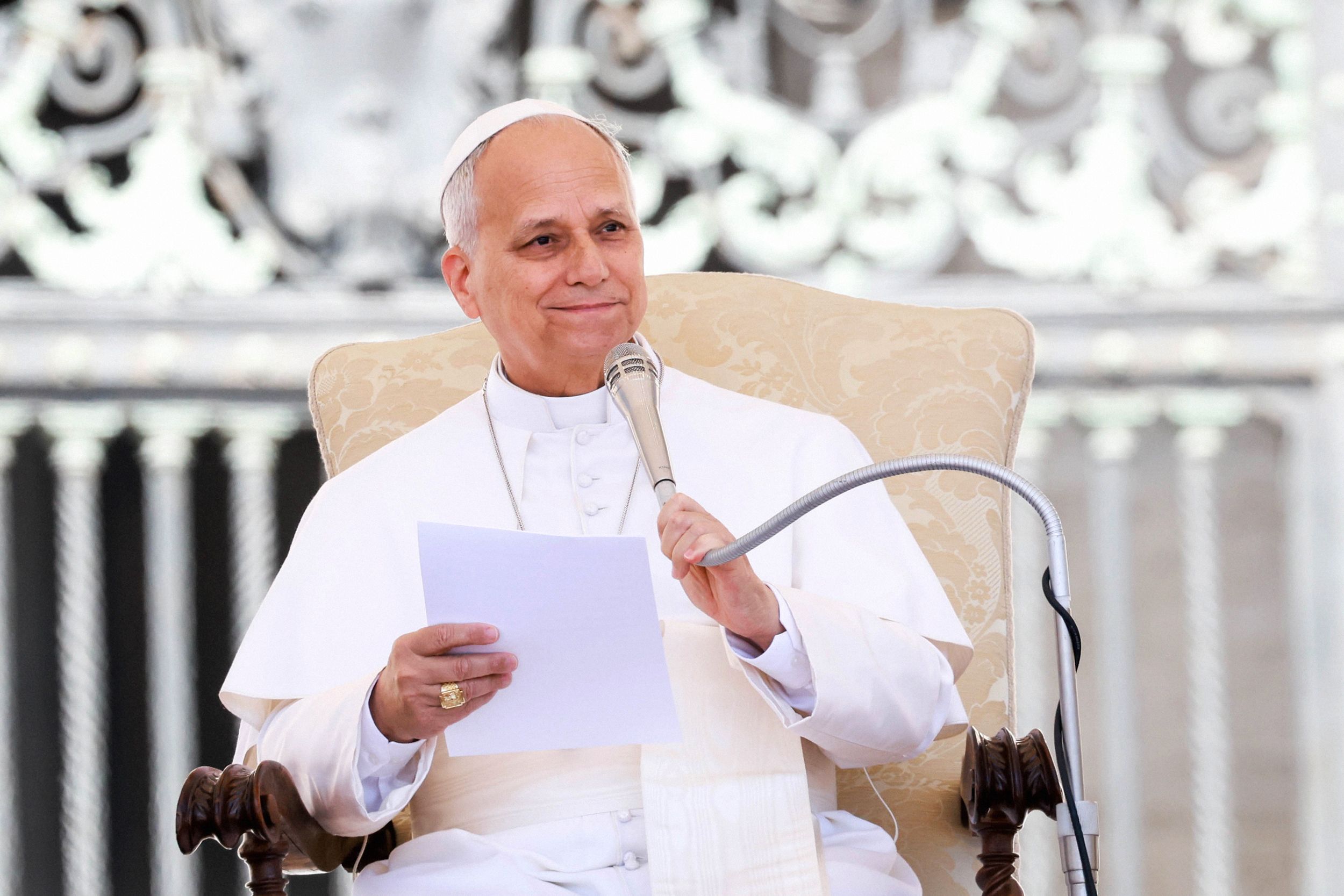
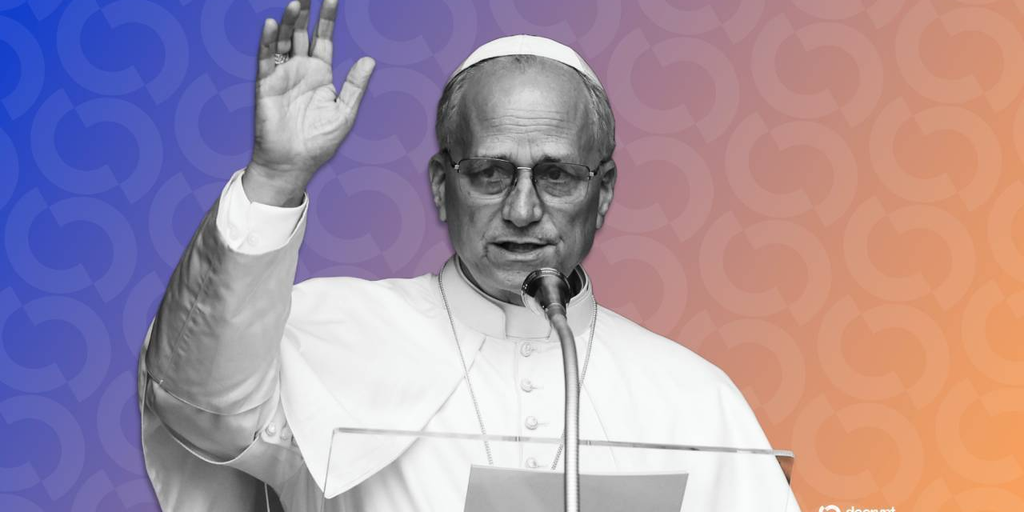
🧠Pope Leo XIV released an encyclical letter titled 'Magnifica Humanitas' addressing AI's societal implications, warning that AI use affects fundamental human rights and freedoms. The letter, unveiled alongside Anthropic cofounder Christopher Olah, represents a significant institutional engagement between the Catholic Church and the AI industry on ethical governance.
🏢 Anthropic
AINeutralarXiv – CS AI · May 276/10
🧠Researchers have developed an interpretable AI framework for assessing suicide risk in metro stations using surveillance video analysis, achieving 83.2% ROC-AUC by combining person tracking, activity recognition, and trajectory analysis. This work addresses a critical public health challenge by enabling early identification of high-risk situations that could facilitate timely intervention.
AINeutralWired – AI · May 266/10
🧠Pope Francis referenced The Lord of the Rings in his encyclical on artificial intelligence, inadvertently critiquing tech billionaires who misinterpret Tolkien's cautionary themes about power and corruption. The papal intervention highlights how the tech industry's leadership often misappropriates literary metaphors while ignoring their moral warnings.
AINeutralWired – AI · May 266/10
🧠The Vatican invited Anthropic to present at Pope Leo's inaugural encyclical on artificial intelligence, marking a rare intersection of religious institution and AI industry leadership. This event signals the Church's engagement with emerging technology governance and reflects broader institutional interest in establishing ethical AI frameworks.
🏢 Anthropic
AINeutralDecrypt – AI · May 256/10
🧠Pope Leo released the Catholic Church's first AI encyclical, a 245-paragraph document asserting that data constitutes a common good and rejecting the notion that technology is morally neutral. The document was presented alongside Anthropic co-founder Christopher Olah, whose AI company is currently engaged in litigation against the Trump administration over military AI applications.
🏢 Anthropic
AIBearishArs Technica – AI · May 226/10
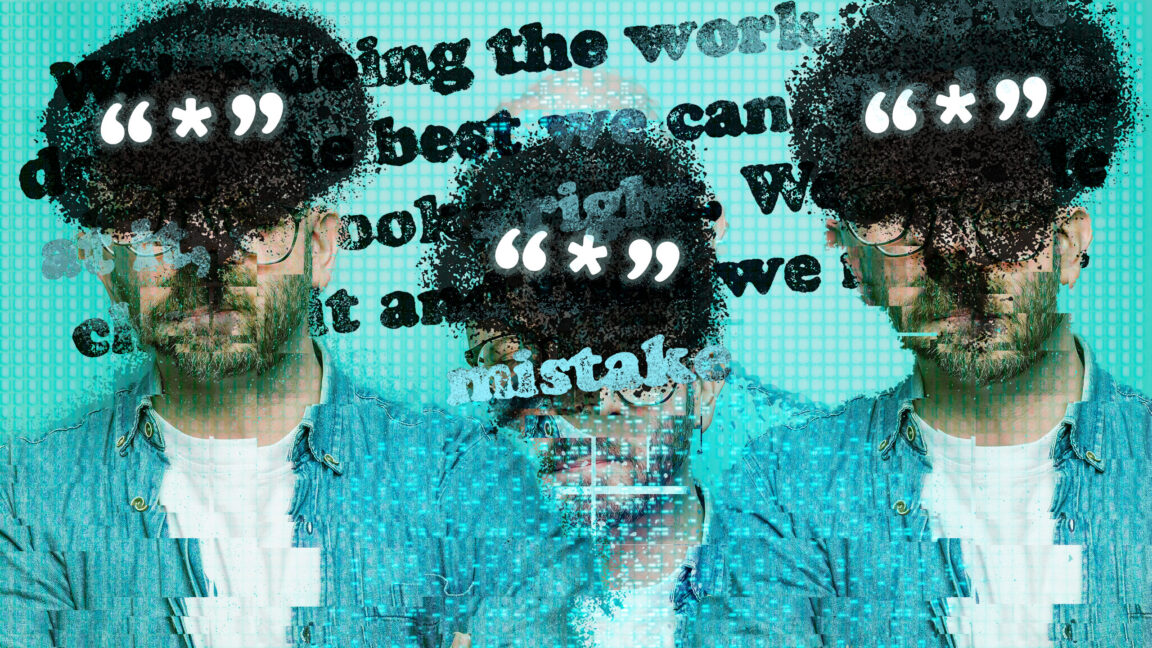
🧠Author Steven Rosenbaum included inaccurate quotes generated by AI in his book 'The Future of Truth,' raising questions about AI's role in content creation and factual accuracy. Despite acknowledging the error, Rosenbaum indicates he plans to continue using similar AI tools, highlighting the tension between AI efficiency and editorial integrity in publishing.
AINeutralarXiv – CS AI · May 126/10
🧠Researchers propose 'Positive Alignment' as a new framework for AI safety that goes beyond preventing harm to actively promote human flourishing through context-sensitive, user-authored systems. The approach addresses alignment failures like engagement hacking and loss of autonomy while emphasizing decentralized governance and diverse viewpoints rather than centralized institutional control.
AINeutralarXiv – CS AI · May 116/10
🧠A researcher argues that directly determining whether AI systems possess consciousness is currently intractable, but studying how people perceive AI consciousness is tractable and consequential. As the public increasingly attributes human-like consciousness to AI systems, this perception is reshaping ethical standards, user experience design, and linguistic norms across society.
AINeutralarXiv – CS AI · May 96/10
🧠Researchers introduce a Dual Causal Adjustment Network (DCAN) to improve fairness in multimodal AI systems that assess personality traits from video data. The method addresses demographic and latent biases that cause unfair predictions across different population groups, achieving 92%+ accuracy while significantly improving fairness metrics.
AINeutralarXiv – CS AI · May 16/10
🧠A research study examines how people ethically judge the reuse of AI-generated content, finding that copying AI work is perceived as significantly less unethical than plagiarizing human-authored work. The leniency stems from lower perceptions of AI's capacity to suffer harm and greater ownership attributed to humans reusing AI content, with anthropomorphic design cues indirectly influencing these moral judgments.
AINeutralarXiv – CS AI · May 16/10
🧠Researchers propose an Ethical Emotion Feedback System (EEFS) for agentic AI systems, drawing from Toegyeyi Hwang's moral-emotional philosophy to regulate autonomous decision-making in learning environments. The framework introduces a five-stage architecture with design principles and evaluation instruments to ensure moral-emotional alignment in AI systems capable of autonomous goal-setting.
AINeutralarXiv – CS AI · May 16/10
🧠Researchers introduce FairMind, an automated tool that detects fairness bias in machine learning datasets using causal analysis and LLM-generated reports. The software applies the standard fairness model to evaluate how protected variables influence predictions through counterfactual reasoning, addressing a critical gap in existing AutoML frameworks that typically ignore fairness considerations.
AINeutralarXiv – CS AI · May 16/10
🧠Researchers introduce MIFair, a machine learning framework using mutual information to assess and mitigate bias in AI systems, with particular strength in handling intersectionality and multiclass classification. The framework consolidates diverse fairness metrics into a unified approach and demonstrates effectiveness on real-world datasets while maintaining predictive performance.
AINeutralarXiv – CS AI · May 16/10
🧠A research paper investigates factors that lead organizations to abandon AI systems during development or post-deployment, finding that ethical concerns represent only one of six drivers. The study reveals that practical constraints—including resource limitations, organizational dynamics, and regulatory pressures—often outweigh ethical considerations in non-development decisions, suggesting responsible AI research should broaden its focus beyond ethics-centric approaches.
AINeutralTechCrunch – AI · Apr 216/10
🧠GRAI, an AI music startup, positions itself as a tool for enhancing artist collaboration rather than replacing human creators. The company argues that user demand centers on remixing and modifying existing tracks rather than generating original songs from scratch, offering a different value proposition in the contentious AI music space.
AINeutralarXiv – CS AI · Apr 206/10
🧠This academic paper examines how AI and data science practices can paradoxically increase vulnerability of subjects they aim to protect, using a case study of computer vision analysis of children in monetized YouTube content. The authors develop an ethics protocol identifying four critical decision points—dataset design, operationalization, inference, and dissemination—where technical choices create vulnerabilizing factors including exposure, monetization, narrative fixing, and algorithmic optimization.
AINeutralarXiv – CS AI · Apr 206/10
🧠Researchers introduce the first benchmark for multicultural text-to-image generation, revealing that state-of-the-art AI models struggle with culturally diverse scenes. The study of 9,000 images across five countries and multiple demographics shows significant performance disparities, with a multi-agent framework using cultural personas demonstrating potential improvements in image quality and cultural accuracy.