#ai-infrastructure News & Analysis
Coverage of #ai-infrastructure has grown significantly, with 197 articles published in the last 30 days across a corpus of 402 indexed pieces. Recent discussion maintains a largely positive outlook, with 66.5% bullish sentiment, though this perspective has remained stable compared to the previous quarter. Nvidia, Anthropic, and OpenAI dominate the conversation, reflecting intense focus on the companies and systems underlying AI deployment.
Related coverage frequently intersects with #data-centers, #nvidia, #enterprise-ai, and #semiconductor topics, indicating broader interest in the technical and commercial layers supporting AI development. Scan the articles below to follow current developments in this space.
sentiment · last 30d (197 articles)Top sources:Blockonomi · 96arXiv – CS AI · 54Crypto Briefing · 32Fortune Crypto · 22TechCrunch – AI · 17
Most-discussed entities:Nvidia · 39Anthropic · 25OpenAI · 19Claude · 5ChatGPT · 3
AINeutralCrypto Briefing · Jun 236/10
🧠Cerebras has confirmed that OpenAI's GPT 5.4 model runs on its AI infrastructure, with plans to support GPT 5.5 rollout. While the partnership highlights Cerebras' competitive positioning in AI chip infrastructure, the company faces significant concentration risk from its heavy dependence on a single major client.
🏢 OpenAI🧠 GPT-5
AIBearishCrypto Briefing · Jun 236/10
🧠Cerebras, now a public company, reported 92% revenue growth in its first earnings report but saw its stock decline, signaling that investors are shifting focus from top-line growth to sustainable profitability metrics. This reflects a broader market maturation in the AI sector where valuation multiples depend increasingly on path-to-profitability rather than revenue expansion alone.
AIBullishCrypto Briefing · Jun 236/10
🧠Nvidia is supporting over 700 US research projects through the National Artificial Intelligence Research Resource (NAIRR), providing democratized access to advanced AI computing infrastructure. This initiative aims to accelerate scientific breakthroughs across diverse fields by removing computational barriers for academic researchers.
🏢 Nvidia
AI × CryptoBullishCrypto Briefing · Jun 236/10
🤖Polymarket prediction markets are pricing in a 96% probability that Micron Technology will beat earnings expectations in its Wednesday earnings report. The high confidence reflects market sentiment around strong AI infrastructure demand driving semiconductor sector performance.
AINeutralArs Technica – AI · Jun 236/10
🧠Oracle is leveraging massive debt financing to fund billions in data center infrastructure for AI capabilities, while simultaneously cutting 21,000 employees (roughly 10% of its workforce) to optimize costs. The layoffs represent a strategic reallocation of resources toward high-margin AI investments rather than a sign of financial distress.
AI × CryptoBullishCrypto Briefing · Jun 236/10
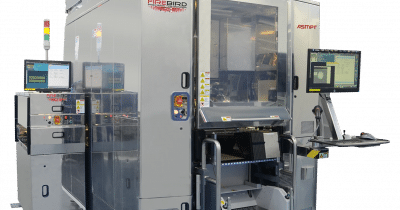
🤖ASMPT Limited has secured a repeat order for eight TCB (Through-Chip-via-Bottom) packaging tools from a major client, demonstrating growing market demand for advanced semiconductor packaging solutions critical to AI and high-performance computing applications. The repeat order signals strong confidence in ASMPT's technology and positions the company as a key enabler of infrastructure supporting the AI boom.
AIBullishCrypto Briefing · Jun 236/10
🧠BE Semiconductor Industries (Besi) has raised its long-term revenue target to €2.2 billion, driven by surging demand for AI chip packaging solutions. The company's growth projection reflects the critical role of hybrid bonding technology in meeting semiconductor capacity needs for artificial intelligence applications.
AIBullishCrypto Briefing · Jun 236/10
🧠AMD's acquisition of MEXT aims to strengthen its AI memory capabilities and reduce costs in AI infrastructure. The deal positions AMD to compete more effectively in the growing AI market by expanding its memory technology portfolio.
AIBullishBlockonomi · Jun 236/10
🧠Bank of America has raised Intel's price target to $160, citing strengthening fundamentals driven by robust AI demand and a semiconductor market expected to reach $2.7 trillion by 2030. The upgrade reflects growing optimism about Intel's positioning in the high-growth AI infrastructure segment.
AIBearishFortune Crypto · Jun 236/10
🧠Forty mayors from cities including Phoenix and Melbourne are organizing collective opposition to data center expansion driven by AI companies, citing strain on local water supplies and electricity infrastructure. The coordinated effort seeks to establish bargaining power against major technology firms' resource-intensive buildout plans.
AI × CryptoBullishBlockonomi · Jun 236/10
🤖Backblaze shares surged 20% following announcement of a $335M, five-year partnership with CoreWeave to provide AI Object Storage infrastructure. The deal represents significant validation of Backblaze's storage capabilities as enterprise demand for AI infrastructure accelerates.
AIBullishBlockonomi · Jun 236/10
🧠Jim Cramer publicly endorsed CoreWeave's data center expansion capabilities as new analysis suggests the company's order backlog may exceed previous estimates. Despite a 35% annual decline, CoreWeave stock has gained 48% year-to-date, with the firm having secured approximately 90% of its 2027 commitments.
GeneralBullishFortune Crypto · Jun 236/10
📰SK Hynix has briefly surpassed Samsung as South Korea's most valuable company, driven by a remarkable 900% share price surge over 12 months, significantly outpacing the broader KOSPI index. The semiconductor manufacturer is reportedly considering a U.S. listing as early as August, signaling strategic repositioning in global capital markets.
AIBullishCrypto Briefing · Jun 236/10
🧠Engram has secured $98 million in funding to advance AI model efficiency, aiming to reduce operational costs and expand practical AI applications. This capital injection signals growing investor confidence in efficiency-focused AI infrastructure solutions.
AINeutralMIT Technology Review · Jun 236/10
🧠The Download newsletter covers two major tech stories: ASML's $400 million advanced chipmaking machine that represents the future of semiconductor manufacturing, and Anthropic's clash with government regulators over AI policy. These developments highlight the intersection of hardware innovation and regulatory challenges shaping the AI industry.
🏢 Anthropic
AINeutralCrypto Briefing · Jun 236/10
🧠SoftBank's Masayoshi Son is advocating for terrestrial data centers as the superior infrastructure strategy for AI, directly challenging Elon Musk's vision of orbital space-based data centers. This strategic disagreement reflects divergent philosophies on how to scale AI computing infrastructure most efficiently and cost-effectively.
AINeutralCrypto Briefing · Jun 236/10
🧠The United Nations is calling for AI companies to disclose their environmental costs by 2030, recognizing that unchecked AI growth threatens global resources. The directive emphasizes the need for greater transparency and sustainable practices to address the sector's escalating environmental footprint.
AI × CryptoNeutralCrypto Briefing · Jun 236/10
🤖Elon Musk's Terafab project proposes deploying 1 terawatt of AI computing capacity into orbit via SpaceX's Starship, potentially transforming global AI infrastructure. This initiative could centralize compute resources in space, challenging existing decentralized computing models and reshaping how AI services are delivered globally.
AINeutralarXiv – CS AI · Jun 236/10
🧠Researchers present a formal architectural framework for managing LLM agent skills—reusable behavioral components that agents dynamically select and execute. The paper catalogs ten architectural patterns organized into four responsibility layers (Supply Chain, Mediation, Execution Control, Evidence & Feedback) and provides a reference architecture validated across eight systems, establishing a standardized approach for skill governance in agent-based AI applications.
AIBullisharXiv – CS AI · Jun 236/10
🧠Researchers introduce Agentic Time Machine (TM), an infrastructure that reconstructs past web states to enable efficient evaluation of AI agents on event forecasting tasks. A multi-agent framework using this system achieves top performance on FutureX benchmarks and Polymarket predictions, demonstrating that offline evaluation correlates strongly with live forecasting results.
AIBullisharXiv – CS AI · Jun 236/10
🧠PulseCX is a new framework that addresses a critical limitation in conversational AI for customer service: the inability to respond to real-time external events like viral trends or system outages. By using an asynchronous knowledge graph system instead of synchronous web search, PulseCX reduces latency to under 10ms while improving intent resolution and customer satisfaction in dynamic environments.
AINeutralarXiv – CS AI · Jun 236/10
🧠Researchers propose a machine learning framework for predicting capacity stress in hyperscale data centers operating under intensive AI workloads like LLM training and inference. The XGBoost-based early warning system achieves 91.4% recall in detecting stress-prone periods, enabling proactive interventions such as workload throttling and resource scaling before system degradation occurs.
AINeutralarXiv – CS AI · Jun 236/10
🧠A new arXiv paper argues that agentic AI systems require deterministic environments to scale effectively, proposing that environment determinism is a critical binding constraint for AI progress alongside compute growth. The authors introduce a Supply Certainty Index and five-level Determinism Maturity Model to operationalize the framework for tasks with verifiable economic or physical outcomes.
AINeutralarXiv – CS AI · Jun 236/10
🧠Researchers introduce AInterviewer, an open-source platform that combines large language models with traditional survey software to conduct automated qualitative interviews while maintaining data security and reproducibility. Unlike proprietary solutions, the system runs on locally hosted models and enforces standardized question administration, addressing concerns about privacy and scientific rigor in AI-driven research.
AINeutralarXiv – CS AI · Jun 236/10
🧠Researchers propose a multi-agent large language model system to optimize physical resource block allocation in 6G radio access networks, treating optimization as a service that dynamically adapts to real-time network conditions. The framework uses a closed-loop architecture with scene understanding, objective generation, and reflection agents, achieving near-optimal performance with minimal inference latency through a novel one-shot distillation mechanism.