#automation News & Analysis
Coverage of #automation has generated 36 articles in the past month, with roughly half expressing bullish sentiment toward the topic. However, optimism has softened compared to the previous quarter, declining 8.5 percentage points. Discussion centers on advances from major AI developers including Anthropic, ChatGPT, and Gemini, with significant overlap in coverage of machine learning, AI agents, and large language models.
The aggregator's sources on this tag are dominated by arXiv's computer science and AI sections, along with crypto-focused outlets. Scan the articles below to explore how automation is being discussed across these communities.
sentiment · last 30d (36 articles) · -8.5pp bullish vs prior 90dTop sources:arXiv – CS AI · 135Fortune Crypto · 42Crypto Briefing · 15The Register – AI · 10TechCrunch – AI · 10
Most-discussed entities:Anthropic · 7ChatGPT · 6Gemini · 5Claude · 5OpenAI · 5
AIBullisharXiv – CS AI · Jun 57/10
🧠Researchers introduce DragOn, a large-scale benchmark dataset with 286K training screenshots and 3.5M tasks designed to improve GUI agents' ability to perform drag-based interactions like highlighting, resizing, and swiping. The dataset addresses a critical gap where drag-grounding capabilities lag significantly behind click-grounding in AI models controlling desktops and mobile devices.
🧠 Claude
AI × CryptoNeutralCrypto Briefing · Jun 47/10
🤖Alex Imas discusses how automation and AI are contracting the human-only economy while reshaping labor markets across sectors. He argues that while human expertise remains valuable in certain fields, better economic data is essential for accurately predicting workforce transitions and policy outcomes.
AIBullishTechCrunch – AI · Jun 47/10
🧠Hello Robot, a California startup, has released the fourth generation of its home assistance robot called Stretch. The product represents a significant step toward commercializing domestic robotics, signaling growing investor and industry confidence in bringing autonomous robots into residential settings.
AIBullishCrypto Briefing · Jun 27/10
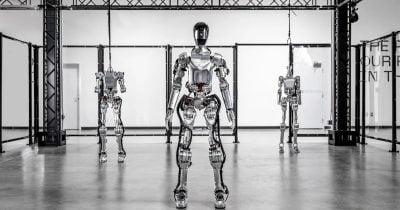
🧠Andrew Kang predicts humanoid robots will become integrated into everyday life within three to five years, with market potential reaching trillions of dollars. He emphasizes that physical intelligence represents a transformative shift in robotics technology, enabling these multipurpose machines to adapt across diverse job functions.
AIBullishDecrypt · Jun 27/10
🧠Microsoft is productizing OpenClaw as an enterprise AI agent called Scout, leveraging its massive Windows user base of 1.4 billion to drive adoption. This move positions Microsoft to dominate enterprise AI agent deployment at scale, though the technology itself is not new to the market.
AIBullishThe Verge – AI · Jun 27/10
🧠Microsoft has launched Scout, an always-on AI personal assistant built on OpenClaw technology that integrates across Microsoft 365 applications like Outlook, OneDrive, and Teams. Unlike existing Copilot features, Scout functions as a dedicated personal assistant capable of handling calendar management, expense reporting, email drafting, and other productivity tasks for enterprise users.
🏢 Microsoft
AIBullisharXiv – CS AI · Jun 27/10
🧠CodeCytos is an AI-powered agent framework that automates spatial molecular imaging analysis through code-driven reasoning, enabling researchers to dynamically explore custom cellular features without manual intervention. The system demonstrates that large language models with strong coding capabilities can effectively analyze complex tissue imaging data when guided by minimal prompts and domain-agnostic few-shot examples, outperforming conventional analysis tools.
AIBullisharXiv – CS AI · Jun 27/10
🧠CRISP is an unsupervised machine learning framework that automates the analysis of multiple whole-slide images (WSIs) in digital pathology by selectively sampling informative patches across all slides in a case rather than relying on a single pathologist-selected slide. The approach matches or exceeds current clinical practice for breast cancer diagnosis and retrieval while eliminating subjective slide selection and reducing computational burden.
AIBullisharXiv – CS AI · Jun 27/10
🧠Researchers introduce LASEV, an LLM-based multi-agent system that generates educational videos by decomposing production into specialized agents rather than relying on end-to-end video models. The system achieves 95% cost reduction and over one million videos daily while maintaining high quality through structured reasoning, semantic critique, and deterministic compilation.
AIBullishCrypto Briefing · Jun 17/10
🧠Nvidia and TSMC have partnered to integrate artificial intelligence directly into semiconductor manufacturing processes. This collaboration aims to accelerate chip production cycles and improve manufacturing efficiency, potentially reshaping the economics of the semiconductor industry.
🏢 Nvidia
AIBearishFortune Crypto · Jun 17/10
🧠Goldman Sachs analysis reveals that Gen Z workers face disproportionate job displacement from AI automation, with economic inequality expected to worsen significantly in coming years. The report presents a nuanced picture where AI's productivity gains mask substantial intergenerational wealth and employment disparities.
AIBullishAI News · Jun 17/10
🧠A Google Cloud survey reveals that 90% of developers are integrating AI into their workflows, with Steam showing 7,818 games disclosing AI use in 2025—a 681% increase year-over-year. This surge demonstrates AI's transformation from experimental tool to core infrastructure in game development pipelines.
AIBullishCrypto Briefing · Jun 17/10
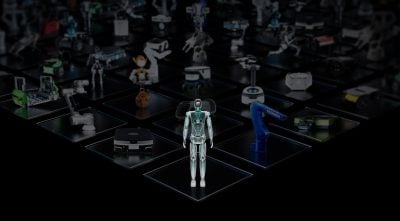
🧠Nvidia has introduced Isaac GR00T, a humanoid robot platform designed for academic research that aims to address labor shortages and advance robotics capabilities across multiple industries. The platform represents a significant step in making sophisticated robotics technology accessible to researchers and institutions.
🏢 Nvidia
AINeutralarXiv – CS AI · Jun 17/10
🧠A comprehensive analysis of 25 studies reveals that cybersecurity organizations are systematically adopting generative AI through modified frameworks and hybrid processes, with success heavily dependent on organizational maturity, regulatory pressure, and investment in human capital. Financial institutions and critical infrastructure sectors lead adaptation efforts, though persistent challenges around privacy, bias, and adversarial defense remain unresolved.
AIBullishCrypto Briefing · May 317/10
🧠OpenAI is expanding its robotics division and ramping up hiring efforts to develop general-purpose robots capable of performing diverse tasks. This expansion signals the company's commitment to integrating advanced AI systems into physical automation, with potential implications for industrial automation, labor markets, and the broader AI sector.
🏢 OpenAI
AIBullisharXiv – CS AI · May 297/10
🧠Eureka is an LLM-driven framework that automates feature engineering for machine learning by treating feature design as a code generation problem. The system combines expert agents, chain-of-thought reasoning, and reinforcement learning to generate and refine features iteratively, demonstrating 16% improvement in cloud resource prediction at Alibaba Cloud.
AIBullisharXiv – CS AI · May 297/10
🧠Researchers introduce Croissant Tasks, a machine-readable metadata format designed to improve reproducibility in machine learning research by abstracting implementation details into high-level specifications. The format enables autonomous AI agents to generate independent implementations of ML experiments, addressing critical reproducibility challenges that plague modern AI research.
AIBearisharXiv – CS AI · May 287/10
🧠A research paper argues that AI labor substitution in software development and knowledge work creates a false efficiency illusion by masking dependence on human expertise rather than truly replacing it. While organizations appear to reduce costs and accelerate output through AI adoption, they risk eroding foundational human capabilities that are slow to rebuild, increasing long-term fragility despite short-term gains.
AIBullisharXiv – CS AI · May 287/10
🧠Researchers introduce RAG-Coding, an AI system using multiple LLM agents enhanced with retrieval-augmented generation to automate ICD-10-CM medical coding. The method outperforms baseline LLM approaches by 8-13% in accuracy and maintains clinical compliance by grounding decisions in official coding guidelines, while a newly released updated dataset enables evaluation against 2025 standards.
AIBullisharXiv – CS AI · May 277/10
🧠AutoDFT is a closed-loop multi-agent framework that automates density functional theory (DFT) calculations by embedding LLM reasoning throughout the entire computational lifecycle, rather than just the planning phase. The system achieves 94.1% success on a 34-task benchmark and enables non-experts to obtain reliable computational chemistry results by dynamically adapting to failures and unexpected outcomes.
🧠 GPT-5
AIBullisharXiv – CS AI · May 277/10
🧠GUI-Libra presents a specialized training methodology for native GUI agents that addresses critical gaps between open-source and closed-source systems through action-aware supervised fine-tuning and improved reinforcement learning with partial verifiability. The work introduces an 81K curated GUI reasoning dataset and demonstrates consistent improvements across web and mobile benchmarks without requiring expensive online data collection.
AIBearishFortune Crypto · May 117/10
🧠A Gartner study reveals that 80% of companies implemented workforce reductions through automation, yet saw no corresponding increase in return on investment. This disconnect suggests that corporations may be pursuing AI-driven layoffs as a reactive cost-cutting measure rather than a strategic productivity enhancement, raising questions about the actual business value of current AI implementations.
AI × CryptoBullishCrypto Briefing · May 97/10
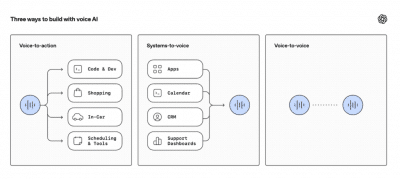
🤖OpenAI has released GPT-5-class voice models designed for real-time orchestration, which could significantly impact cryptocurrency markets and decentralized computing infrastructure. The modular voice AI tools are positioned to drive innovation and investment in AI infrastructure sectors, with potential implications for how decentralized systems handle computational tasks.
🏢 OpenAI🧠 GPT-5
AIBearishFortune Crypto · May 87/10
🧠The April jobs report reveals a paradox: overall U.S. hiring reached its strongest pace in over a year, yet white-collar office-based sectors continue to shed workers. AI-driven automation may be accelerating displacement in traditional office roles, creating a bifurcated labor market where blue-collar and service sectors thrive while knowledge workers face headwinds.
AI × CryptoBullishCoinDesk · May 77/10
🤖Crypto executives, including eToro CEO Yoni Assia, argue that DeFi is entering a mainstream phase powered by AI agents rather than experiencing decline. The statement reflects growing confidence that decentralized finance has achieved sufficient technological maturity and scale to support next-generation applications.