#autonomous-systems News & Analysis
Coverage of #autonomous-systems has intensified recently, with 50 articles published over the past month representing about half of the 98 total pieces indexed on this topic. Academic sources dominate the discussion, particularly arXiv's computer science and AI sections, alongside crypto-focused outlets like CoinDesk and Crypto Briefing. Nvidia, Claude, and OpenAI feature prominently in related conversations.
Sentiment has softened slightly, with 40% bullish coverage offset by 48% neutral reporting and 12% bearish takes—a decline of 12.7 percentage points in bullish sentiment compared to the prior quarter. Related discussions frequently intersect with #machine-learning, #ai-safety, #ai-agents, and #robotics. Scan the articles below to explore recent developments and perspectives.
sentiment · last 30d (50 articles) · -12.7pp bullish vs prior 90dTop sources:arXiv – CS AI · 68CoinDesk · 4Crypto Briefing · 3Fortune Crypto · 3TechCrunch – AI · 2
Most-discussed entities:Nvidia · 2Claude · 2OpenAI · 2Gemini · 2Llama · 1
AIBullishWired – AI · May 26🔥 8/10
🧠The article chronicles how Claude Code and OpenClaw, advanced AI agent systems, triggered a significant technological disruption in computing. This development represents a pivotal moment in AI evolution, demonstrating autonomous AI systems operating at unprecedented capability levels and potentially reshaping software development workflows.
🧠 Claude
AINeutralArs Technica – AI · Apr 14🔥 8/10
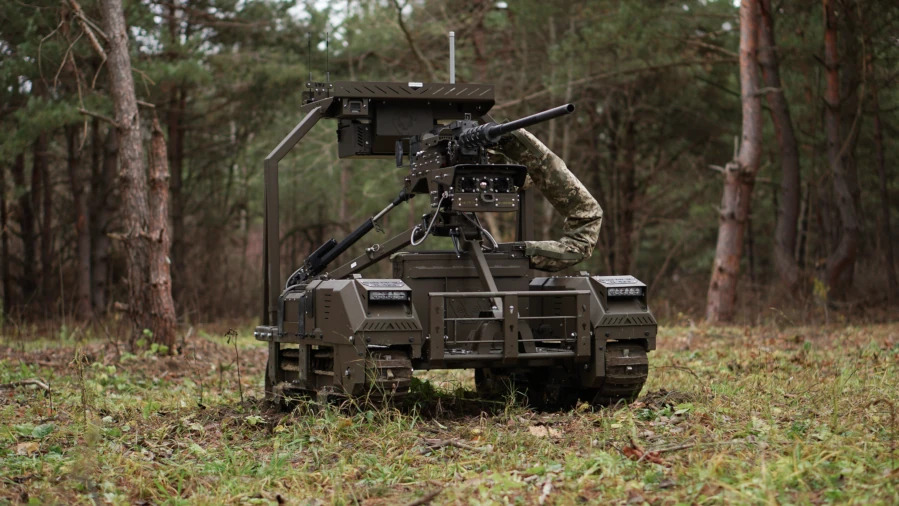
🧠Ukraine is accelerating its deployment of military robots on the battlefield to reduce human casualties and mitigate risks from drone warfare. This shift reflects broader geopolitical trends where autonomous systems are becoming critical force multipliers in modern conflict zones.
AI × CryptoBullishBitcoinist · Jun 277/10
🤖Mysten Labs has launched Sui Seal MPC, a distributed key management system that enables autonomous AI agents to conduct on-chain transactions without directly holding private keys. The technology uses key shares and Move-based policies to allow secure, policy-driven spending by AI systems.
AIBullishCrypto Briefing · Jun 267/10
🧠OpenAI's Mark Chen has stated that AI models are approaching a capability threshold where they can autonomously generate novel innovations without human direction. This development signals a fundamental shift in AI autonomy that could reshape how industries evaluate AI performance and redefine collaboration between humans and AI systems.
🏢 OpenAI
AINeutralArs Technica – AI · Jun 267/10
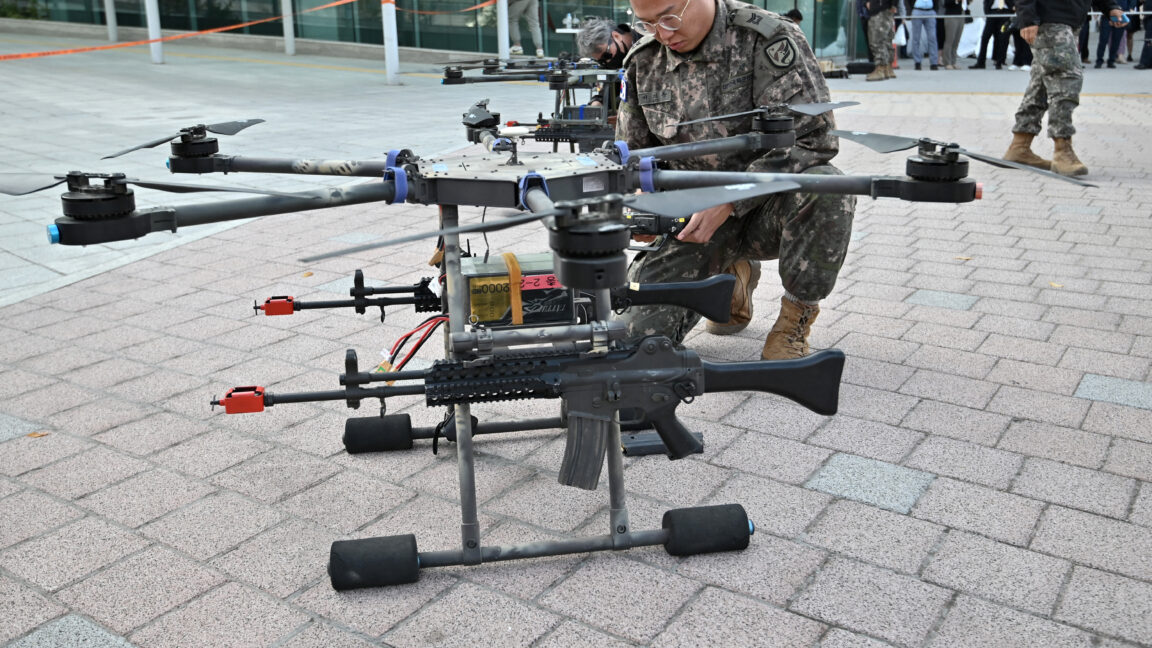
🧠South Korea's military plans to train its entire 500,000-strong force as 'drone warriors,' treating unmanned systems as universal combat tools. This represents a significant strategic pivot toward drone-centric warfare, reflecting regional tensions and technological advancement in autonomous systems.
AIBullishTechCrunch – AI · Jun 257/10
🧠Patronus AI, an agent testing startup founded by former Meta AI researchers, has secured $50M in funding to develop stress-testing environments for AI agents. The funding round reflects strong investor confidence and addresses the growing need for robust testing infrastructure as AI agent deployment accelerates.
🏢 Meta
AI × CryptoBullishNewsBTC · Jun 257/10
🤖The American Arbitration Association's Legal Context Protocol proposes a legal framework to govern autonomous AI agent payments and commercial transactions, addressing the growing need for dispute resolution mechanisms in AI-driven financial operations. This development seeks to bridge the gap between autonomous systems and existing legal structures, potentially enabling broader adoption of AI agents in regulated commercial environments.
AIBullishTechCrunch – AI · Jun 257/10
🧠General Intuition has secured $320 million in funding to develop AI agents trained on millions of hours of video game footage, leveraging gameplay data to teach artificial intelligence human-like intuition and decision-making capabilities. The approach represents a significant bet that interactive gaming environments can serve as effective training grounds for real-world AI applications, from robotics to autonomous systems.
AIBullishOpenAI News · Jun 257/10
🧠OpenAI's latest research demonstrates how AI agents are fundamentally reshaping work by automating extended, multi-step tasks and significantly boosting productivity across various professional roles. This advancement represents a meaningful step toward autonomous AI systems capable of handling complex workflows without constant human intervention.
🏢 OpenAI
AI × CryptoBullishCrypto Briefing · Jun 257/10
🤖SpaceX is pursuing a massive IPO while exploring a potential merger with Tesla, signaling how major tech companies are positioning themselves around AI capabilities. The move reflects broader industry trends of consolidation and strategic AI investment among tech giants, which presents both growth opportunities and potential market volatility for investors.
AI × CryptoBullishcrypto.news · Jun 247/10
🤖World has expanded access to AgentKit, a framework enabling AI agents to connect to verified digital identities and prove human representation rather than bot networks. This expansion addresses growing concerns about automated systems impersonating legitimate users in digital ecosystems.
AI × CryptoBullishNewsBTC · Jun 247/10
🤖0x protocol has opened its Swap API to AI agents through a new pay-per-request model denominated in USDC, enabling autonomous systems to execute token swaps without traditional infrastructure overhead. This development bridges decentralized finance and artificial intelligence, allowing AI applications to access liquidity primitives directly while 0x captures transaction value through a sustainable monetization mechanism.
AIBearishFortune Crypto · Jun 237/10
🧠Yale School of Management highlights that while Maryland and Connecticut have banned personalized pricing based on consumer data, the emergence of AI agents raises deeper questions about accountability and whose interests autonomous systems actually serve. The article suggests that AI agents represent a more fundamental challenge to corporate trust than surveillance pricing alone.
AI × CryptoBullishFortune Crypto · Jun 237/10
🤖The Technology Innovation Institute argues that AI agents operating autonomously must demonstrate trustworthiness through verifiable, real-time proof of their actions rather than relying on post-hoc assurances. This shift reflects the industry's movement from conversational AI to agentic systems that execute tasks independently, requiring fundamentally different approaches to enterprise validation and accountability.
AIBullisharXiv – CS AI · Jun 237/10
🧠Researchers propose a hierarchical reinforcement learning method that combines learned world models with dual-level policies to enable safe exploration in long-horizon tasks. The approach uses high-level subgoals to guide exploration toward safe regions and low-level imagined rollouts to minimize unsafe behaviors, demonstrating significant improvements over existing Safe RL baselines on complex navigation and manipulation tasks.
AIBullisharXiv – CS AI · Jun 237/10
🧠Researchers introduce a novel test-time scaling law for physical AI agents based on active inference principles, enabling agents to generalize to unforeseen scenarios by dynamically updating policies through reasoning about prediction errors. The approach outperforms existing reinforcement learning methods by 36% in inference efficiency on autonomous driving tasks and scales with real-world experience rather than just training data or model size.
AIBearisharXiv – CS AI · Jun 237/10
🧠A new research framework reveals that large language models exhibit inconsistent behavior across structurally equivalent decision environments, demonstrating significant portability losses when behavioral patterns learned in one setting are applied to another. The findings suggest that LLM evaluations based on single environments may be unreliable for predicting real-world autonomous decision-making performance.
AIBearisharXiv – CS AI · Jun 237/10
🧠Researchers identify 'Memory Contagion,' a phenomenon where biased evaluator feedback propagates through LLM agent memory systems into future iterations, even with perfect consolidation. The study demonstrates that bias contamination occurs at rates as low as 20% and has differential effects depending on bias type, exposing a critical vulnerability in current agent memory architectures.
AINeutralarXiv – CS AI · Jun 237/10
🧠Researchers propose a three-layer framework integrating large language models with digital twins and automation systems to enable adaptive industrial autonomous systems. The TPSR model transforms user tasks into executable processes through LLM-based reasoning, demonstrated across five peer-reviewed studies with prototypes showing improved task executability and reduced manual effort.
AINeutralarXiv – CS AI · Jun 237/10
🧠Researchers propose a dimensional governance framework for AI systems that tracks decision authority, process autonomy, and accountability across human-AI relationships rather than relying on static risk categories. This adaptive approach enables proactive risk management by monitoring system movement toward critical thresholds, offering a more flexible alternative to traditional categorical governance as AI capabilities evolve.
AIBullisharXiv – CS AI · Jun 237/10
🧠A research paper describes how artificial intelligence and automated systems are converging to create autonomous discovery ecosystems for polymer materials science. Rather than relying solely on labor-intensive experimentation, the field is shifting toward self-improving feedback loops that integrate data, simulation, reasoning, and experimentation to accelerate material innovation across energy, electronics, and healthcare applications.
AIBullisharXiv – CS AI · Jun 237/10
🧠Researchers introduce Vesta, a unified foundation model for robotics that consolidates localization, spatial reasoning, navigation, and planning into a single generalist system rather than relying on multiple specialist models. The approach outperforms individual state-of-the-art baselines by over 20% and improves real-world robotic task success by 35%, demonstrating that generalist models can match or exceed specialized alternatives while reducing computational overhead and error cascades.
AIBullisharXiv – CS AI · Jun 237/10
🧠Researchers have developed an adaptive safety system for autonomous drone swarms using distributed model predictive control that dynamically adjusts safety zones based on speed rather than using fixed worst-case buffers. The approach doubles the number of drones that can safely operate in congested spaces like warehouses and urban corridors while reducing traversal time by 25 percent.
AIBullisharXiv – CS AI · Jun 237/10
🧠Researchers introduce RigorBench, the first benchmark measuring process discipline in AI coding agents beyond mere outcome correctness. The study demonstrates that structured engineering practices improve both process quality by 41% and code correctness by 17%, establishing that how AI agents approach coding tasks matters as significantly as their final results.
AIBullisharXiv – CS AI · Jun 237/10
🧠MemoryVAM introduces an episodic memory mechanism for video-world-model policies that enables robots to perform long-horizon manipulation tasks by retaining and leveraging historical context. The system achieves significant performance improvements on benchmark tasks and real robot experiments, addressing a fundamental limitation where short observation windows make complex manipulation non-Markovian.